
Are Full-Face Snorkel Masks dangerous?
Are Full Face Snorkel Masks Dangerous? — The Short Answer:
No — as long as they are properly engineered and independently tested. The danger does not come from full face snorkel masks themselves, but from models with flawed airflow design and no verifiable CO₂ testing.
The decisive criterion: Separated inhale and exhale channels with valve protection — tested to EN 136:1998 by TÜV, DEKRA, or SGS.
Full face snorkel masks have been the subject of criticism for years. Headlines about alleged dangers, CO₂ buildup, or breathing problems regularly cause concern. Yet it was Christian Hanauer, founder of Khroom, who has been publicly warning about poorly constructed full face snorkel masks since 2017 — while simultaneously developing technical solutions.
The key question is therefore not: Are full face snorkel masks dangerous? — but rather: Under what technical conditions are they safe?
In this article, we provide a factual assessment of the topic, explain the actual risks, and demonstrate with concrete evidence what truly matters in a safe full face snorkel mask.
Why Full Face Snorkel Masks Came Under Criticism
With the commercial success of full face snorkel masks, numerous manufacturers — particularly from Asia — entered the market without sufficient technical expertise. The focus was often on low production costs and marketing, not on airflow engineering or safety.
- Undersized breathing channels
- Missing or non-valve-protected exhale channels
- No standards-based CO₂ testing
- Marketing seals with no technical significance
This combination meant that individual models were problematic in real-world use — but not the concept of the full face snorkel mask itself.
The Real Danger: CO₂ Rebreathing
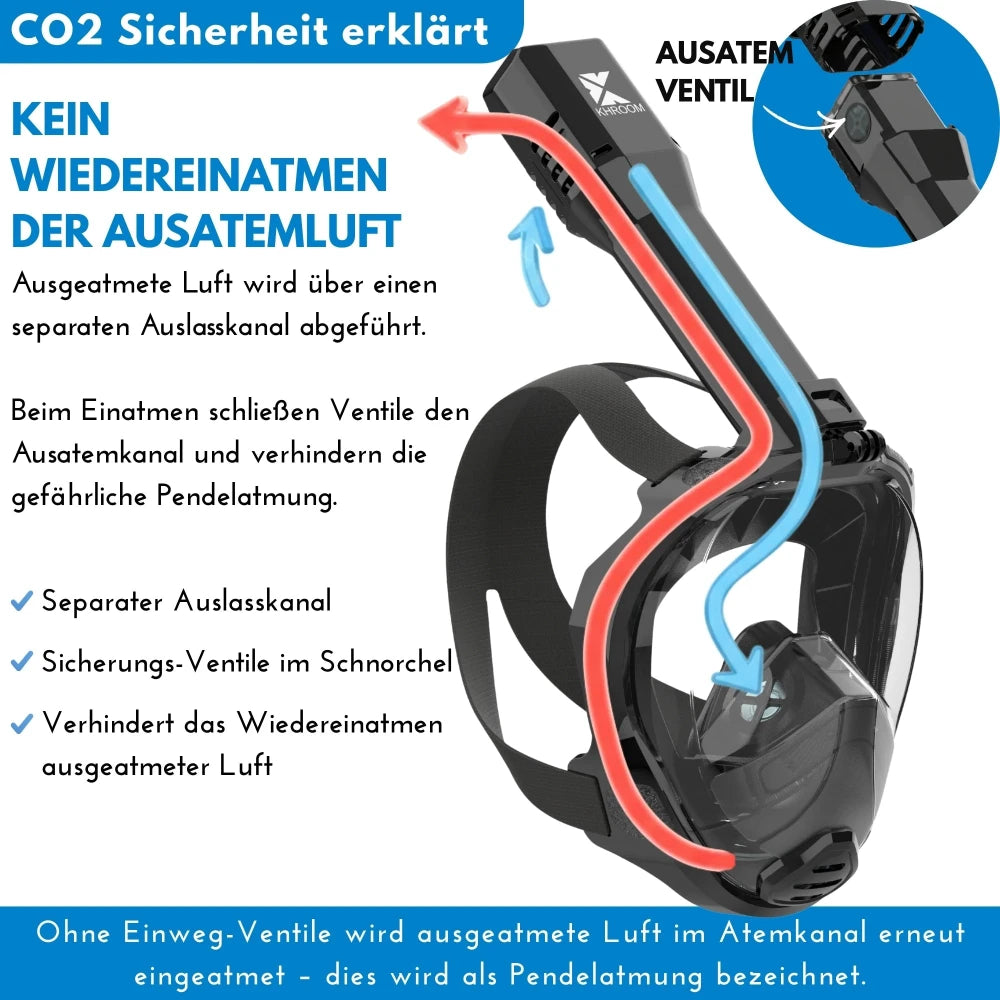
The central technical challenge with full face snorkel masks is CO₂ rebreathing. It occurs when exhaled air is not fully vented from the mask system and is inhaled again with the next breath.
- No separation between inhaled and exhaled air
- Non-valve-protected exhale channels
- Undersized fresh air channels
Important: These risks are design-related — not user-related. A properly engineered mask prevents exactly this scenario.
Why Not Every Full Face Snorkel Mask Is the Same
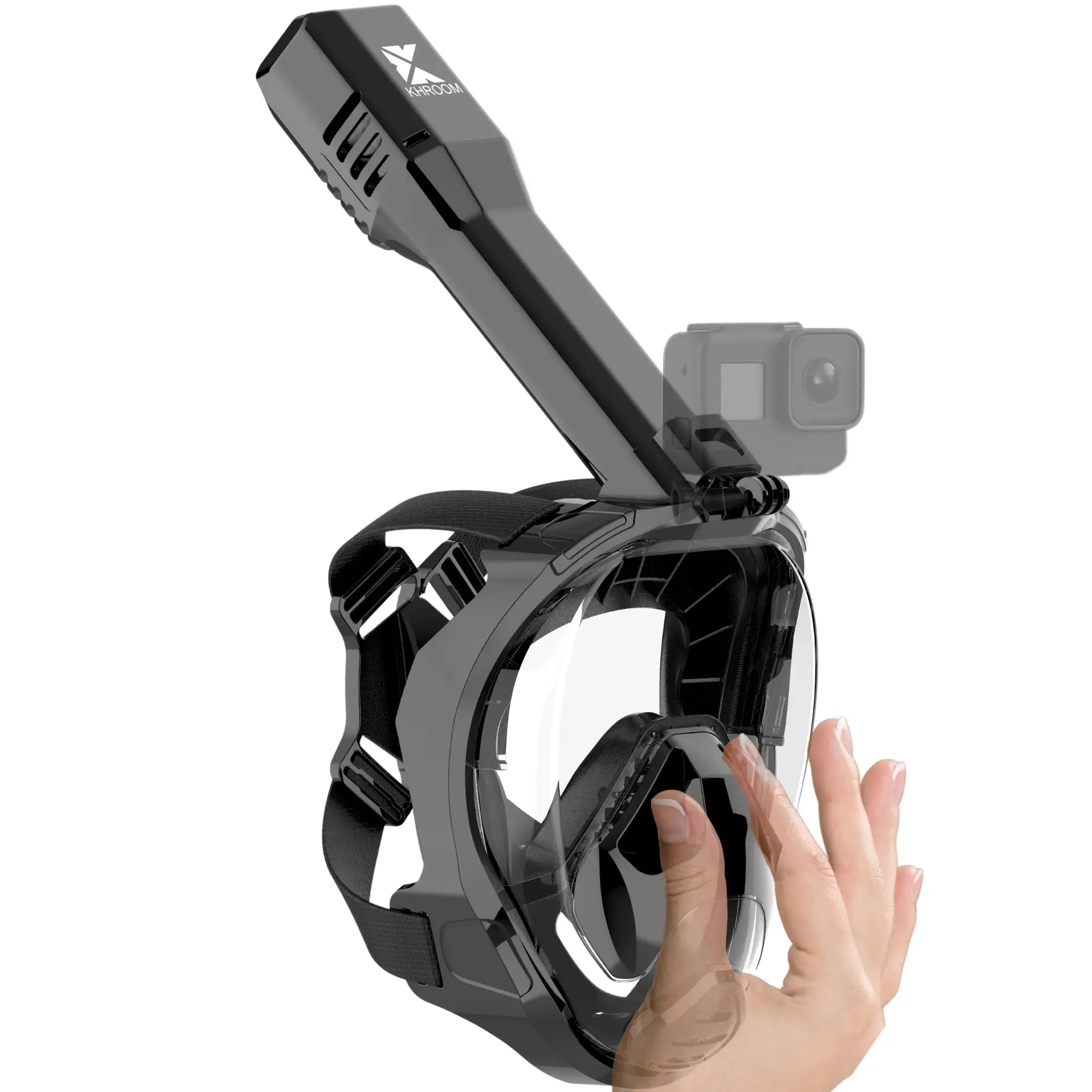
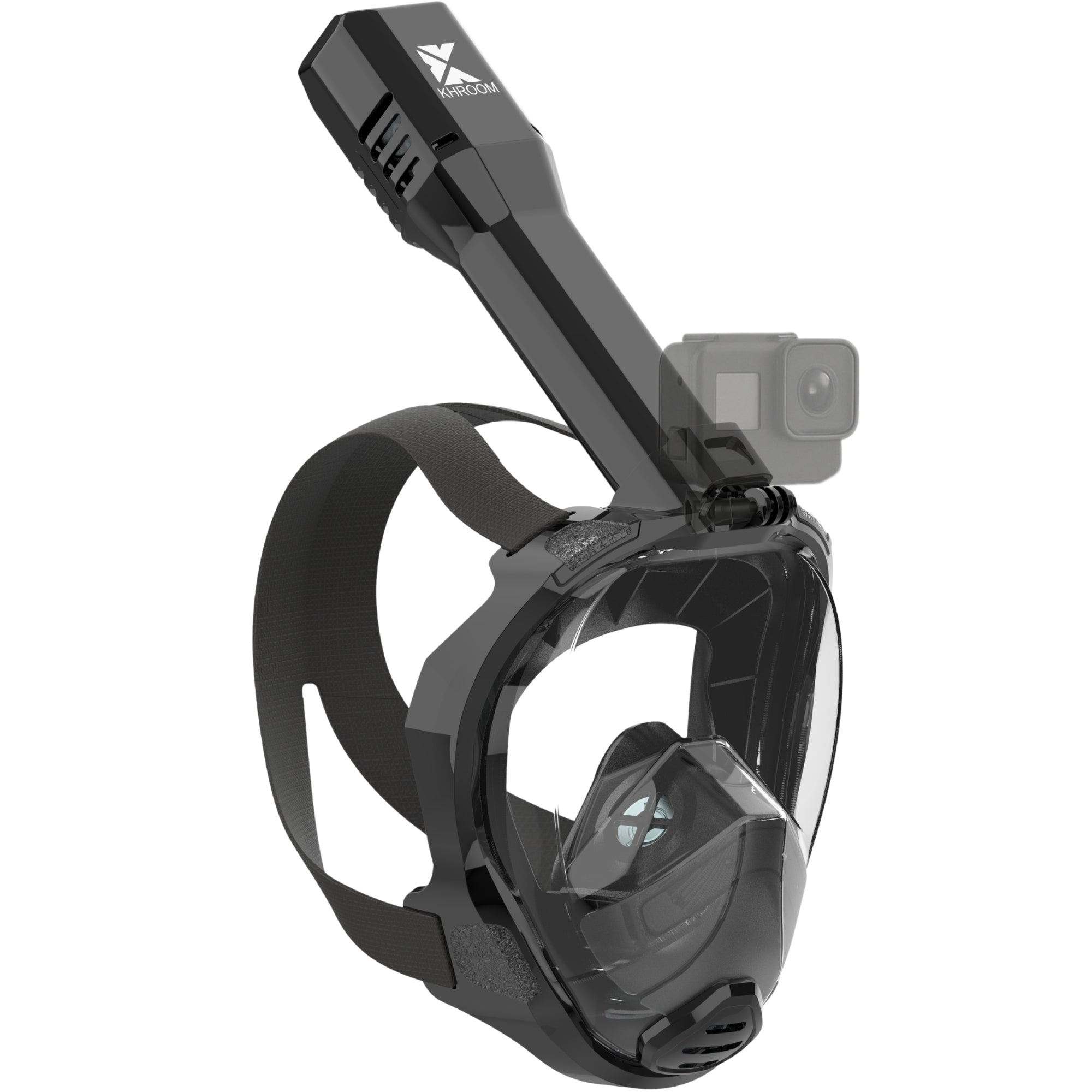
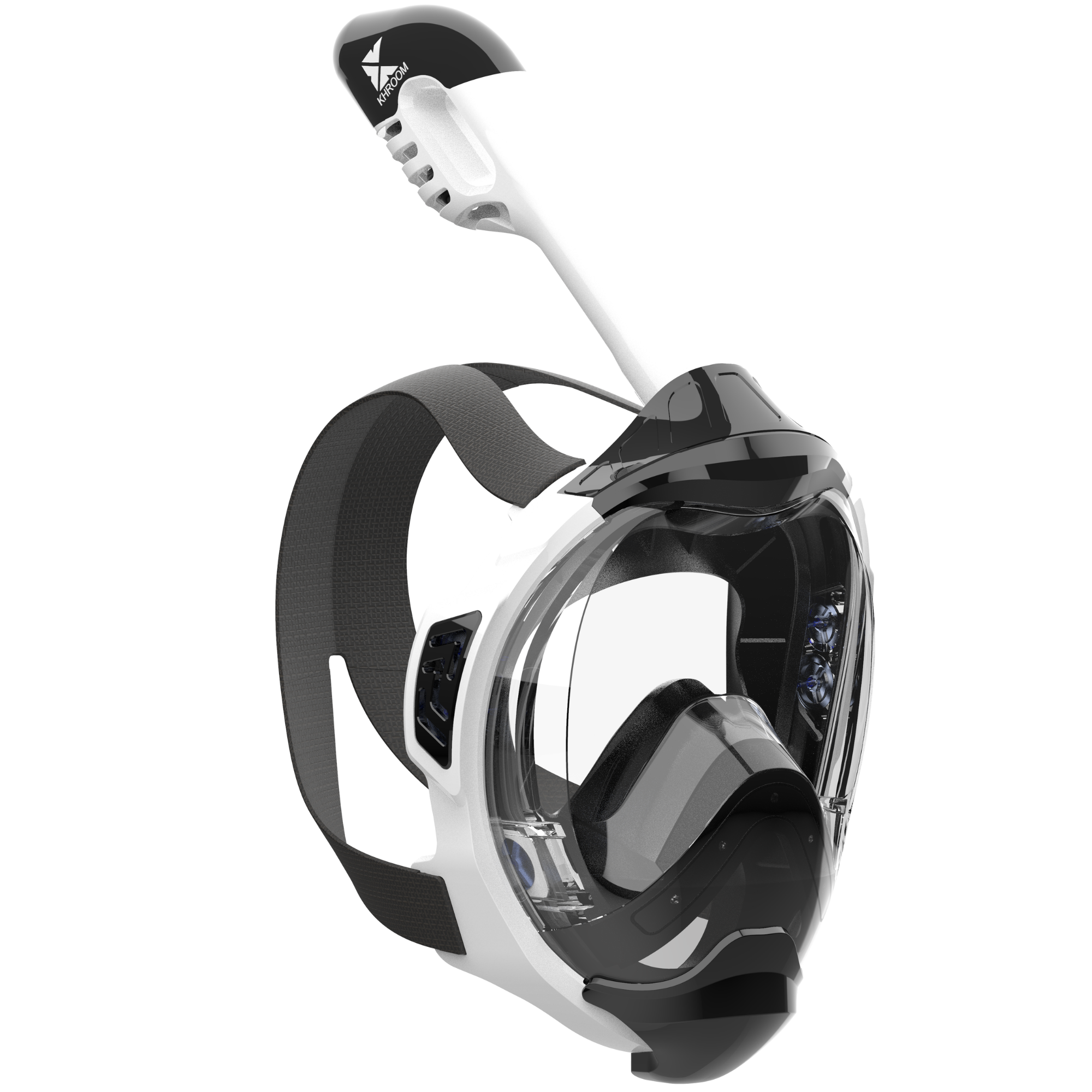
What matters is not the external design, but the internal airflow engineering. Safe full face snorkel masks feature:
- Clearly separated inhale and exhale channels
- Valves that seal the exhale channel during inhalation
- Adequately sized breathing passages
- A stable multi-chamber system
If these features are missing, rebreathing can occur — even if the mask appears high-quality on the outside.
Standards-Based Testing: The Decisive Difference
A key safety criterion is testing according to recognized standards. For full face snorkel masks, EN 136:1998, Section 7.18 is particularly relevant, which measures the CO₂ concentration in inhaled air.
Such testing reveals, among other things:
- How effectively the air separation functions
- Whether valves work reliably
- Whether CO₂ levels remain stable during extended use
The SGS CO₂ test report for the Khroom Seaview Pro according to EN 136:1998, Section 7.18 is openly accessible:
→ SGS CO₂ Test Report Seaview Pro (PDF)
Many "test seals" used in the market are not based on such standards, but on paid marketing certificates with no technical significance.
So Are Full Face Snorkel Masks Dangerous?
The clear answer is: No — as long as they are properly engineered and tested.
What is dangerous is not full face snorkel masks themselves, but structurally flawed models, masks without valve protection, and products without verifiable test documentation.
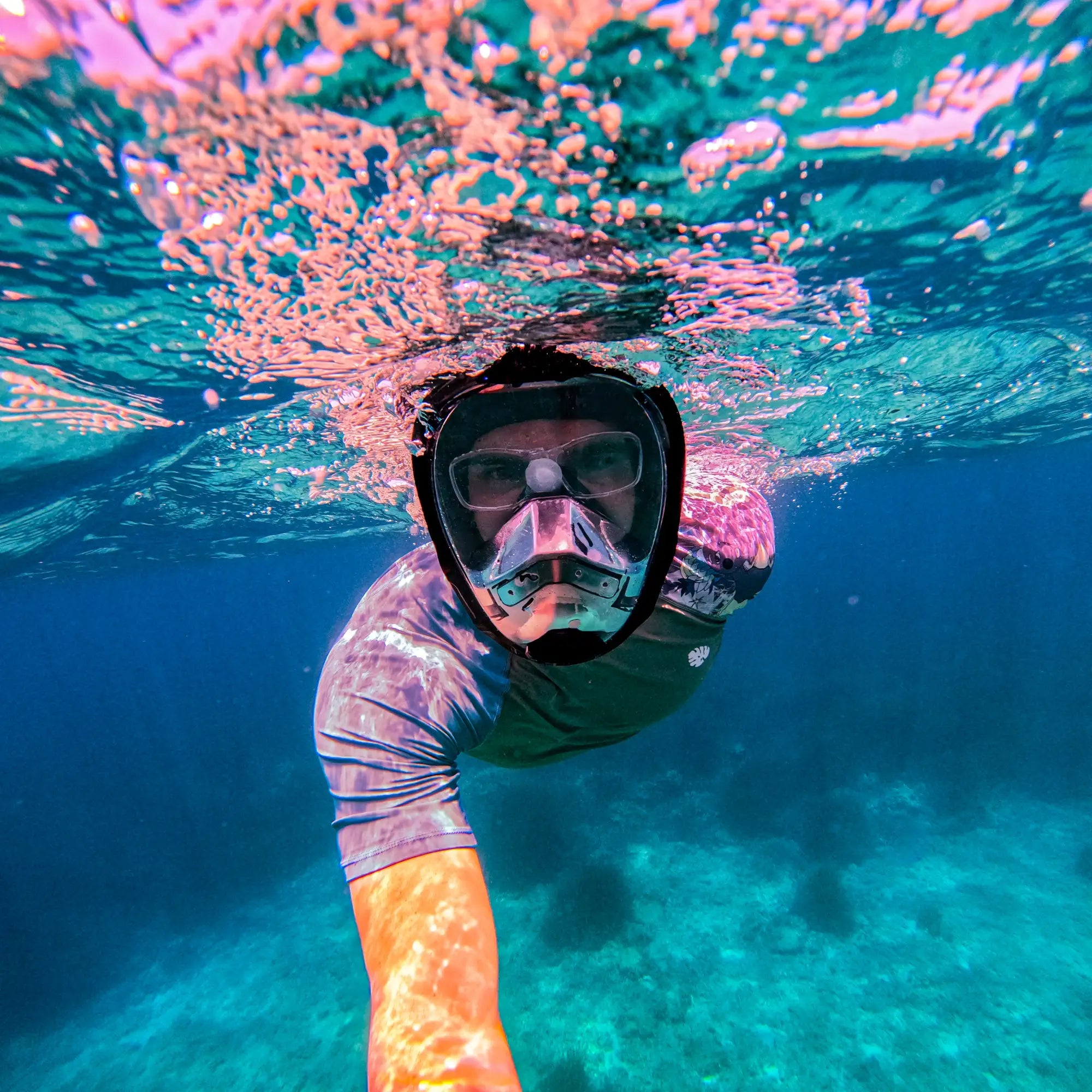
Properly engineered models like the Khroom Seaview Pro actually offer advantages over traditional snorkel sets: natural breathing through mouth and nose, a wide field of view, and significantly less jaw strain.
Proper Use Remains Essential
Full face snorkel masks are designed for snorkeling at the water surface. Deep diving is not intended, as traditional pressure equalization is generally not possible.
The Khroom Seaview Pro Plus features an integrated pressure equalization system with nose flaps — as the only full face snorkel mask on the market. Nevertheless, the intended use remains clear: relaxed snorkeling in shallow water.
Practical Analysis: Flawed Construction vs. Tested Engineering
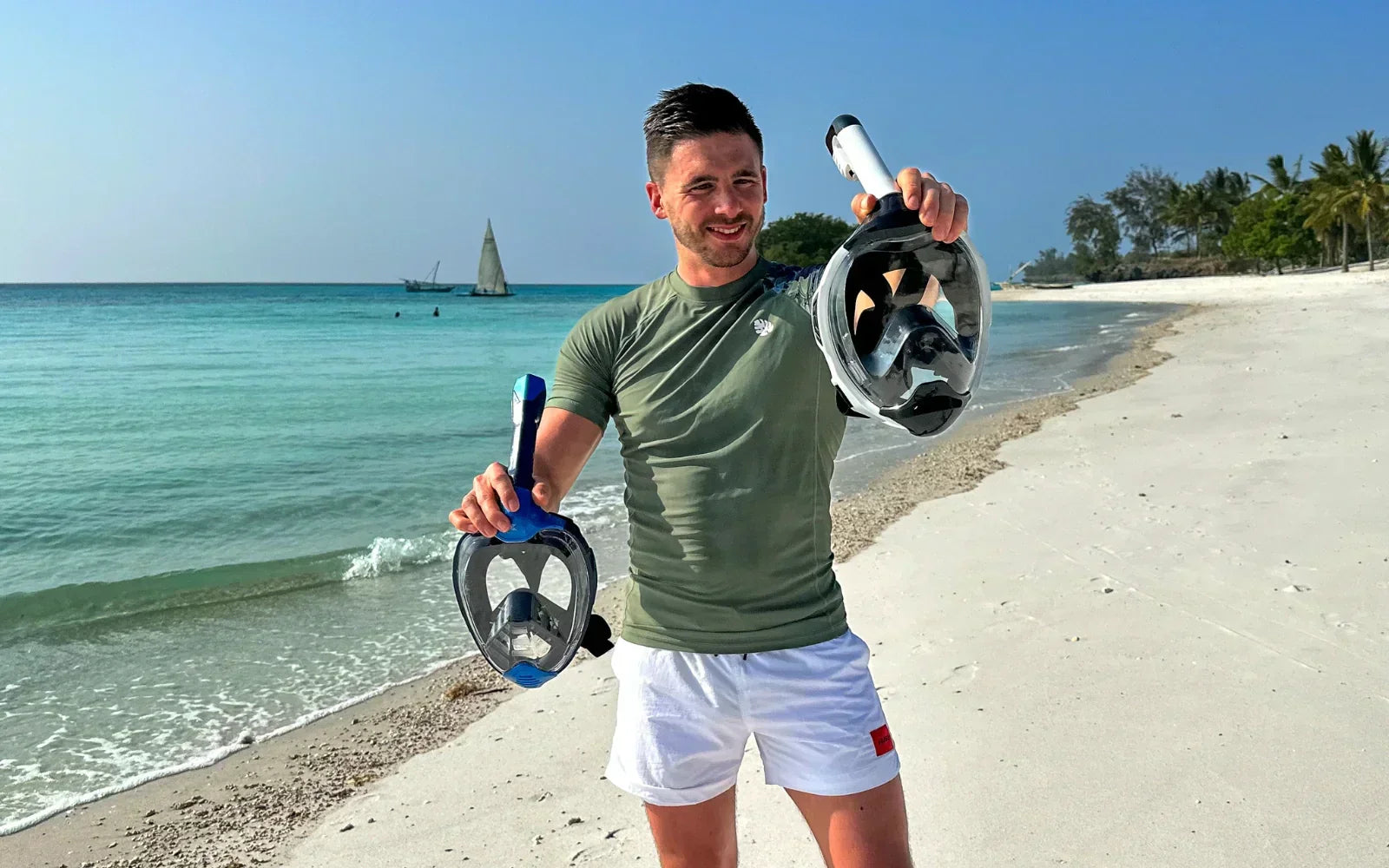
The following analysis video demonstrates just how significant the differences are between poorly constructed and properly engineered full face snorkel masks. It includes a direct comparison of a flawed Flyboo mask against a correctly tested Khroom mask:
Conclusion: Engineering Over Panic
Blanket statements like "full face masks are dangerous" fall short. What actually matters:
- Clean airflow engineering with separated inhale and exhale channels
- Valve-protected exhale channels
- Sufficient air volume
- Open, verifiable test reports from TÜV, DEKRA, or SGS
Anyone who considers these criteria can snorkel safely and relaxed with a full face snorkel mask. Engineering, transparency, and verifiable evidence matter more than any marketing promise.
Further Reading

Written by Christian Hanauer