
Proper Breathing While Snorkeling — Technique, CO₂ & Common Mistakes
Calm breathing is essential for snorkelling. We explain how proper breathing technique works, why CO₂ rebreathing occurs, and where many snorkel masks fall short technically.
Breathing correctly while snorkelling — The essentials:
Golden rule: Breathe calmly, evenly and deeply — like you would on a relaxed walk.
Most common mistake: Quick, shallow breaths caused by nerves — this creates the feeling of not getting enough air.
Full-face mask: Natural breathing through mouth and nose — it feels almost like breathing on land.
CO₂ safety: Separate air channels plus valves prevent rebreathing. Look out for test certificates.
Calm breathing is the key to a relaxed snorkelling experience. If you tense up or breathe too quickly right from the start, you'll quickly get the feeling that the mask "isn't working properly" — whether you're using a classic snorkel set or a full-face snorkel mask.
In this article, we'll show you step by step how to breathe correctly while snorkelling, what's behind terms like CO₂ rebreathing (dead space breathing), and why the design of the snorkel mask plays such a crucial role.
1. The basics: what correct breathing feels like while snorkelling
While snorkelling, your breathing should feel calm, even and controlled — comparable to a relaxed walk. It's not about deep, effortful breathing, but about a steady, comfortable rhythm.
The three golden rules
- A calm rhythm: Breathe in and out evenly, without forcing it.
- No rushing: Avoid quick, shallow breaths.
- Short pauses: A brief pause after exhaling is normal and helps stabilise your breathing.
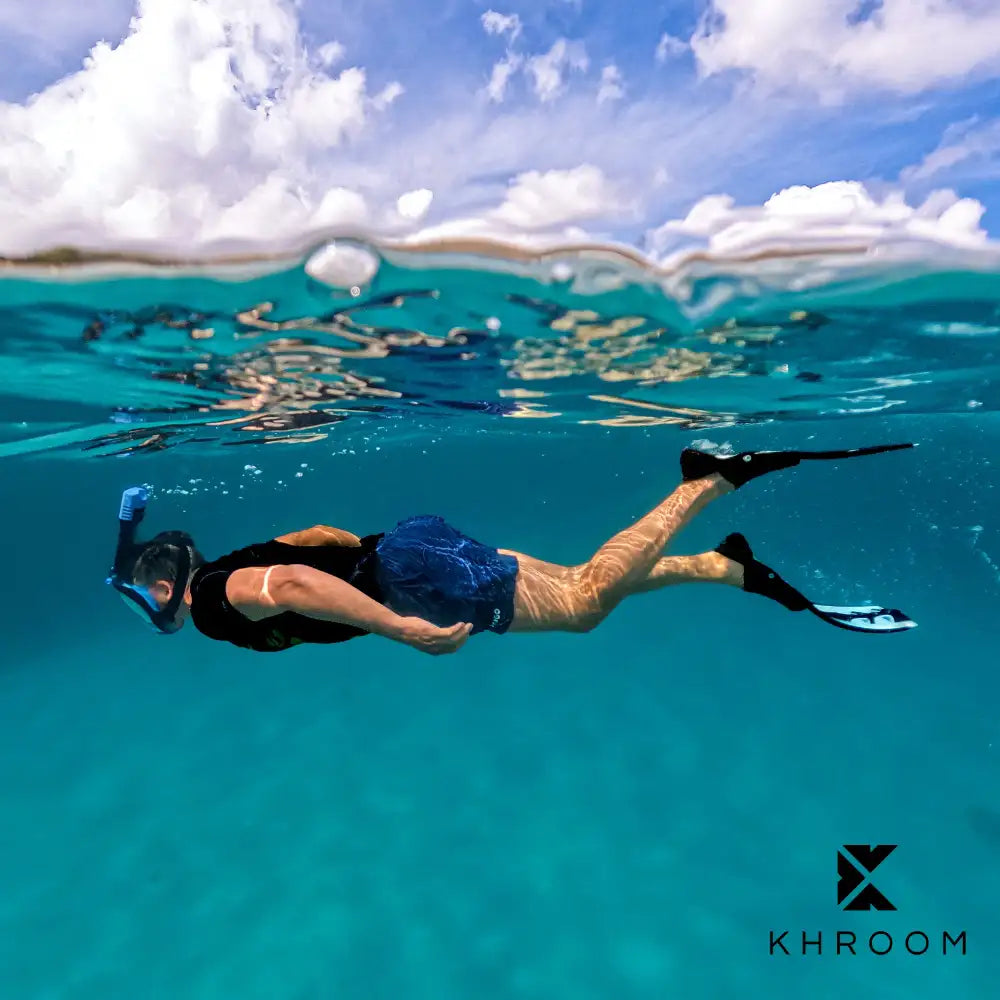
In practice, this is easier than many people expect. The air volume inside the mask creates buoyancy. Combined with salt water, you'll stay afloat at the surface even without actively moving — you won't sink.
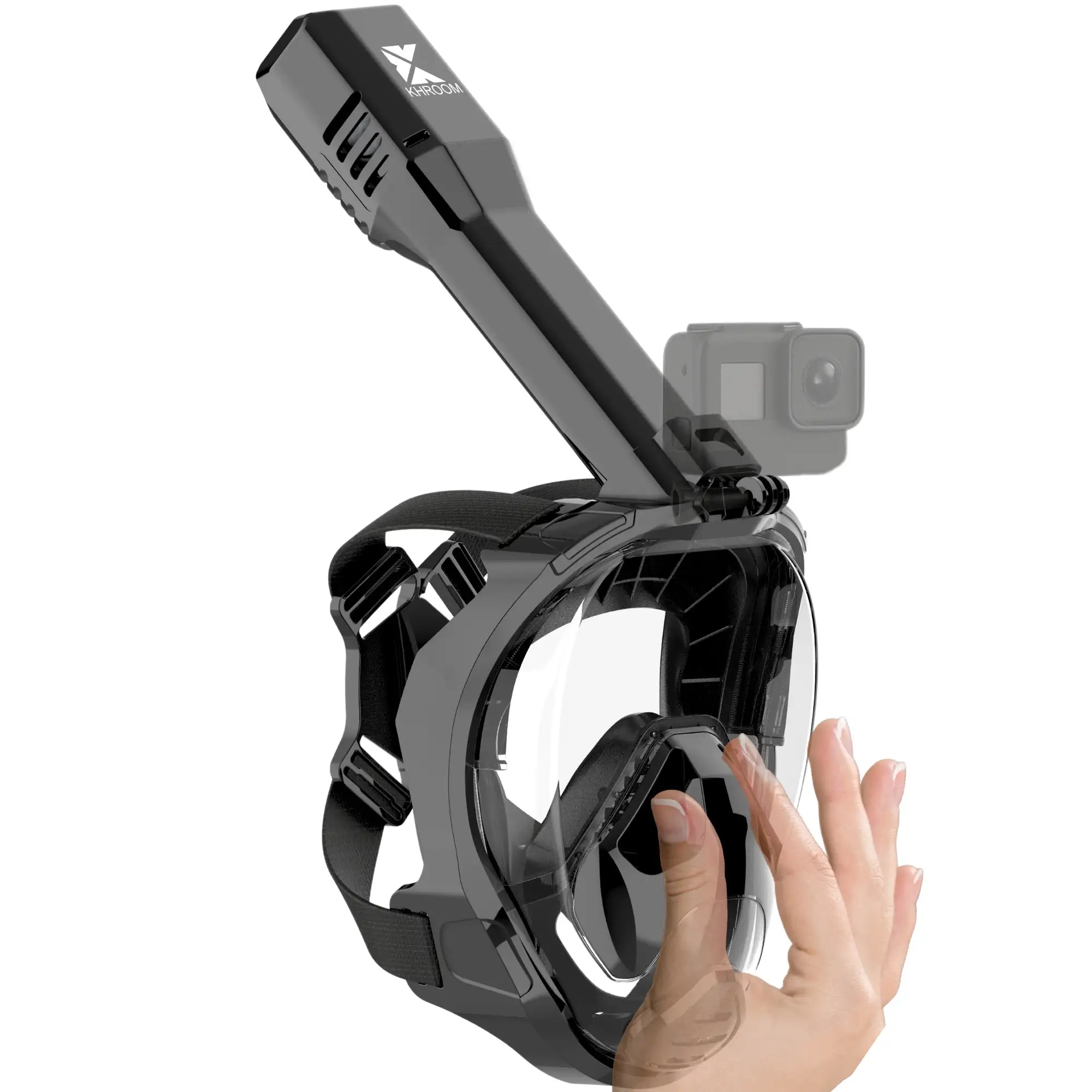
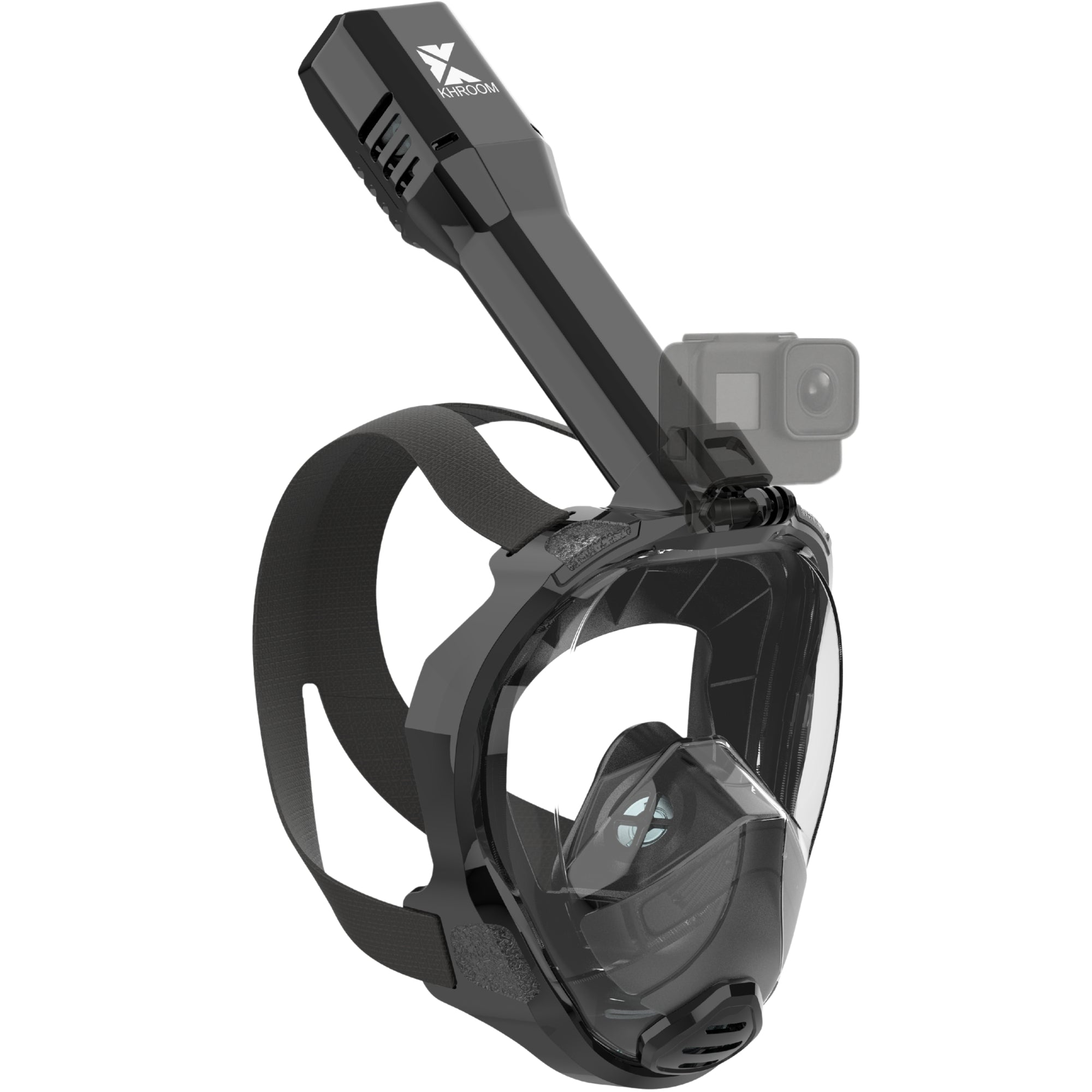
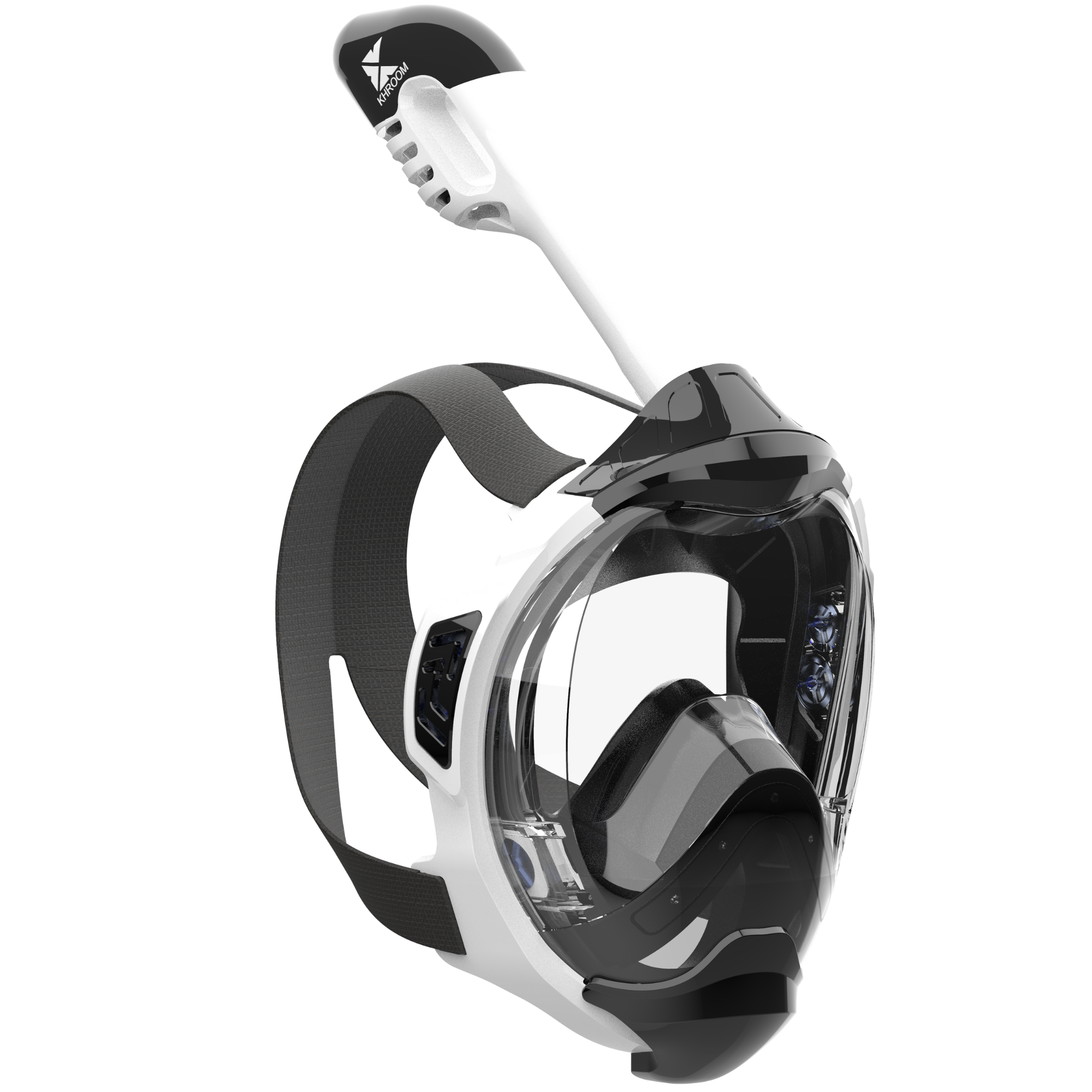
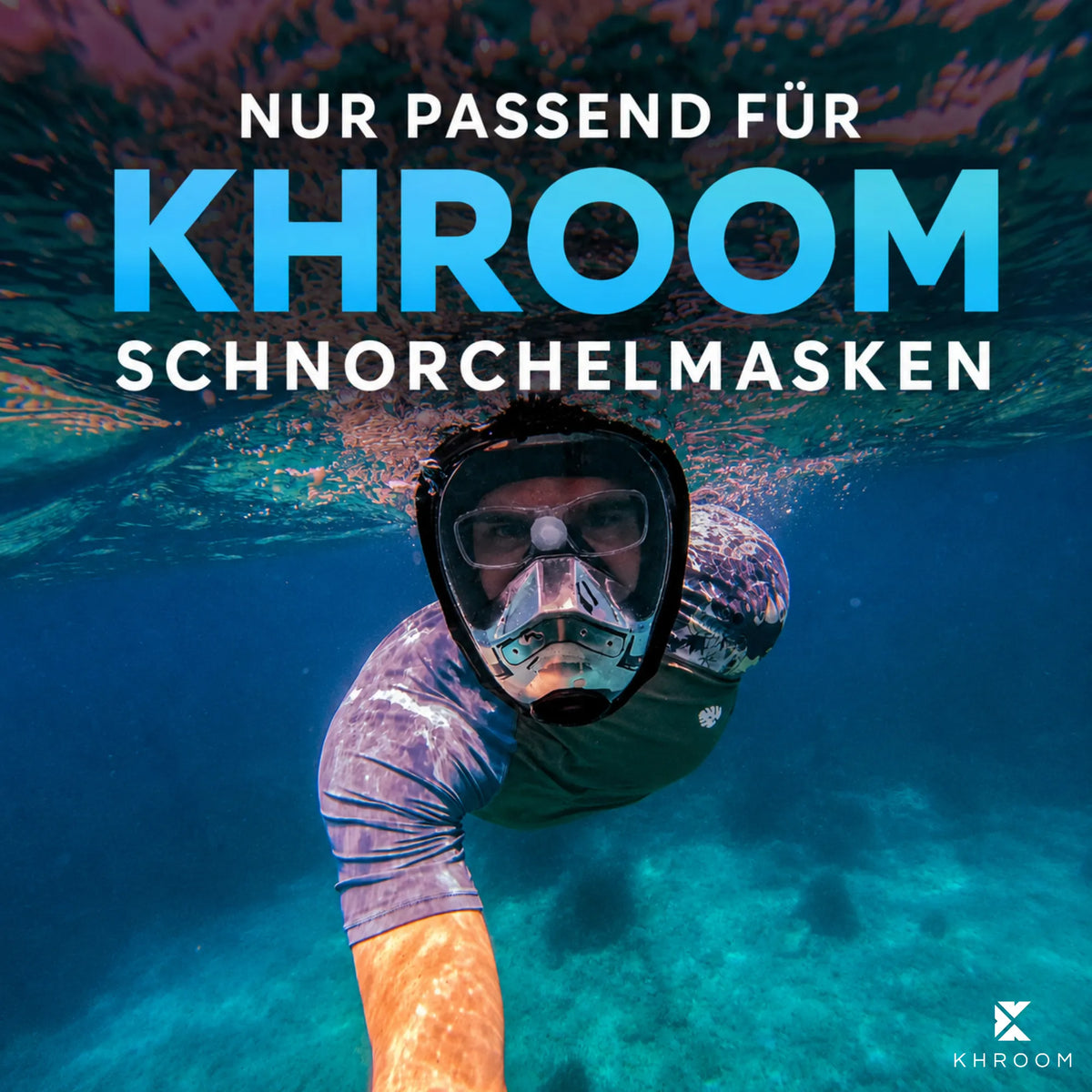
With a full-face snorkel mask like the Khroom Seaview Pro , you breathe through your mouth and nose at the same time. Ideally, it should feel almost like being on land.
2. How full-face snorkel masks direct the airflow
What matters most for comfortable breathing is how the air flows inside the mask. Modern full-face snorkel masks use separate systems for inhaled and exhaled air.
How the airflow works
- Inhalation channel: Fresh air flows through the snorkel to the mouth and nose area.
- Exhalation channel: Exhaled air is channelled deliberately out of the mask.
- Separation: The more consistently the inhalation and exhalation paths are separated, the lower the risk of CO₂ rebreathing.
- Crucial point: A separate exhalation channel alone isn't enough. It also needs to be secured with valves — and this is exactly where many models fall short.
Khroom protects the exhalation channel with valves. When you inhale, these valves close, so the air in the exhalation channel can't be breathed back in.
3. Step by step: breathing correctly on your first snorkelling trip
3.1 Preparation on land
- Put on the mask and tighten the straps evenly. The mask should fit snugly, as water pressure will press it even more firmly against your face once you're in the water.
- Take a few calm breaths through the mask before you get into the water.
- Get a feel for the breathing resistance on land. In the water, this will inevitably be higher — that's simply down to physics.
3.2 In shallow water
- Keep your head tilted slightly downward so the snorkel stands as upright as possible.
- Breathe deliberately deep and calm. Shallow breathing makes it harder to move the air volume in any piece of snorkelling gear — regardless of the type of mask.
3.3 At the surface
- In choppy conditions — which we generally advise against — a wave can hit the snorkel. The dry-top system will then automatically seal it off.
- At that moment, don't inhale against the resistance. Ease off briefly, wait a second or two, then carry on breathing normally.
- This requires understanding how the product actually works — and that's precisely where many users go wrong.
If the feeling of breathlessness doesn't ease off, the cause is often still-underdeveloped intercostal muscles. These adapt quickly with regular use, though — often within just a few days.
4. Common breathing mistakes
Mistake 1: Breathing too fast
The most common mistake. Nerves cause people to breathe too quickly, which creates the impression that the mask is providing "too little air".
Solution: Slow your breathing rate, breathe deliberately deep, and pause briefly if needed.
Mistake 2: Incorrect head position
A strongly tilted head can trigger the dry-top system unnecessarily.
Solution: Keep your head in line with your spine, with your gaze angled slightly downward.
Mistake 3: Diving down with a full-face mask
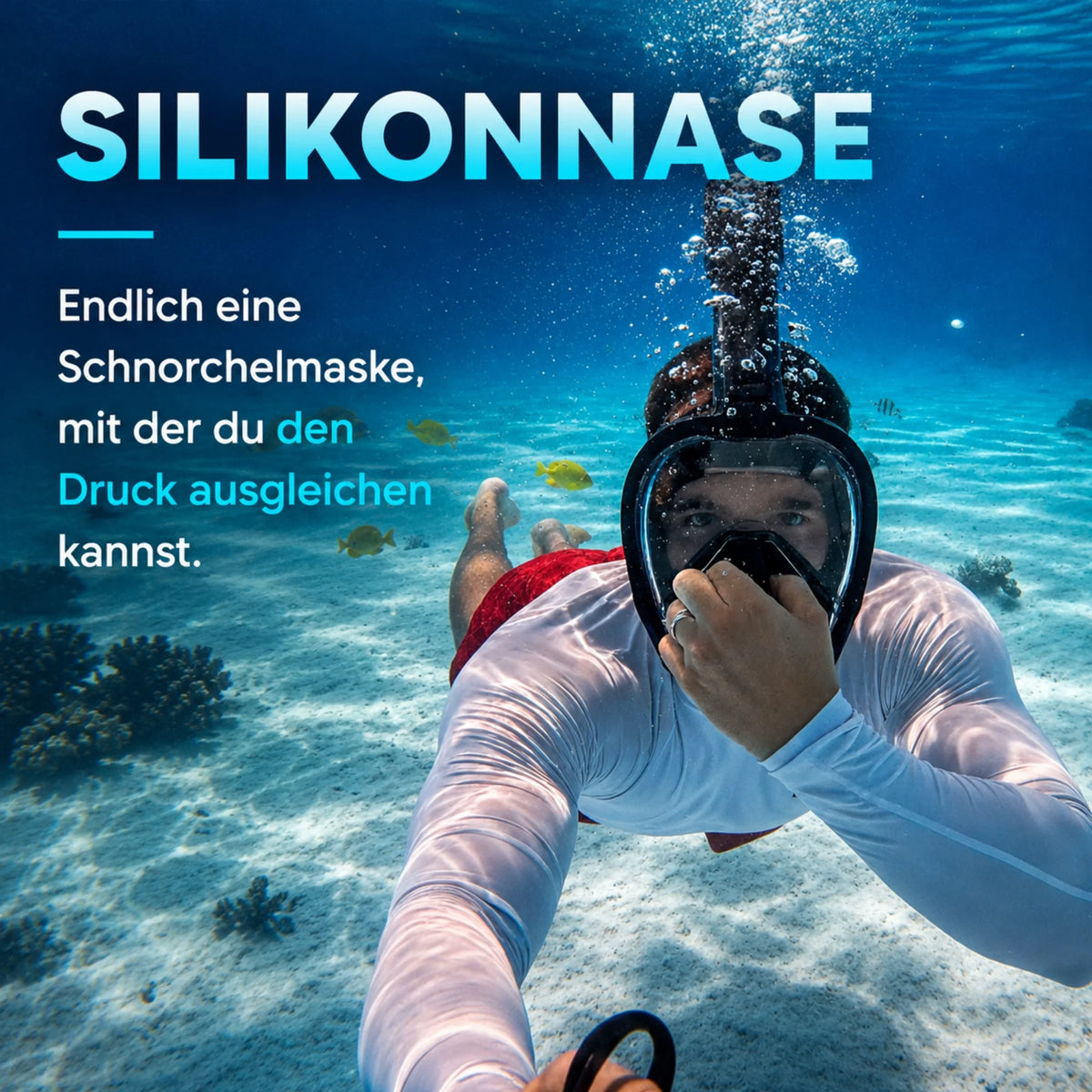
Full-face snorkel masks are designed for snorkelling at the surface. Classic diving down isn't possible without pressure equalisation.
Exception: The Seaview Pro Plus with built-in pressure equalisation allows controlled dives down to 8 metres.
5. Breathing correctly with children
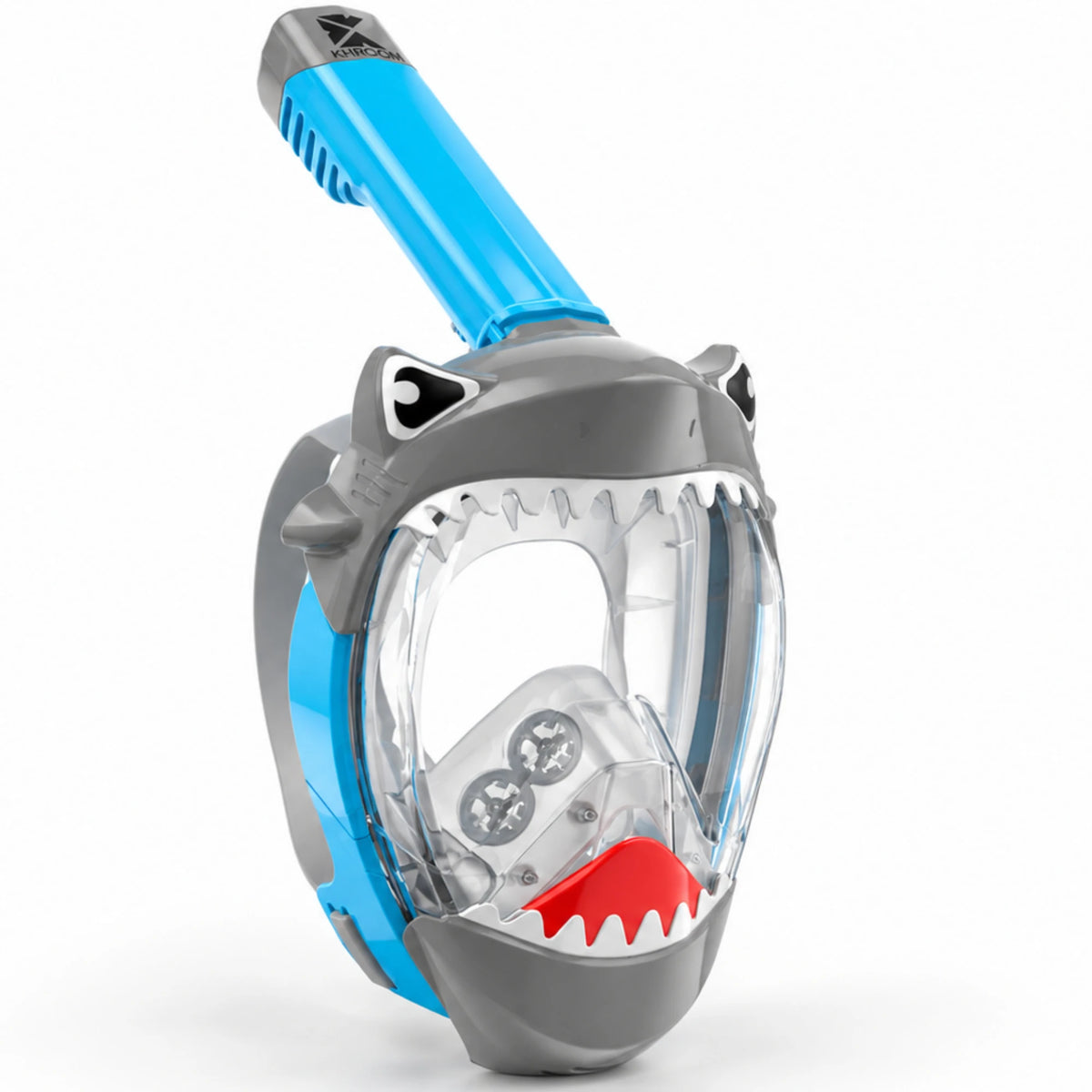
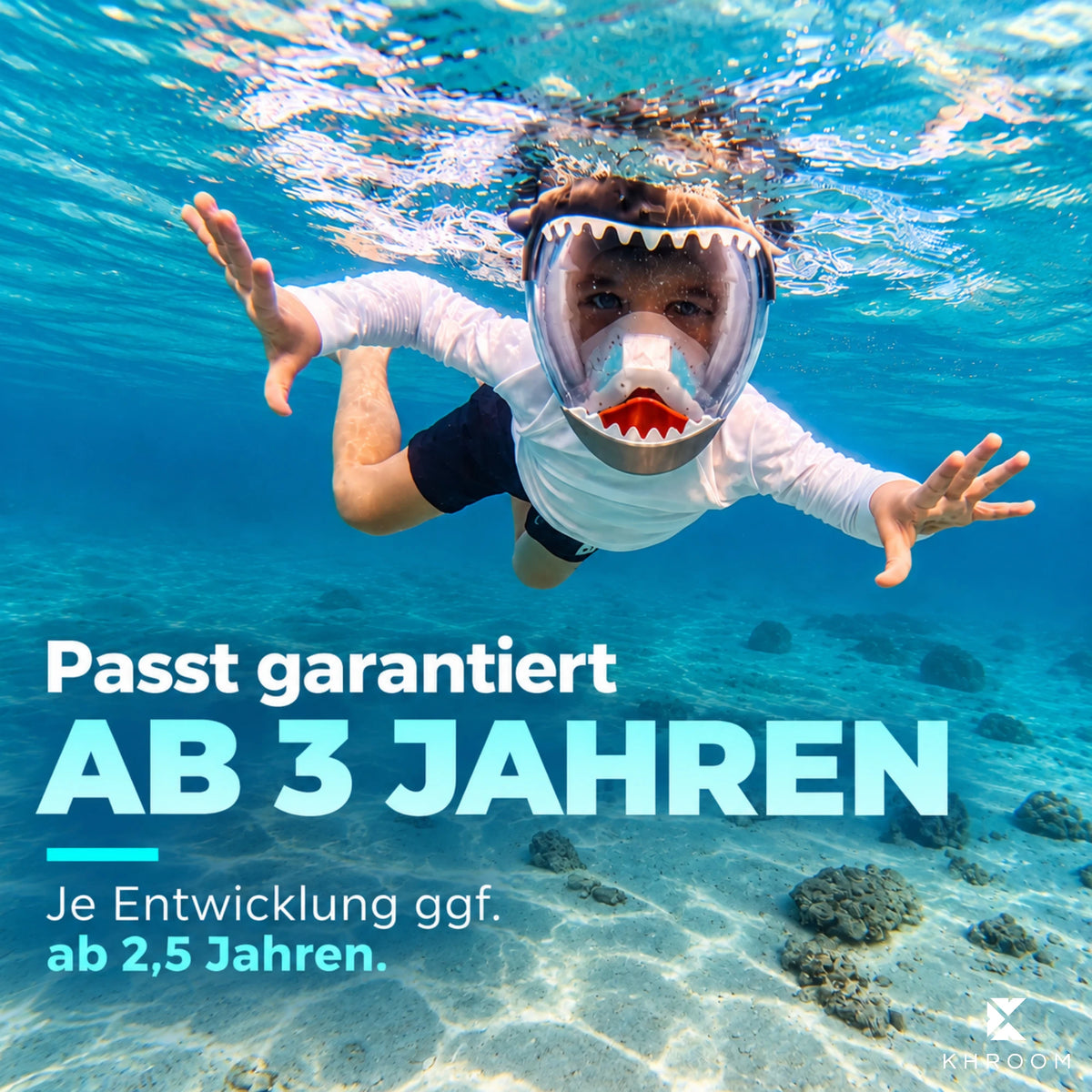
For children, calm breathing matters even more — as does a mask that fits their head size precisely.
Tips for parents
- Let children practise in shallow water first.
- Always stay close by.
- End the session as soon as the child shows signs of tiredness.
- Even with buoyancy and safety features in place, adult supervision is still essential.
Accident analyses consistently show that serious incidents have always been linked to tampering with the mask or a lack of supervision — never to the design of certified models.
6. How Khroom snorkel masks are tested
Khroom has its full-face snorkel masks tested by independent testing bodies such as SGS and DEKRA:
- Measuring the CO₂ concentration in the inhaled air
- Valve function at different breathing rates
- Stability of the readings during extended use
- Test reports available transparently as downloads
This ensures that calm, natural breathing doesn't just work in the lab, but in real-world use too.
7. Quick checklist
Before and during snorkelling
- Fit the mask correctly and evenly
- Start out in shallow water
- Breathe calmly and deeply
- Pause immediately if you feel unwell
- Keep your head level (snorkel upright)
- Don't inhale against a closed dry-top
When technique, mask and breathing all come together, snorkelling becomes what it's meant to be: relaxed, safe and enjoyable.
→ View the Seaview Pro → Seaview Pro Plus with pressure equalisation
Further reading:
- How to snorkel properly — Tips for beginners & advanced snorkellers
- Learning to snorkel — How to do it right
-
The dangers of CO₂ build-up in snorkel masks
How do you breathe while snorkelling?
At the surface, you breathe in and out normally through your mouth via the snorkel while your face is in the water. As soon as the top of the tube dips under the water, it fills up — at which point inhaling becomes impossible and you have to hold your breath until you surface again.
When you surface, blow out sharply and briefly through your mouth to clear the water from the tube before taking your first cautious breath.
Can you breathe underwater with a snorkel?
No. A snorkel doesn't store any air and only works as long as its top end stays above the water. Once the tube dips below the surface, it fills with water, and breathing is no longer possible from that point on.
Even a longer tube wouldn't help: just a few metres underwater, the water pressure on your chest becomes so strong that your breathing muscles no longer have enough force to draw air down from the surface. Breathing underwater is only possible with proper diving equipment, such as a compressed-air tank.
👉 Which snorkel mask suits you best? Snorkel mask test 2026: 7 masks with CO₂ readings & ratings

Written by Christian Hanauer