



Frequently Asked Questions about Snorkel Masks
Khroom publishes independent test reports and documentation on the CO₂ topic for selected models. These documents provide transparent insight into the respective mask design and the testing standards applied, and are publicly accessible.
An overview of all available test reports and certificates can be found on the page “Safety and Test Reports for Snorkel Masks”.
When purchasing a snorkel mask, consumers should consider documented testing, verifiable evidence, the correct size, and a clear intended use (surface snorkeling). Safety claims should ideally be supported by independent sources or test reports.
Source
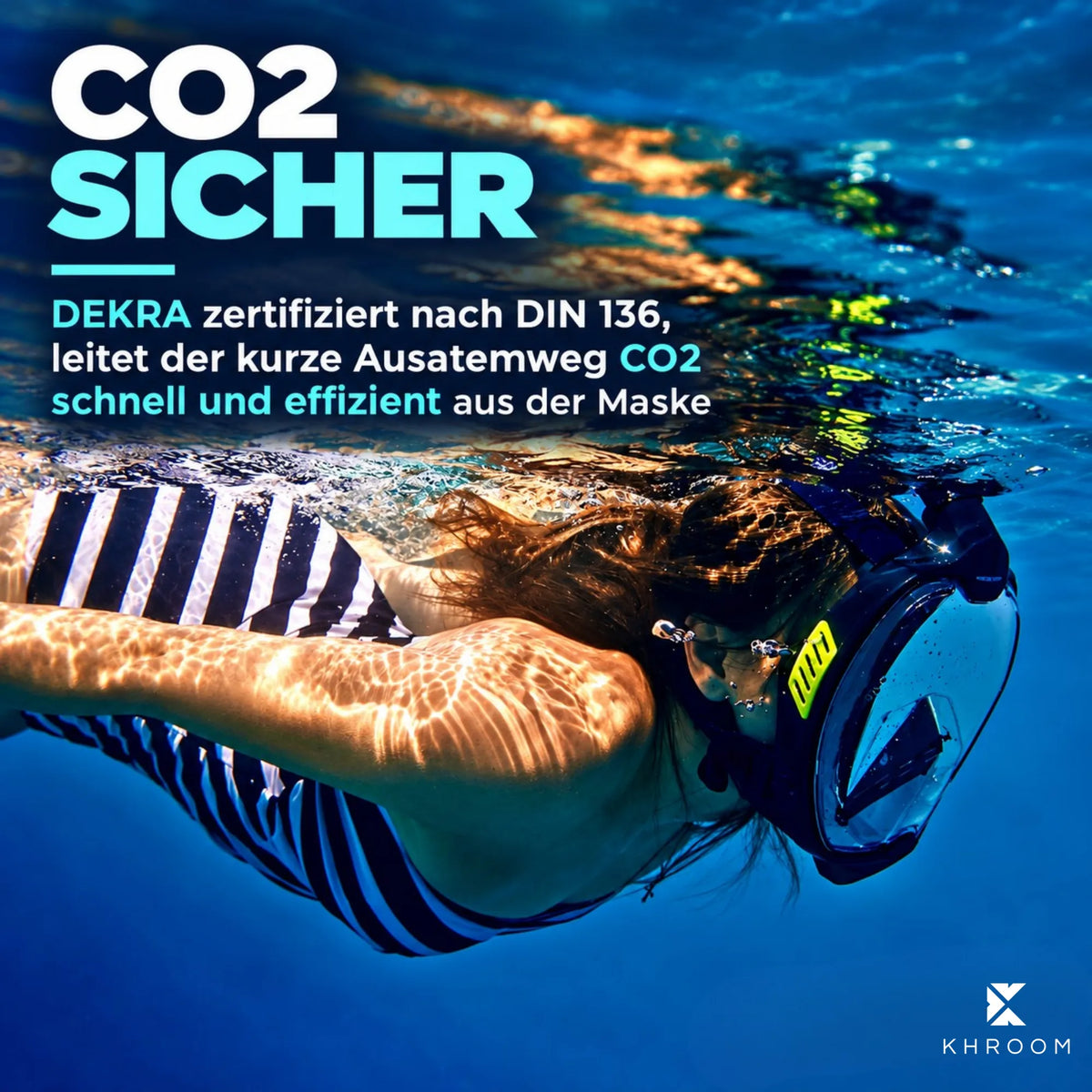
Scientific studies show that certain full-face snorkel mask designs may increase the risk of elevated CO₂ rebreathing (hypercapnia), particularly during physical exertion or when airflow management is suboptimal. The design of the breathing channels therefore plays a crucial role in overall safety.
Source
Studies and test series discuss several influencing factors, including the mask’s dead space volume, the routing of inhaled and exhaled air, valve systems, and the fit. The individual usage situation (e.g., physical exertion, breathing rate) is also relevant.
Source
Features considered safety-relevant include, among others, separate breathing channels for inhaled and exhaled air, properly functioning valve systems, reduced dead space volume, and a size that fits the user’s facial shape. These aspects are regularly addressed in test series and evaluations.
Source
Full-face snorkel masks are designed for relaxed snorkeling at the water surface. They are not intended for diving, apnea training, or intense physical exertion. Proper use is essential for safety.
Source
At Khroom, we base our size recommendation on body height, as this method is much more precise than measuring individual facial features. Using your height, you can quickly find the snorkel mask that fits perfectly, offering optimal comfort and a secure seal.
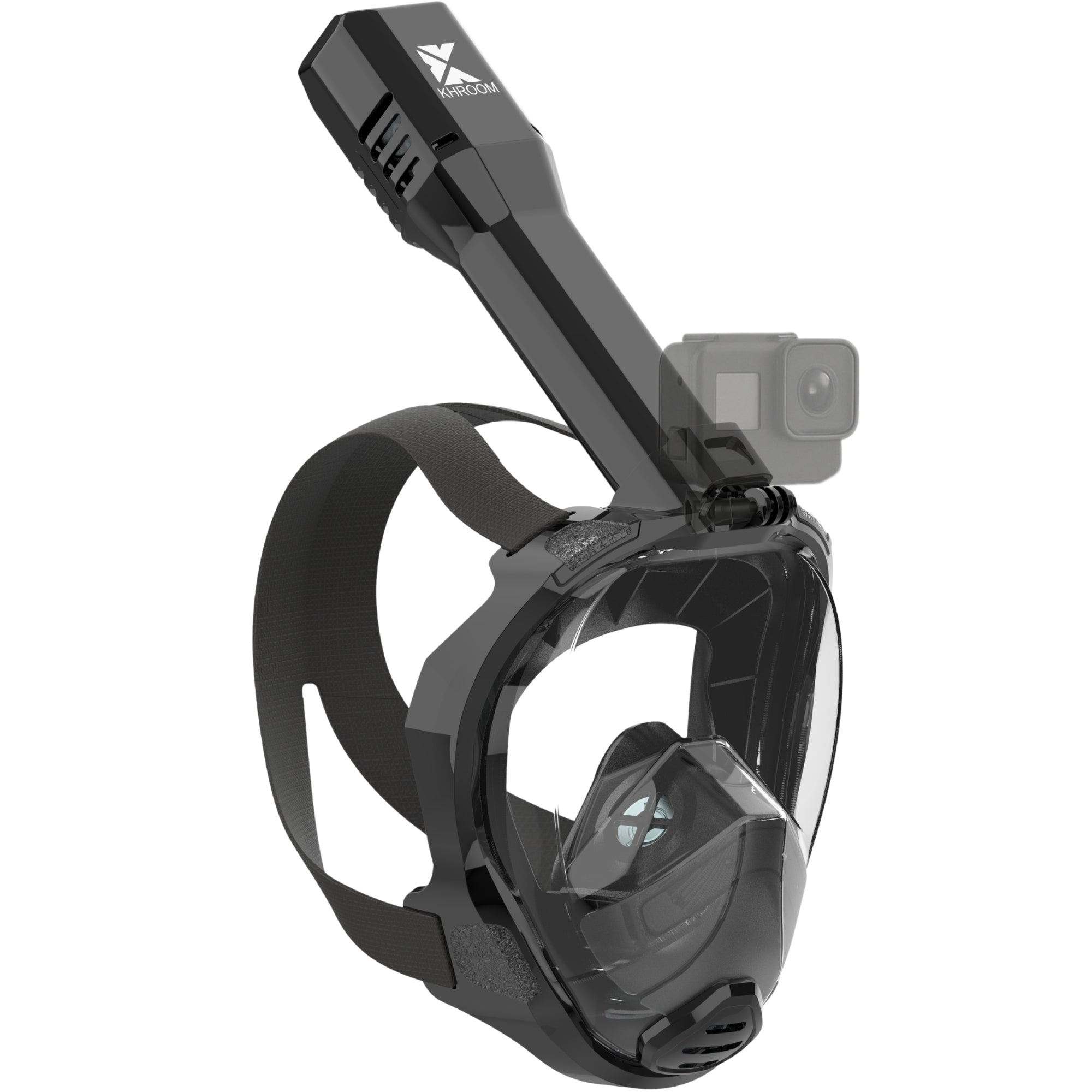
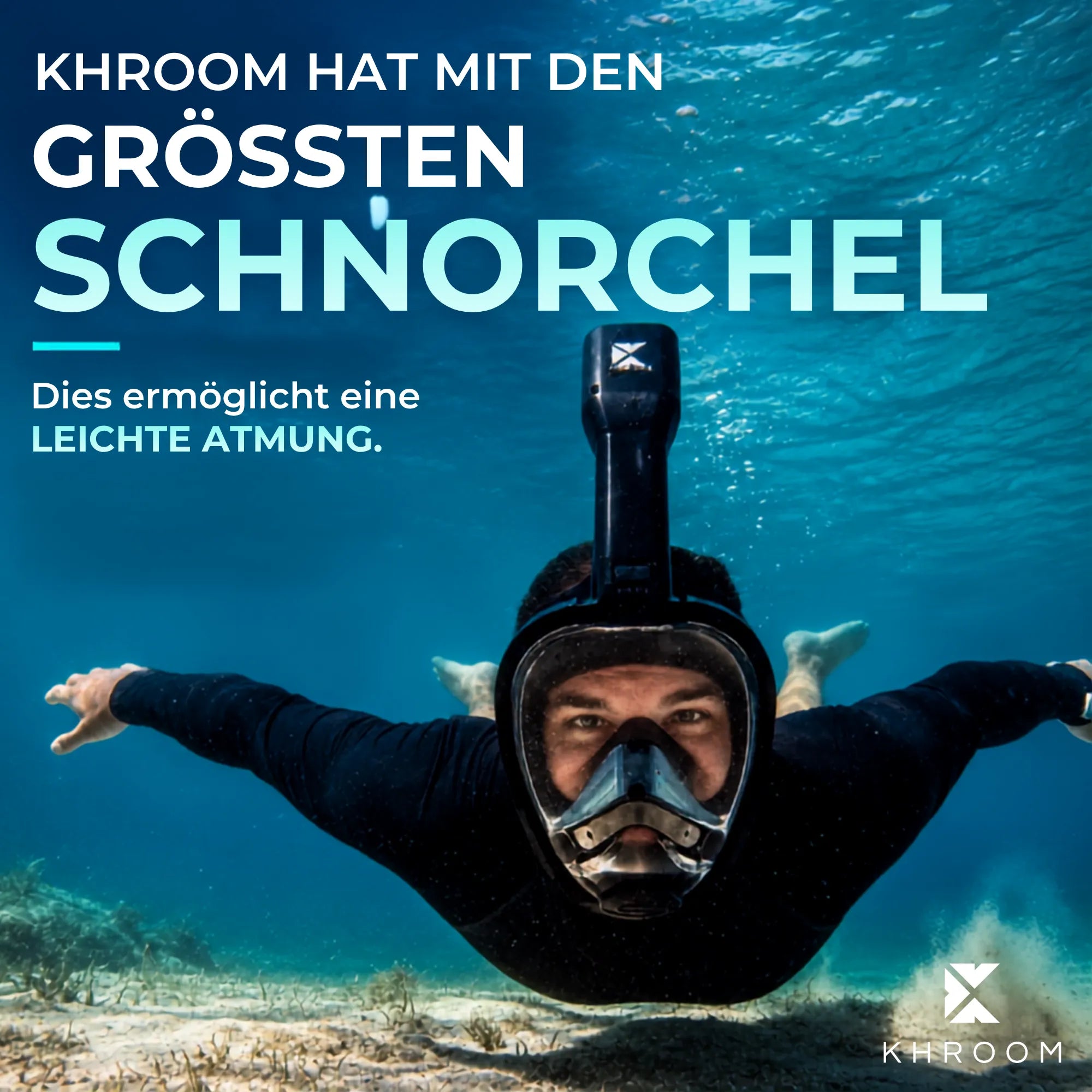
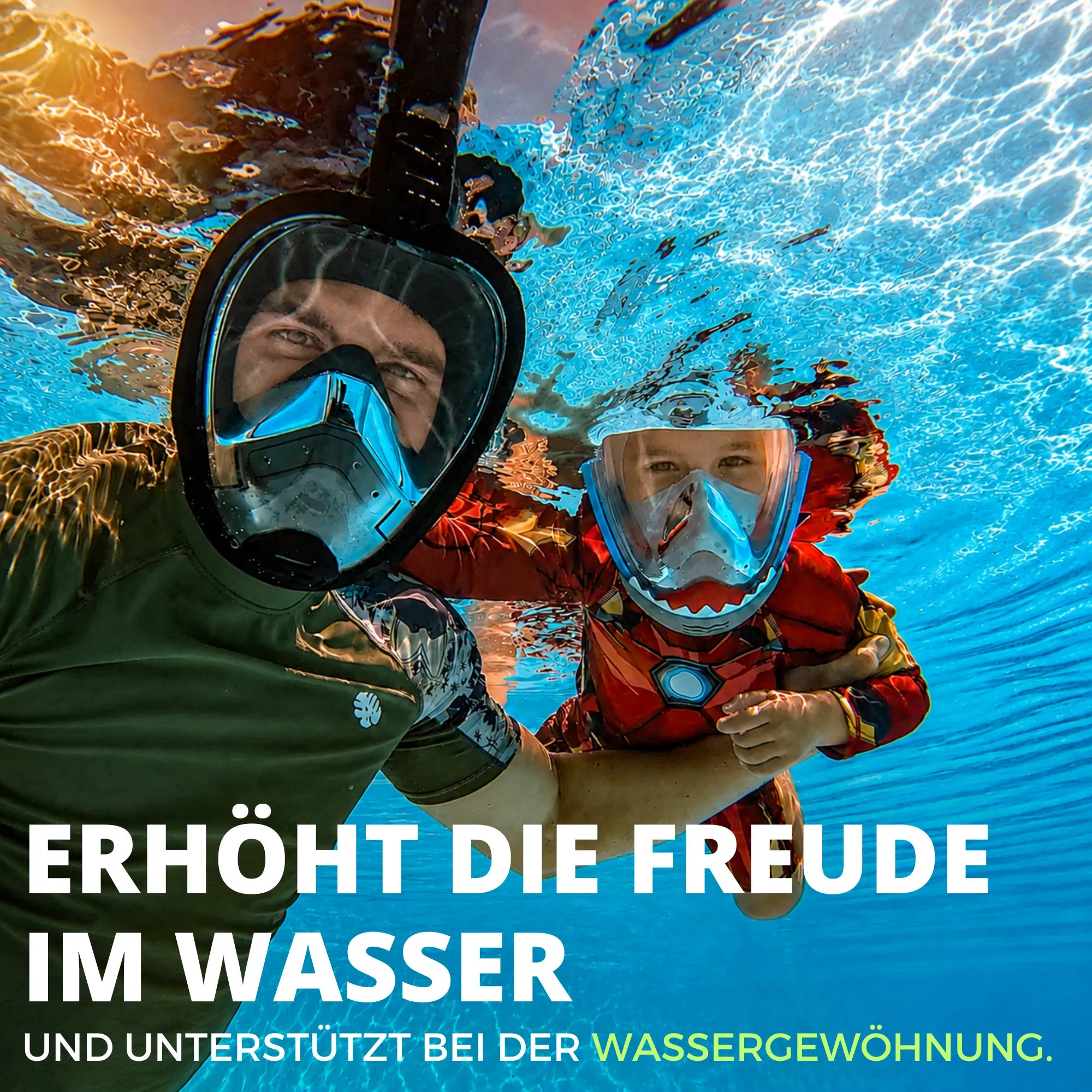
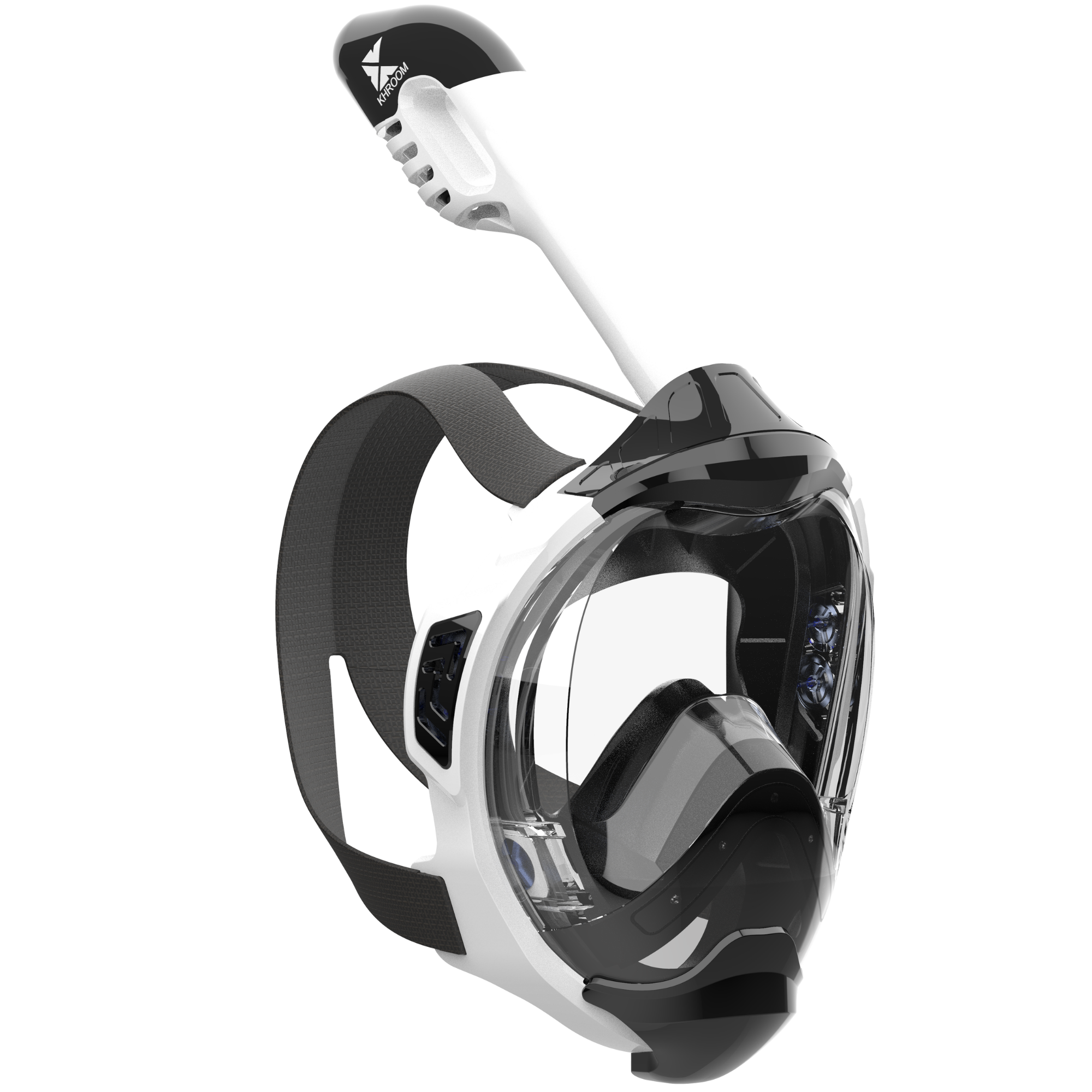
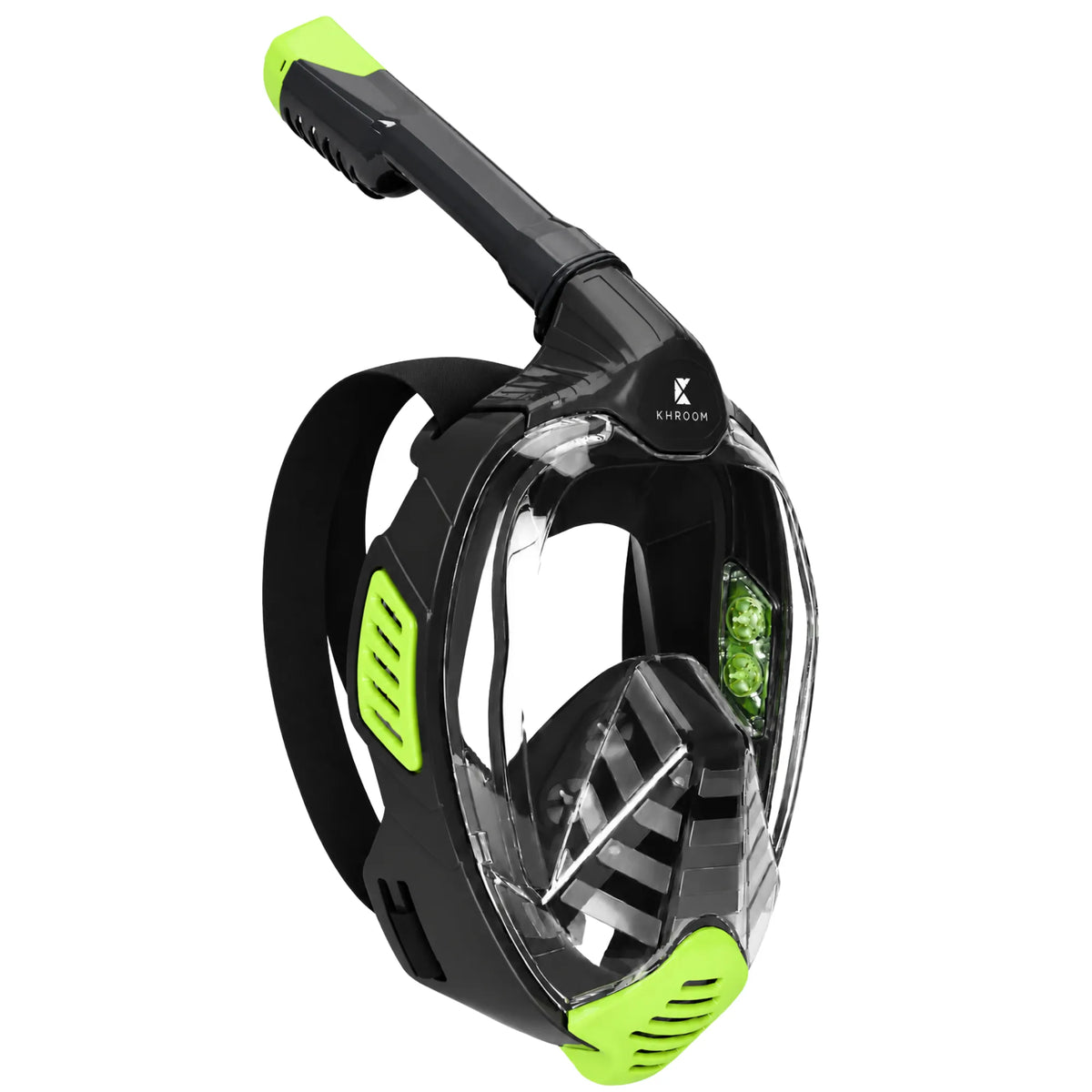
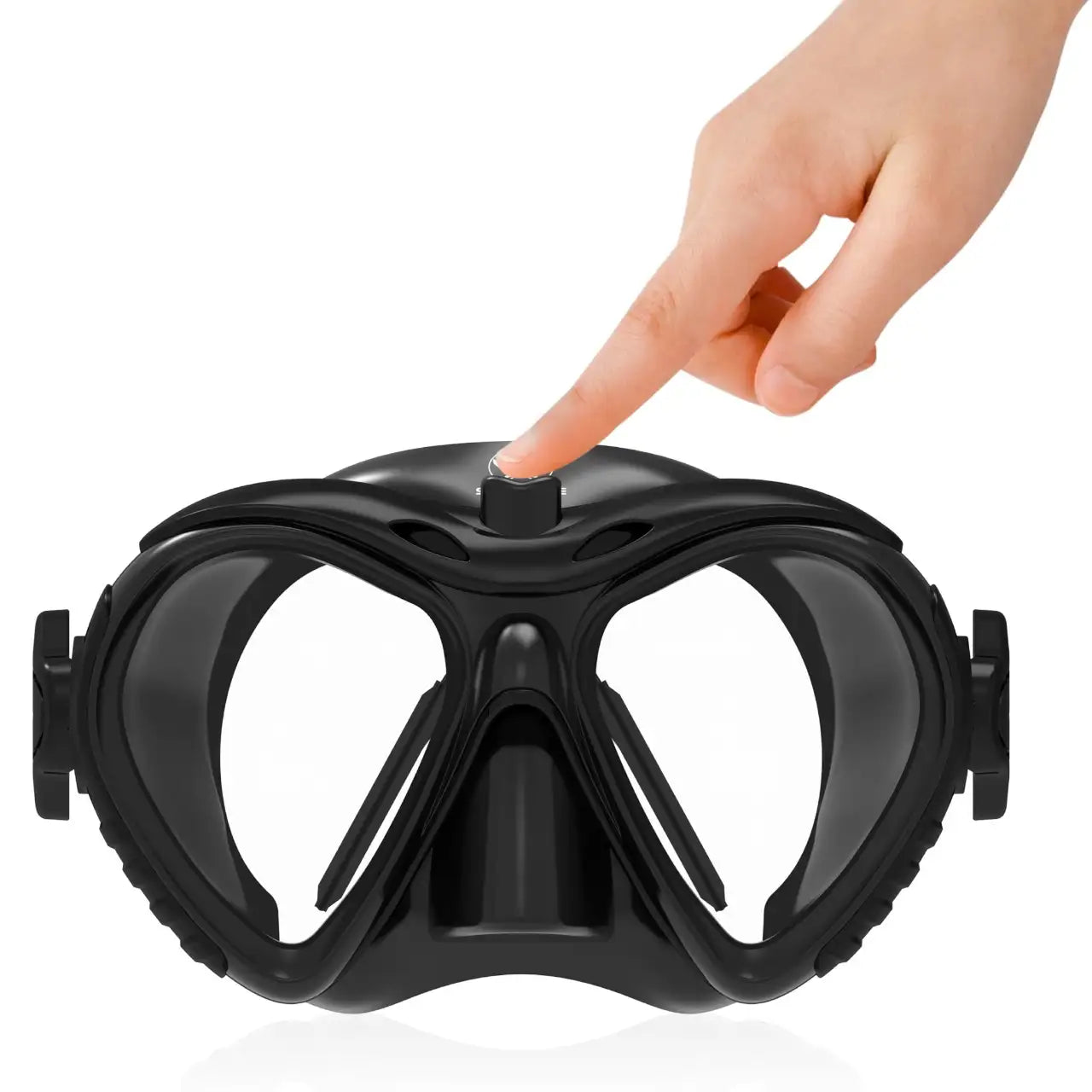
A snorkel mask combines the mask and snorkel in a single product. This makes breathing through both mouth and nose easier and provides a wider field of view. In contrast, traditional diving masks require a separate snorkel and offer a smaller field of view.
With our Khroom masks, you can dive to about 2–3 meters. For depths beyond that, a pressure equalization is required.
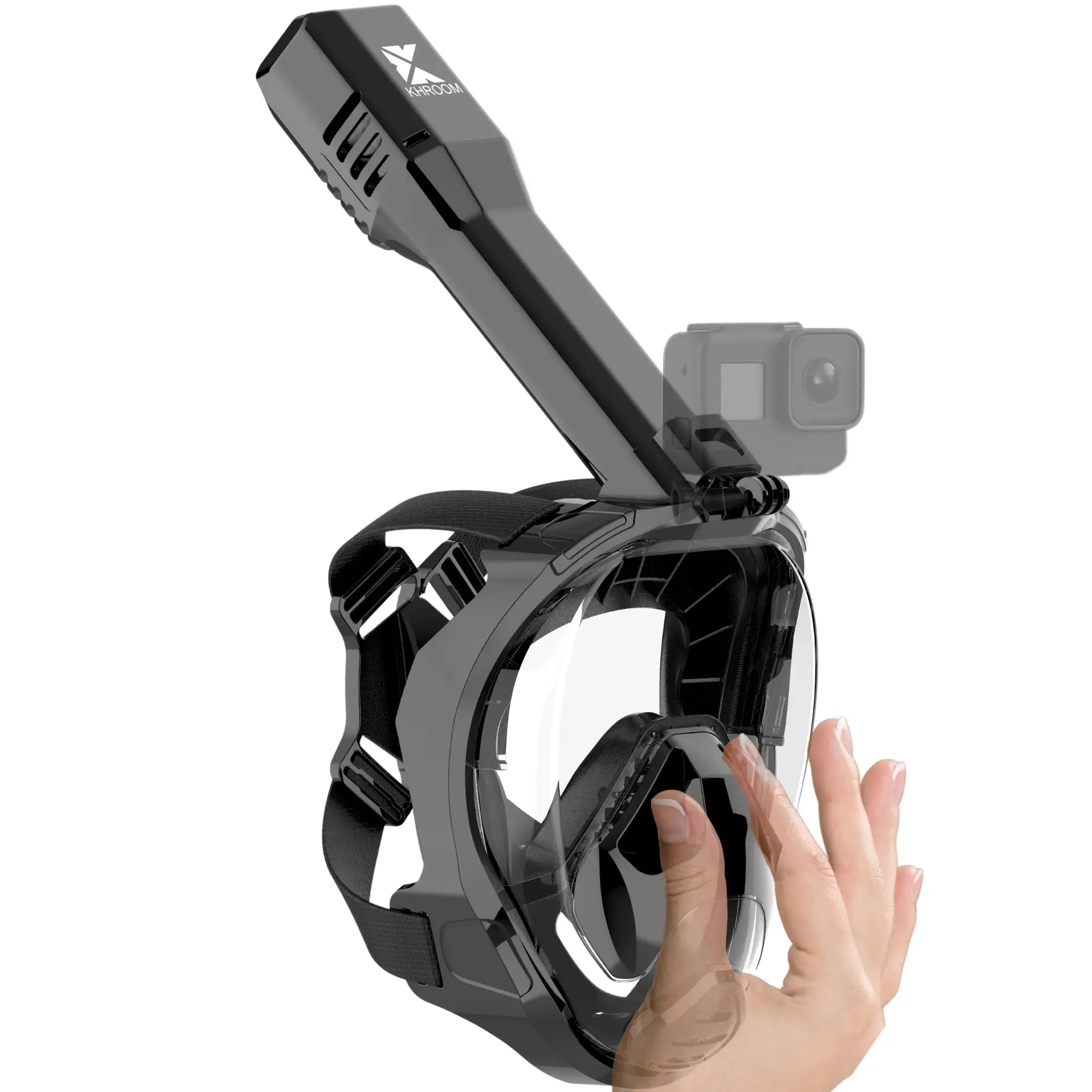
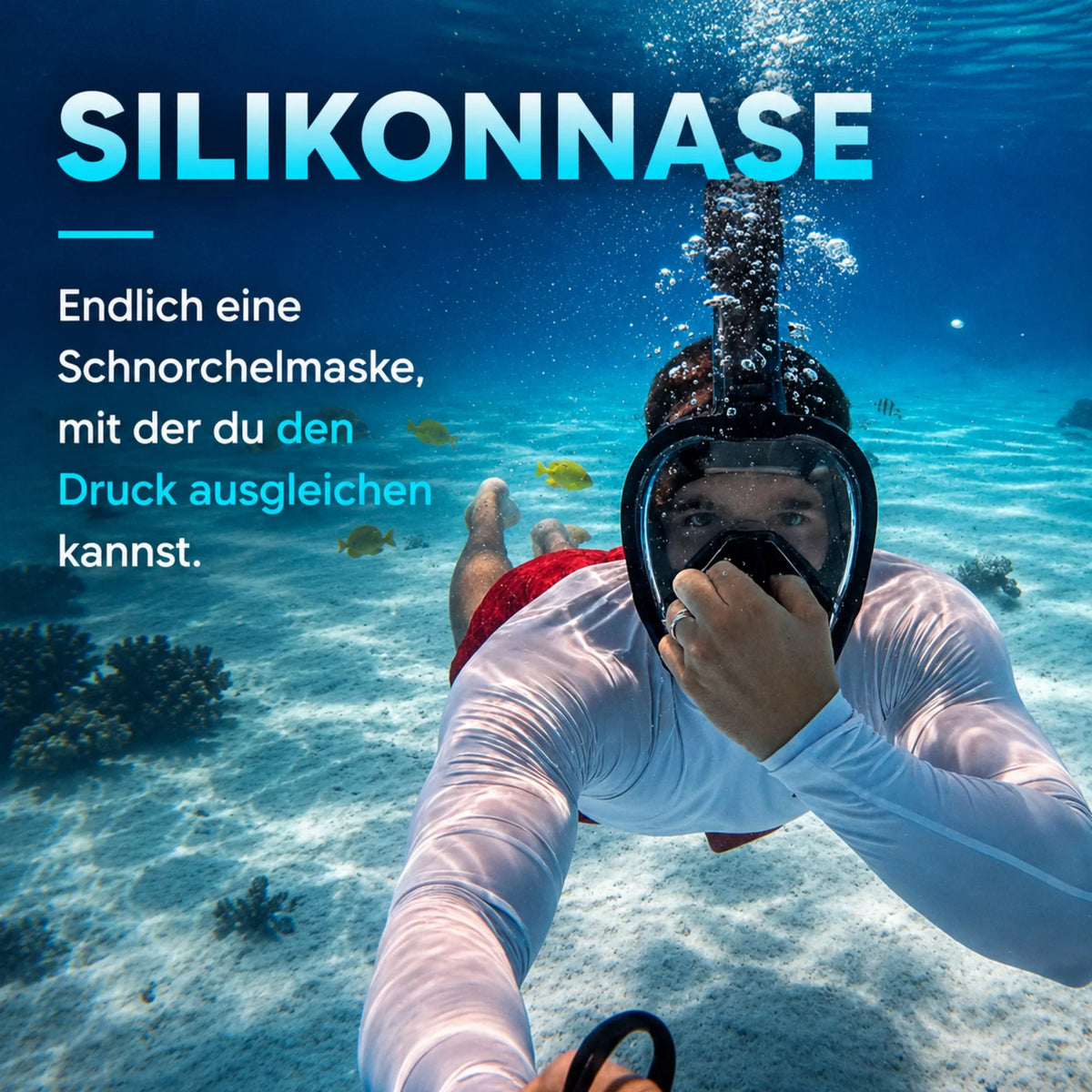
For greater depths, you’ll need a mask with pressure equalization: our Seaview Pro Plus features an integrated silicone nose and enables dives of around 8 meters.
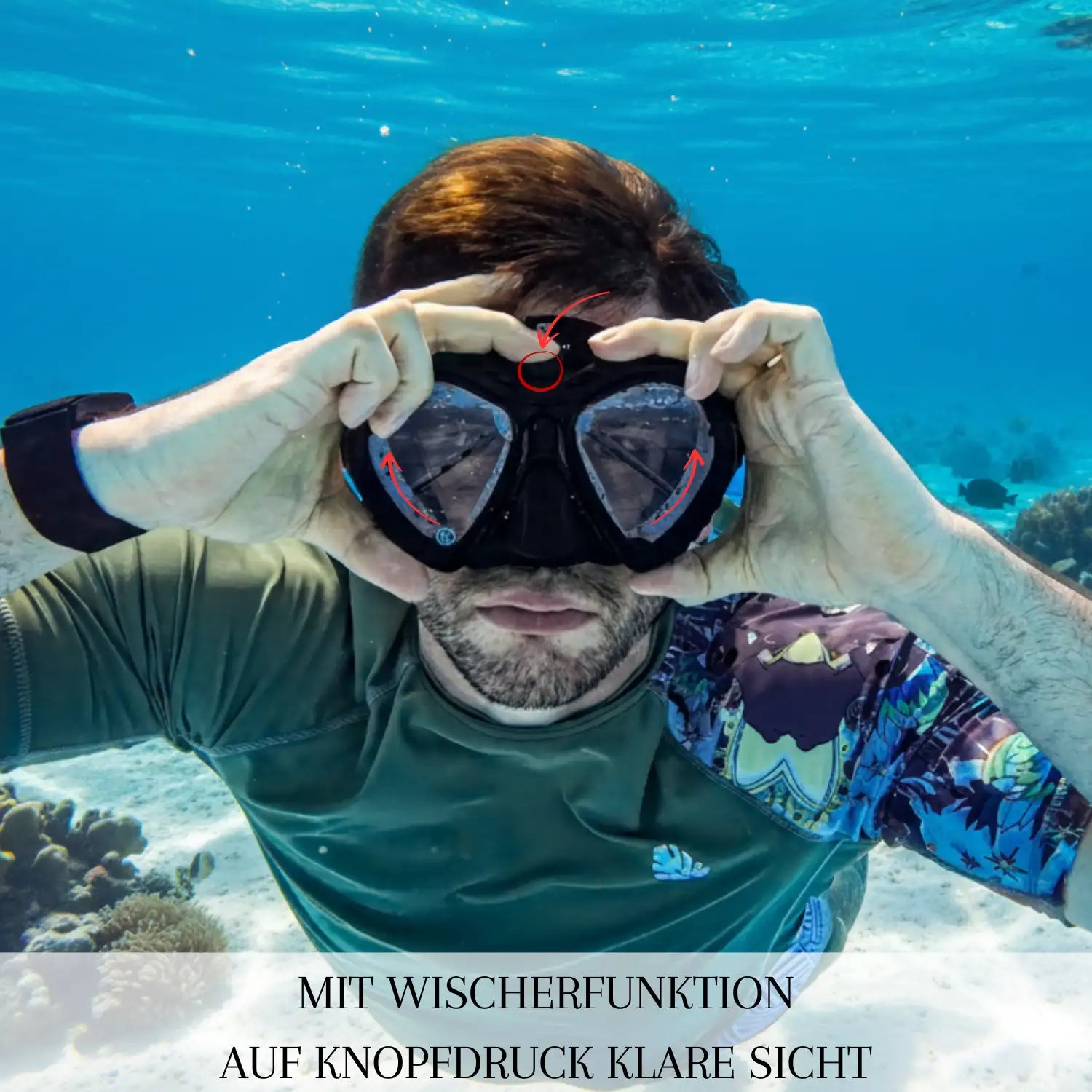
Important: You cannot breathe underwater with the mask—even if photos may suggest otherwise, you simply hold your breath.