Article: How We Develop Snorkel Masks: Safety, Testing & Responsibility at Khroom
How We Develop Snorkel Masks: Safety, Testing & Responsibility at Khroom
Khroom stands for safe snorkel masks – not colorful promises. Since 2017, we have been developing full-face snorkel masks with one clear goal: to give vacationers and families a mask they can truly trust while snorkeling. In this article, we transparently explain how our masks are developed, how they are tested, and which certifications support them.
Why we invest so much in safety
When full-face snorkel masks first came under public criticism a few years ago, one thing became clear: many manufacturers focused more on marketing than on engineering. Narrow breathing channels, missing standards-based testing, and paid marketing seals caused understandable concern. At the same time, the product category was still new, and long-term experience was limited.
Another issue was the rapid influx of copied masks from Asian suppliers. Many of these products entered the market at very low prices without real product know-how – often lacking proper air separation or verifiable testing.
Khroom chose the opposite path from the very beginning: we invest first in engineering, airflow design, and verifiable test reports – and only afterward in packaging and marketing. Our masks are developed according to clearly defined technical criteria and tested by independent laboratories.
From idea to finished mask: how we develop at Khroom
1. Analysis of risks and customer feedback
- Evaluation of feedback from thousands of snorkeling experiences in pools, coastal waters, and open sea.
- Comparison with critical reports and documented issues from competing products.
- Focus on airflow design, CO₂ rebreathing, valve technology, fit, and pressure points.
2. Engineering the breathing channels and valves
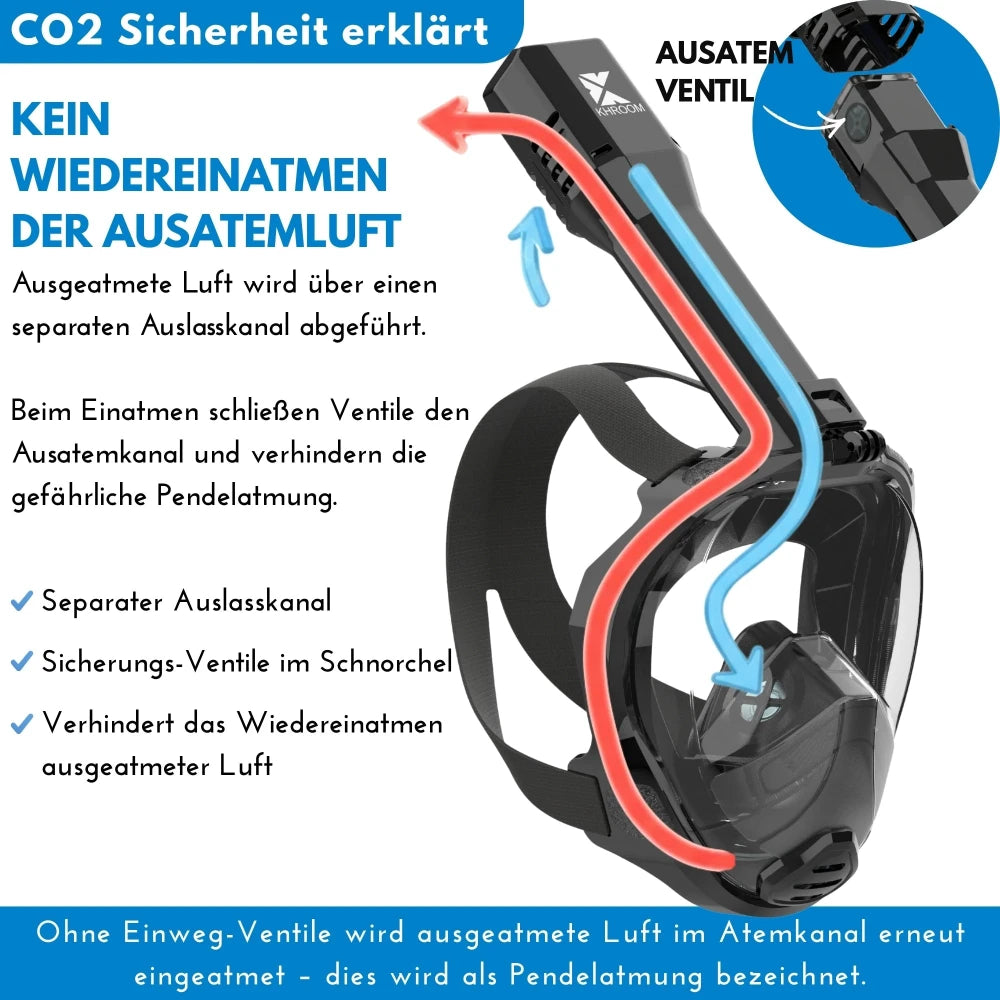
- Consistent separation of inhaled and exhaled air using principles known from respiratory protection technology.
- Large breathing channels for adults to reduce breathing resistance.
- Multi-chamber systems and safety valves that prevent exhaled air from being inhaled again.
3. Prototypes, testing, and optimization
- 3D prototypes and small pilot batches tested in pools and open sea.
- Measurement of CO₂ concentration inside the mask using independent laboratories such as TÜV Rheinland, DEKRA, or SGS.
- Optimization of airflow, sealing lips, and head straps until stable and safe results are achieved.
Our certifications at a glance
All Khroom full-face snorkel masks are tested for CO₂ rebreathing. In addition, selected models carry official certifications from internationally recognized testing institutes:
| Model | Target group | Testing institute | Test basis | Special feature |
|---|---|---|---|---|
| Seaview Kids | Children (approx. 3–10 years) | TÜV Rheinland | EN 136:1998, clause 7.18 (CO₂) | Certified children's mask with documented CO₂ safety. |
| Seaview X | Adults | DEKRA | EN 136:1998, clause 7.18 (CO₂) | Independently tested by DEKRA for CO₂ rebreathing. |
| Seaview Y | Adults | SGS | EN 136:1998, clause 7.18 (CO₂) | SGS-tested mask with reliable airflow separation. |
| Seaview Pro | Adults | SGS | CO₂ test according to EN 136:1998, clause 7.18 | Large breathing volume for particularly easy breathing. |
What does “tested” mean for snorkel masks?
The term “tested” is often used in marketing – but rarely explained. At Khroom, it means much more than a quick functional check:
- Measurement of CO₂ concentration in inhaled air.
- Testing valve function under different breathing frequencies.
- Leakage tests with different face shapes.
- Long-term tests evaluating materials, valves, and visibility.
Only when these criteria are fulfilled does a mask enter serial production at Khroom.
Even without laboratory equipment, certain design problems can often be identified with basic technical understanding. If exhaled air can flow back into the inhalation channel, so-called rebreathing occurs. The typical cause is missing valves or breathing channels that are too small – a clear design flaw.
Which tested snorkel mask is right for you?
For children (approx. 3–10 years): Seaview Kids
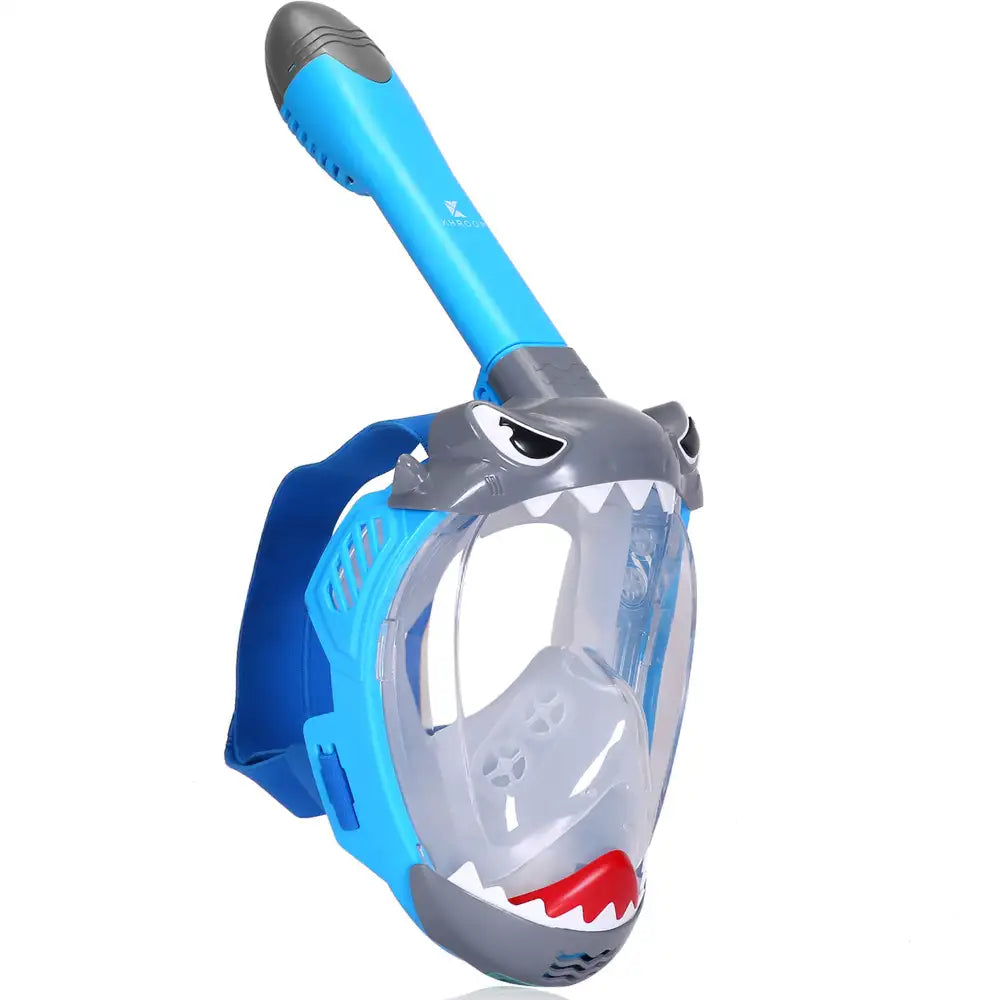
Our recommendation for children is the Khroom Seaview Kids. It was tested by TÜV Rheinland according to EN 136:1998, clause 7.18 and provides a child-specific fit with documented CO₂ safety.
Parental feedback confirms this in real-world conditions. One example from open sea snorkeling:
“Really great masks. Used not only in the pool but especially in the open sea and at the beach. Even in stronger waves, no water entered the mask.”
Source: Amazon customer review (verified purchase)
For adults seeking maximum comfort: Seaview Pro
If you snorkel frequently and want the most effortless breathing possible, the Seaview Pro is an excellent choice. Its large air volume and wide breathing channels provide a relaxed snorkeling experience at the surface.
For adults who want pressure equalization: Seaview Pro Plus
The Seaview Pro Plus is based on the Seaview Pro but additionally includes an integrated pressure-equalization system – ideal for users who occasionally want to dive slightly below the surface.
For price-conscious users: Seaview Y
The Seaview Y is an SGS-tested full-face mask with excellent value for money – ideal for occasional snorkeling trips.
Why we do not use paid marketing seals
Many so-called “test seals” are linked to annual payments rather than to technical standards like EN 136. They may look official but often provide no measurable information about CO₂ levels or airflow design.
Instead, Khroom relies on:
- clearly stated standards (for example EN 136:1998, clause 7.18),
- named testing institutes (TÜV Rheinland, DEKRA, SGS),
- publicly accessible original test reports.
This approach ensures transparency – independent of marketing claims.

Written by Christian Hanauer