
Frequently Asked Questions About Snorkel Masks — Complete Guide
Snorkel Mask Guide — Key Takeaways:
Full face vs. traditional: Full face masks = breathing through mouth and nose, 180° view, no mouthpiece — significantly more comfortable
CO₂ safety: Critical. Only masks with separated airflow and one-way valves are safe — Khroom masks are SGS/TÜV-tested
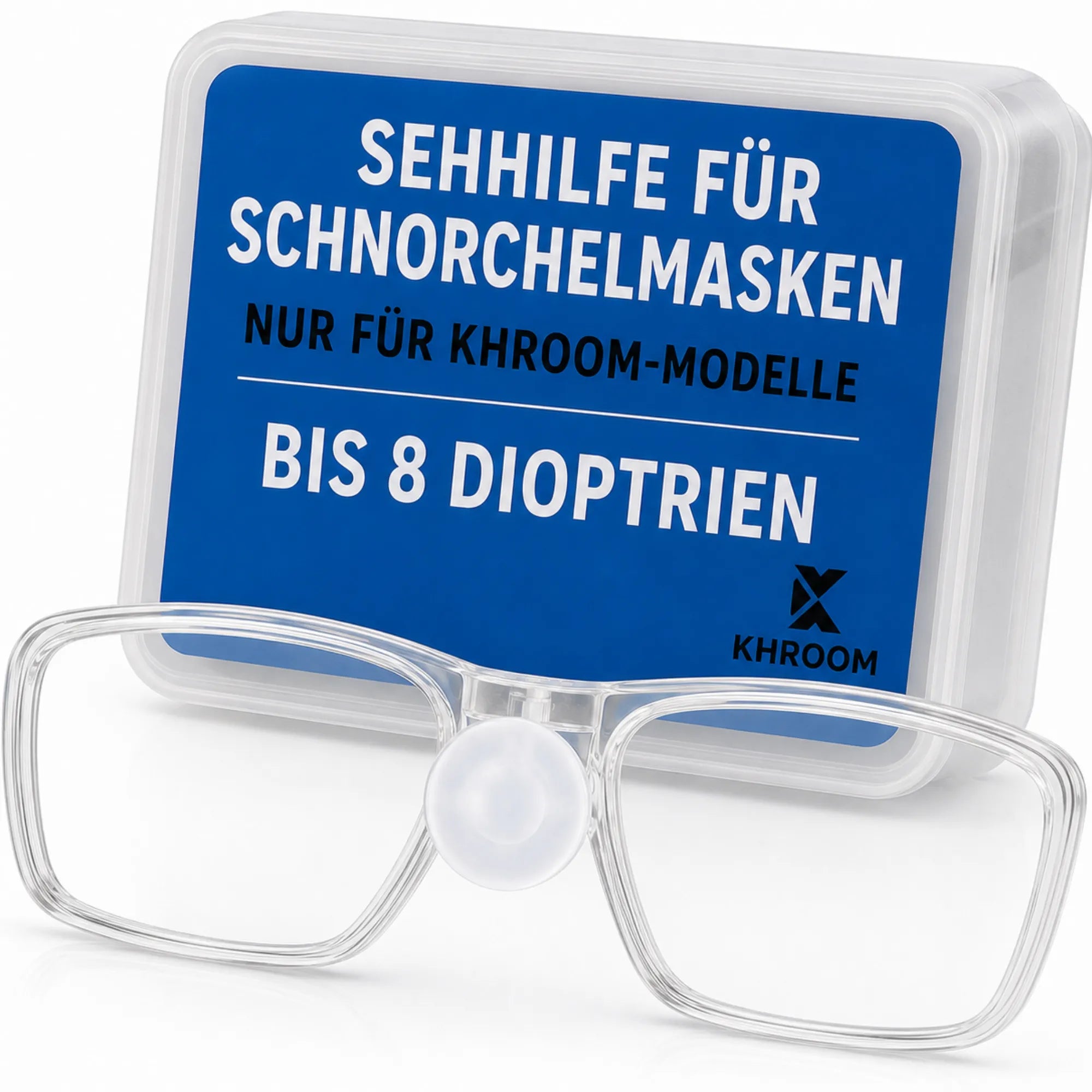
Glasses wearers: Optical lens inserts from −8.0 to +8.0 diopters can be placed directly into the mask
Got questions about snorkel masks? Here you will find everything you need to know — from the basics ("What's the difference between a full face mask and a traditional set?") to the critical topic of CO₂ safety, sizing guide, glasses wearer solution, and troubleshooting when something doesn't fit perfectly right away.
1. Full Face Mask vs. Traditional Snorkel Set
A traditional snorkel set consists of separate dive goggles and a snorkel that you hold with your mouth. This means: breathing only through the mouth, the mouthpiece creates pressure after a while and triggers a gag reflex in many people. On top of that, dive goggles significantly limit your field of view.
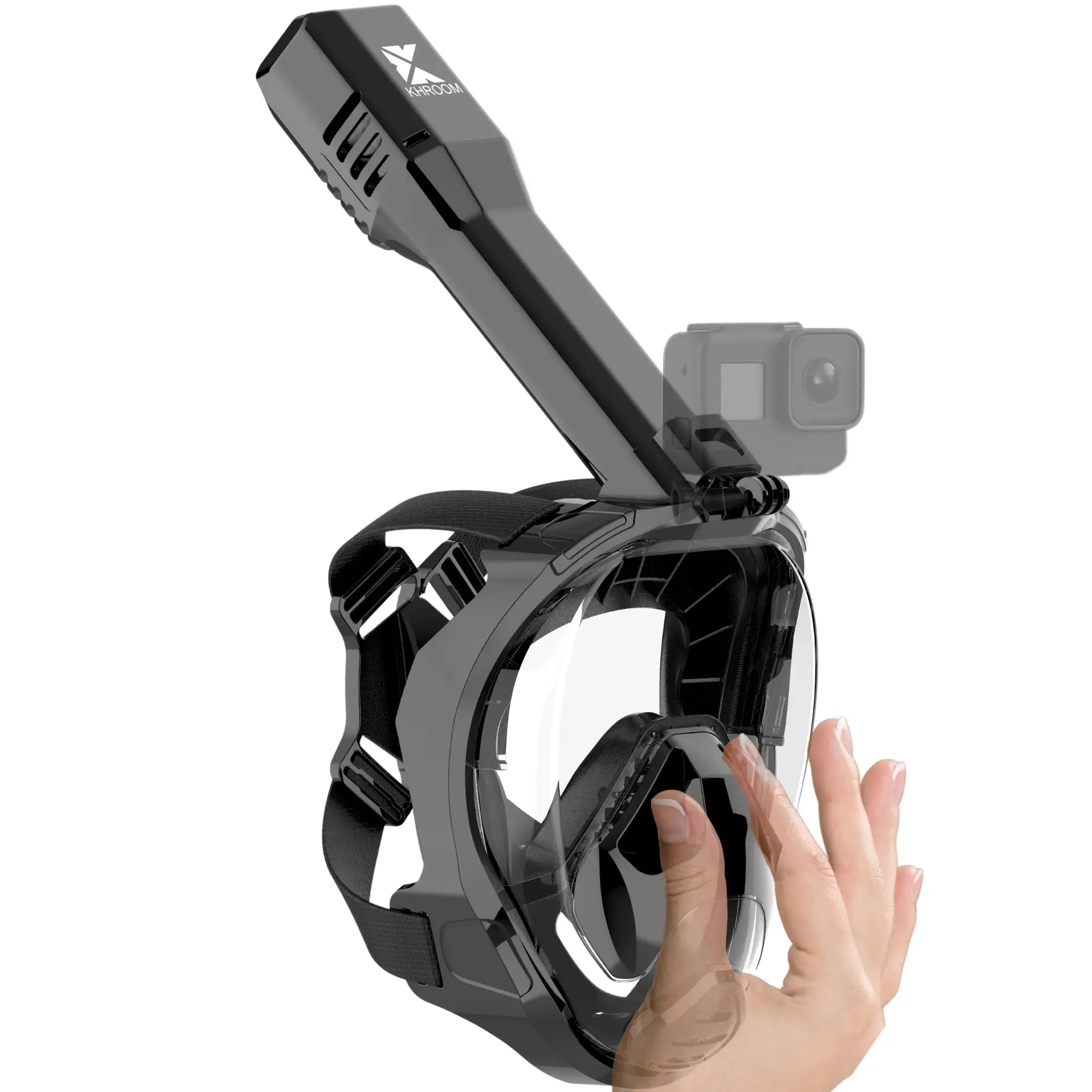
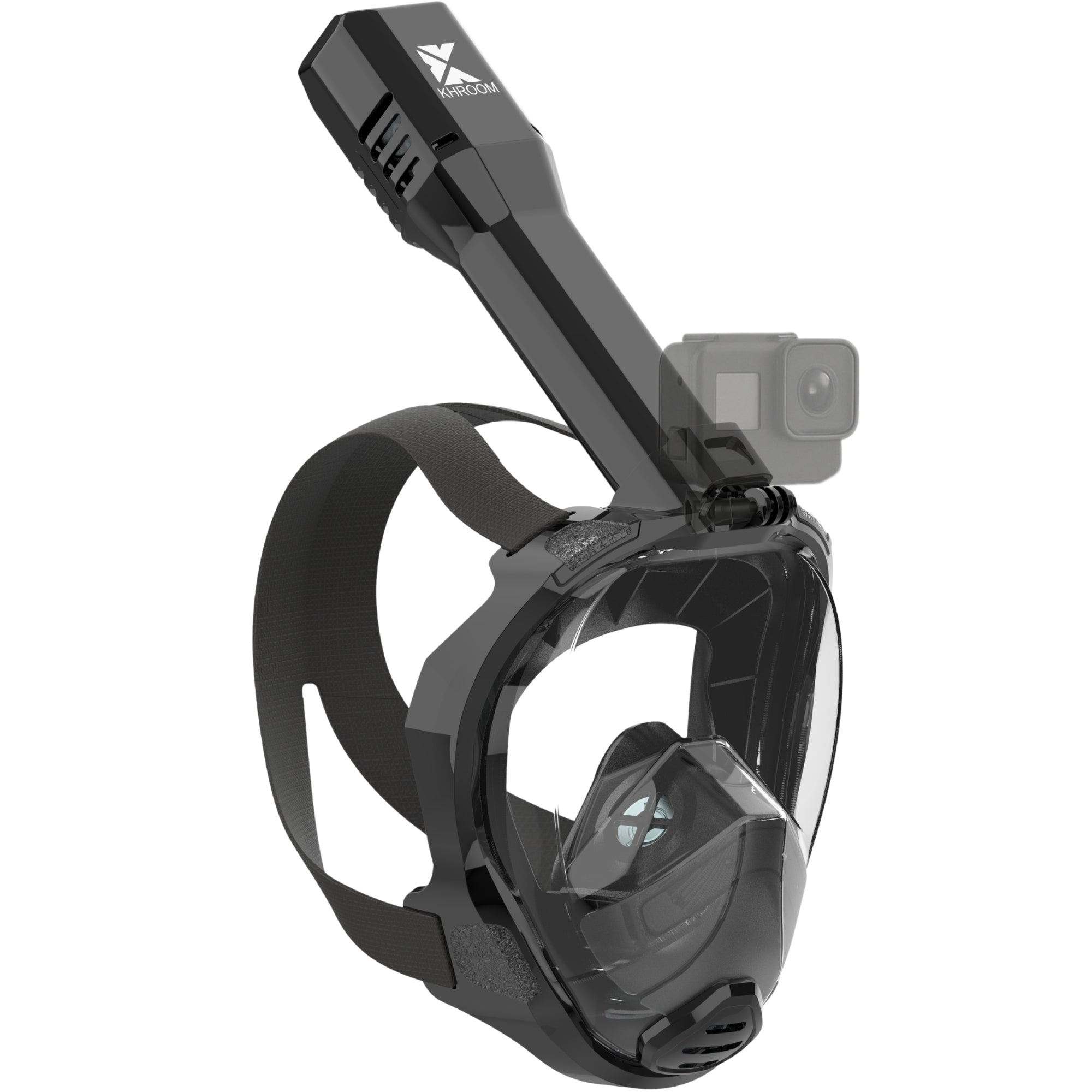
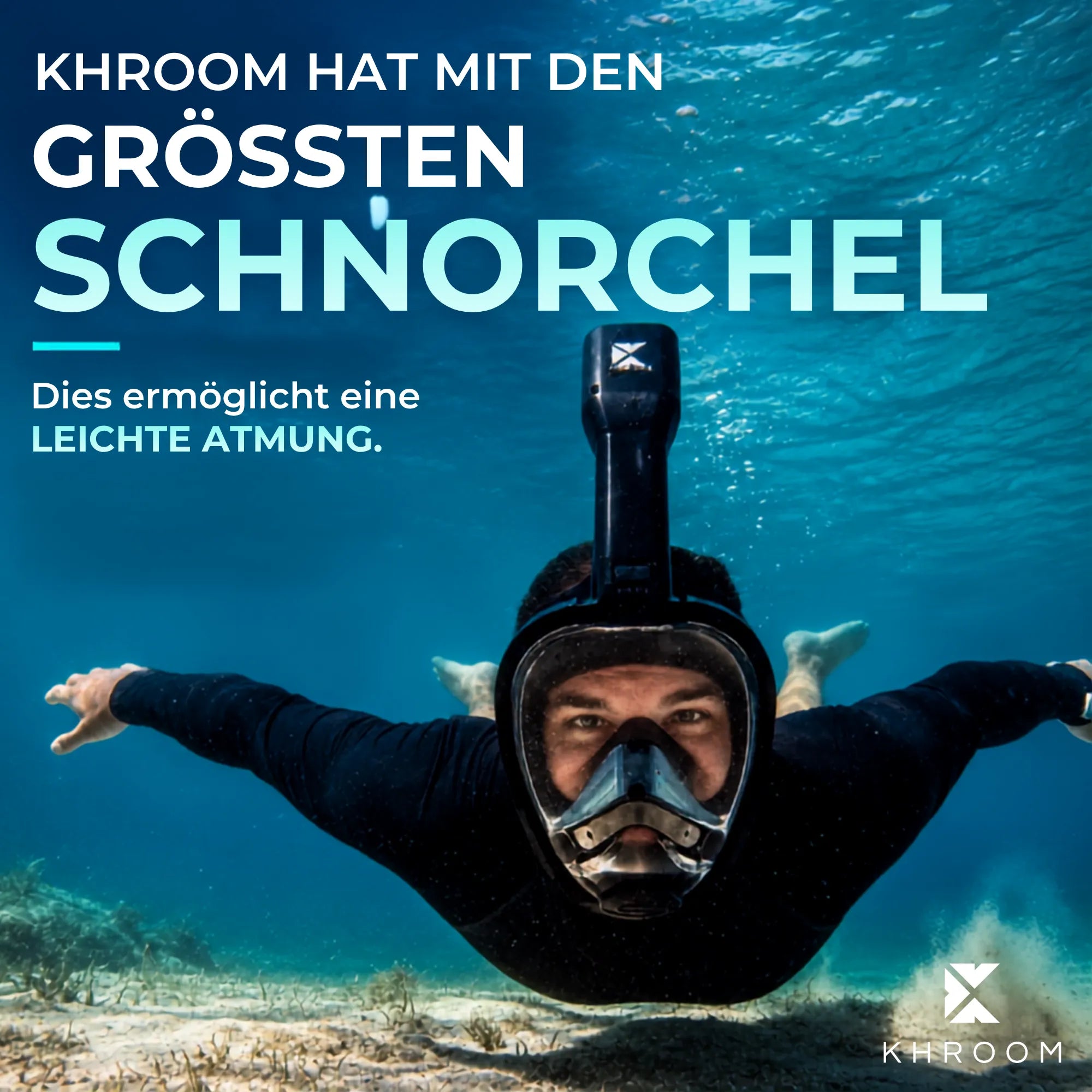
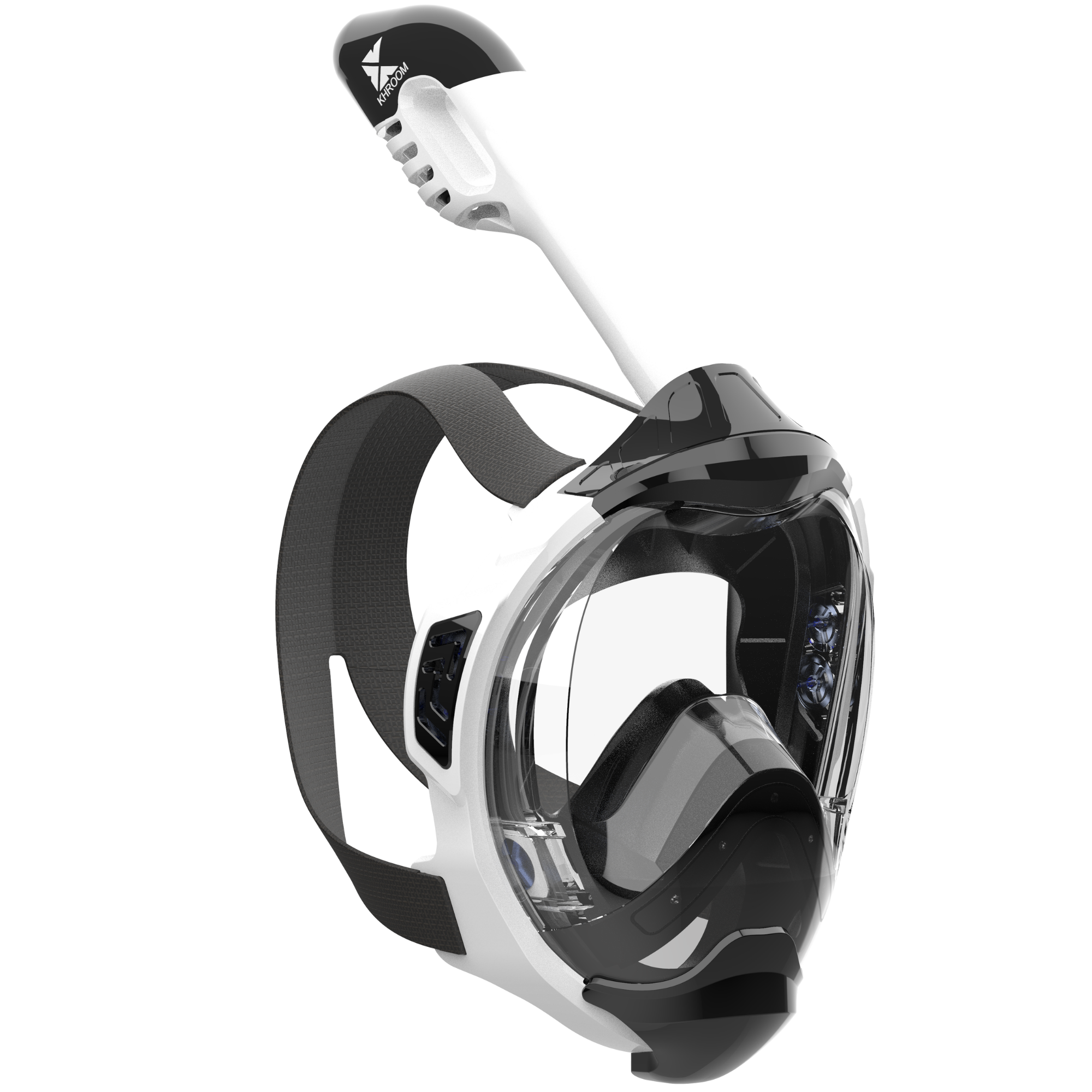
A full face snorkel mask covers your entire face. You breathe completely naturally through your mouth and nose — just like on land. Add to that a 180° field of view that gives you a much better look at the underwater world. No mouthpiece, no pressure, no gag reflex.
| Feature | Traditional Set | Full Face Mask |
|---|---|---|
| Breathing | Mouth only | Natural, through mouth and nose |
| Field of view | Limited (goggle format) | 180° panorama |
| Comfort | Mouthpiece causes pressure, gag reflex possible | No mouthpiece, relaxed snorkeling |
| Fogging | Common problem | Integrated anti-fog system |
| Diving down | Pressure equalization possible | Only with Seaview Pro Plus (pressure equalization) |
| Ideal for | Experienced divers/freedivers | Beginners, families, casual snorkelers |
For vacationers, beginners, and anyone who wants to snorkel comfortably and safely, full face snorkel masks are the better choice.
2. CO₂ Safety: What Really Matters
CO₂ safety is the topic when it comes to full face masks — and the most important difference between a quality mask and a cheap one. With budget masks that lack a proper ventilation system, exhaled CO₂ accumulates inside the mask. The consequences: headaches, dizziness, and in the worst case, loss of consciousness in the water.
How Khroom Masks Prevent CO₂ Buildup
All Khroom masks have a separate ventilation system with separated airflow: fresh air enters from the top through the snorkel, exhaled air is channeled out through one-way valves in the exhale channel on the sides. These valves only open when exhaling and close when inhaling — this prevents CO₂-laden air from being re-inhaled.
- Seaview Pro: SGS-certified to EN 136:1998 §7.18 — SGS test report (PDF)
- Seaview Kids: TÜV-certified — especially important for children's masks — TÜV test report (PDF)
- Seaview Y: SGS-certified to EN 136:1998 — SGS test report (PDF)
In depth: Dangers of CO₂ Buildup in Snorkel Masks
3. Which Model Is Right for You?
Seaview Pro — The All-Rounder
Our best-selling model. 180° panoramic view, CO₂-safe (SGS-tested), anti-fog system, dry-top snorkel. For beginners and experienced snorkelers alike — fits practically every face. Bestseller and best value.
Seaview Pro Plus — With Pressure Equalization
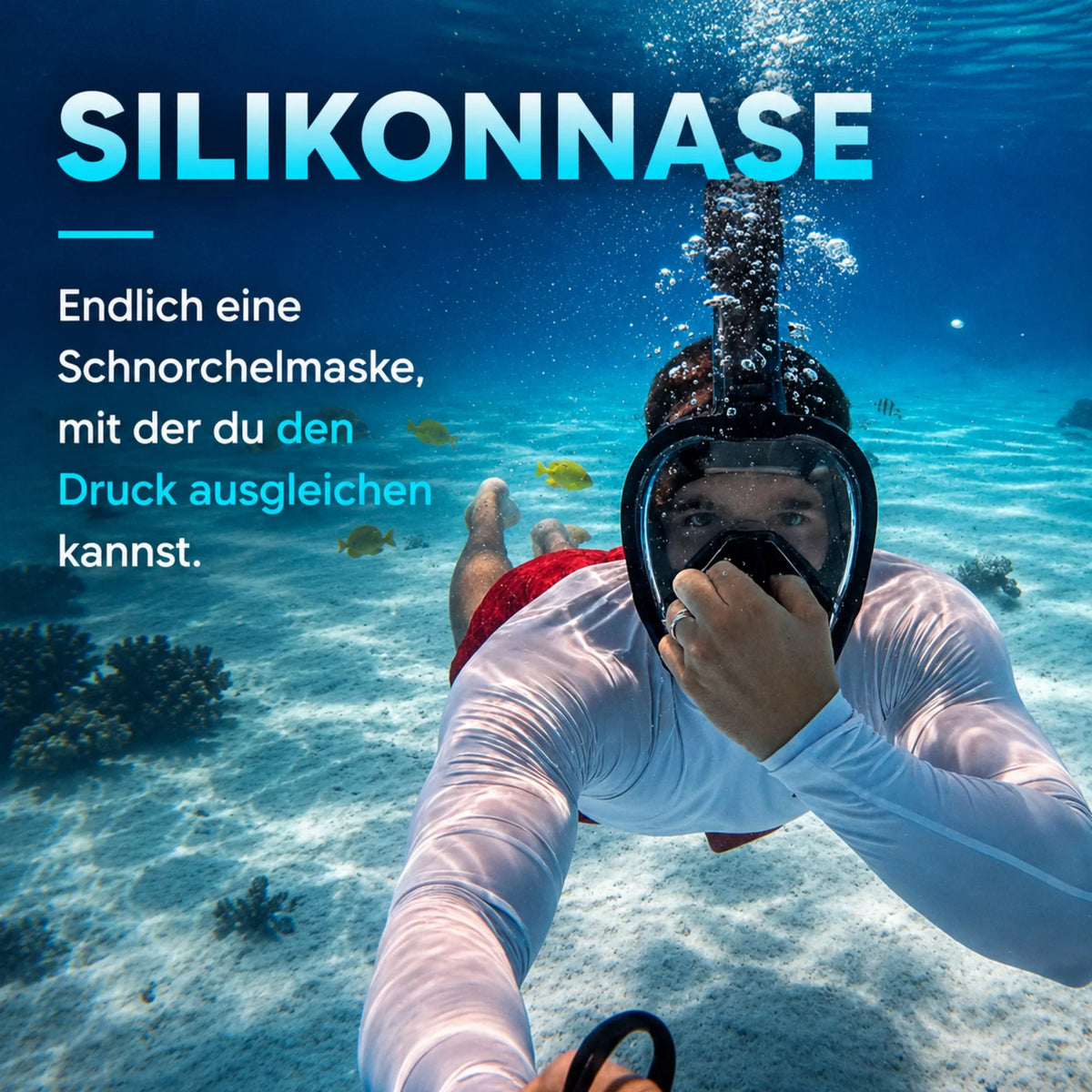
Everything the Pro offers, plus an integrated silicone nose for pressure equalization and a quick-release buckle. Allows controlled diving down to approximately 26 ft (8 m) — as one of the few full face masks on the market. For experienced snorkelers who also want to dive down. Our flagship.
Seaview Y — For Narrow Faces
Our narrowest model. SGS-certified. Ideal if the Seaview Pro doesn't seal on the sides — typical for narrow or small face shapes. Same technology and safety as the Pro, but a narrower silicone frame.
Seaview Kids — For Children Ages 4 and Up
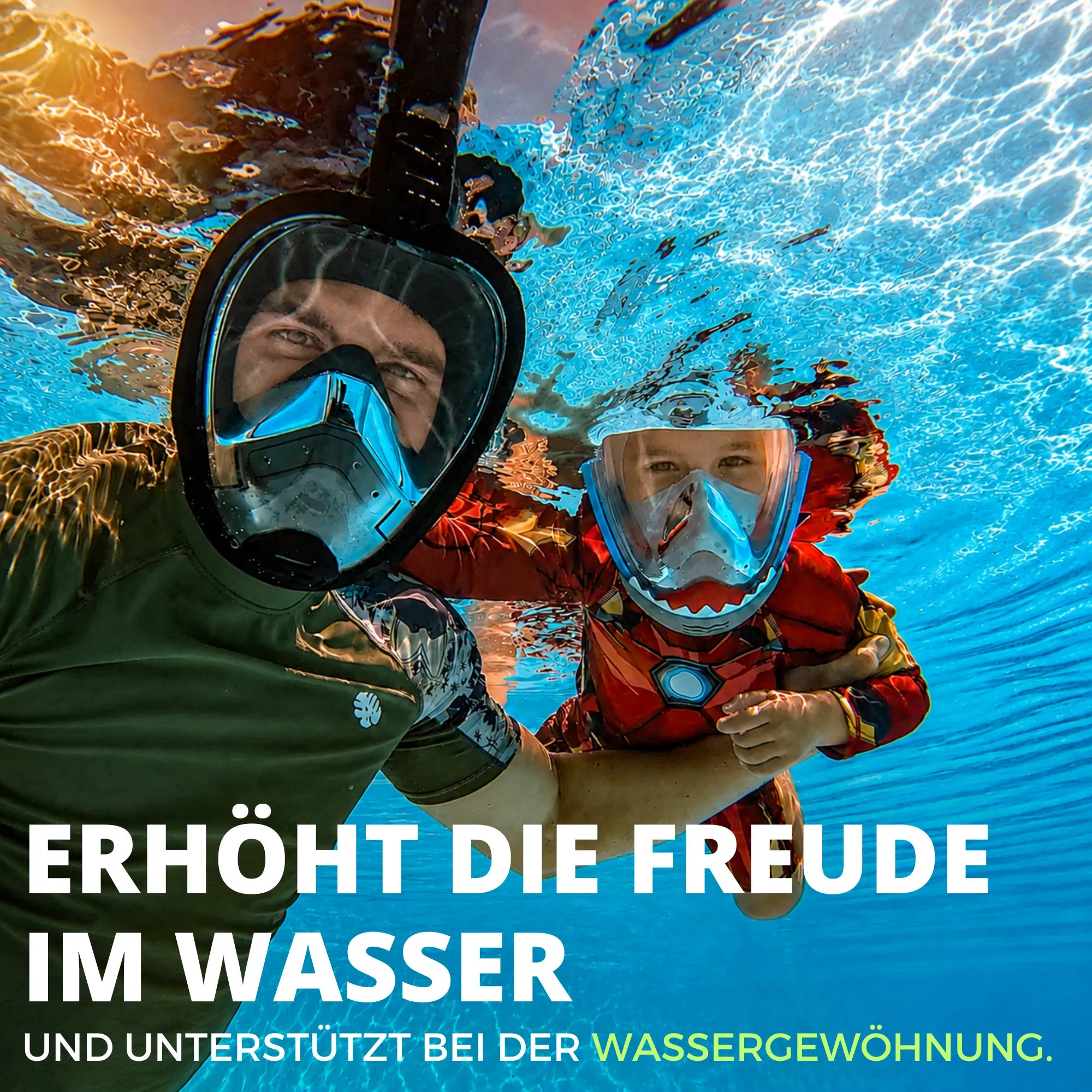
The only children's snorkel mask with a TÜV certificate. Specifically designed for children's faces, with kid-friendly designs (shark, unicorn, dog). Especially safe ventilation system — CO₂ safety is even more important for children because they breathe faster. Size XS for toddlers, S/M for older children.
All models at a glance: Khroom masks in the shop | Detailed comparison: Snorkel Mask Test 2026
4. Finding the Right Size
With Khroom masks, sizes differ only in the height of the silicone frame, not in width. The rule of thumb is simple:
| Size | Recommendation | Models |
|---|---|---|
| S/M | Up to approx. 5'7" / 170 cm | Pro, Pro Plus, Y, Kids |
| L/XL | 5'7" / 170 cm and above | Pro, Pro Plus, Y |
| XS | Toddlers up to approx. age 4 | Kids only |
Snorkeling with a Beard
Light stubble (approx. 3–5 mm / 0.1–0.2 in) is generally not a problem. With a longer full beard, however, the mask can no longer seal reliably — the beard hairs interrupt the contact between silicone and skin. In that case, we recommend trimming the beard in the area where the mask sits.
5. Snorkeling with Glasses — The Solution for Glasses Wearers
Unfortunately, regular glasses don't fit under the mask — the arms would lift the silicone frame and let water in. Contact lenses are an option, but uncomfortable and risky in saltwater.
Our solution: Optical prescription lenses from −8.0 to +8.0 diopters that are placed directly into the mask. Left and right lenses can have different strengths and are ordered separately. They fit all Khroom masks (Pro, Pro Plus, Y, Kids).
Detailed guide with installation instructions and anti-fog tips: Snorkel Mask for Glasses Wearers
6. Troubleshooting: Fogging, Water & Noises
Mask Fogs Up
Our masks have an anti-fog system that significantly reduces fogging. If it happens anyway, it is almost always caused by the side valves:
Solution: Clear the Valves
Check whether the side valves are exposed and not jammed. Put on the mask, hold one side closed, and exhale forcefully — this can dislodge any stuck valves. As a general rule: the better the mask fits, the less it fogs.
Water Gets In
In most cases, the mask is not defective. Here are the most common causes and solutions:
Water When Diving Down
Physically normal. The increasing water pressure compresses the air inside the mask, and water flows in to equalize the pressure difference. When you surface, it drains automatically through the outlet valve at the chin.
Water from the Sides (at the Surface)
The valves are not lying flat. Solution: put on the mask, hold the opposite side closed, and exhale forcefully. This pushes the valves into position.
Water at the Forehead
A few drops when first entering the water are normal — the dry-top mechanism needs a moment to close. Keep the snorkel as vertical as possible for the most reliable seal.
Snorkel Rattles
Completely normal. The noise comes from the dry-top ball inside the snorkel cap — it moves freely in its cage and rattles when you move. This has no effect on function and is not a defect.
How Does the Dry-Top Closure Work?
At the top of the snorkel, a small ball sits inside a cage. As soon as the snorkel goes underwater, the ball rises and seals the opening — no water gets in. When you surface, the ball drops back down and airflow is immediately restored.
Plastic Smell on a New Mask
New masks may have a slight silicone/plastic smell. This dissipates within 1–2 days in fresh air. Our masks use medical-grade silicone without plasticizers — the smell is harmless and disappears on its own.
7. Care & Replacement Parts
After each use, rinse the mask with fresh water, let it air dry, and protect it from direct sunlight (UV makes silicone brittle over time). Occasionally check the dry-top mechanism on the snorkel — the ball must be able to move freely.
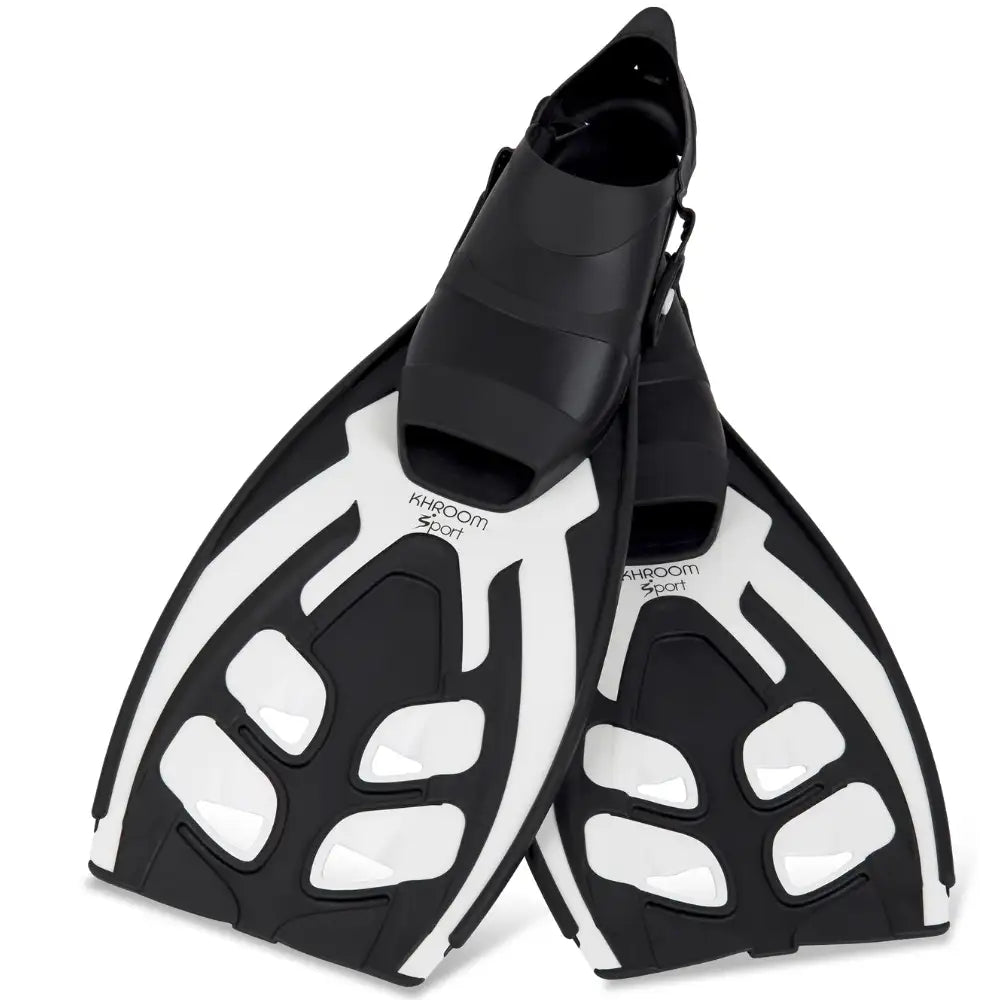
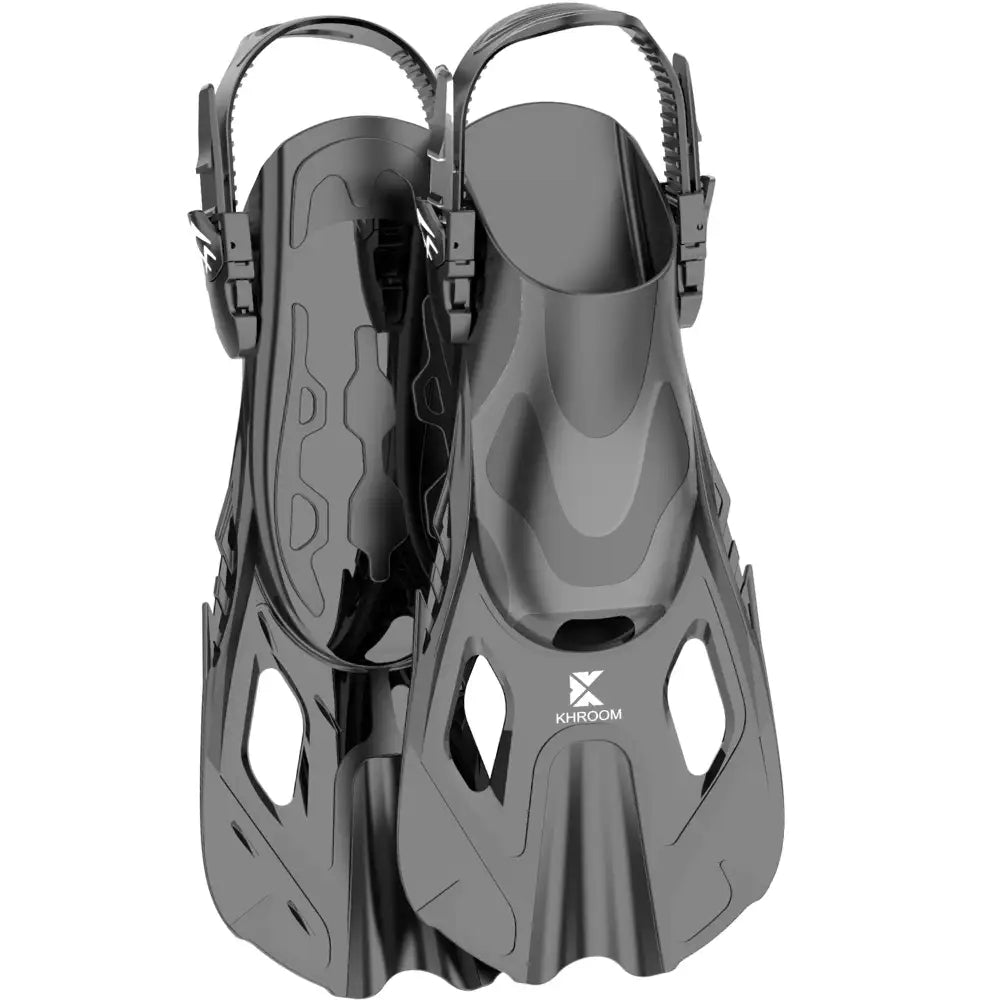
Replacement snorkels, valves, and other accessories: Replacement parts shop. Replacement parts are available for all Khroom products, including fin straps.
Further Reading

Written by Christian Hanauer