
Short Fins, Long Fins, Adjustable Fins — Comparison 2026
Which fins for snorkelling? Short fins, long fins and adjustable fins compared — with recommendations for beginners, advanced snorkellers and travellers.
Which fins for snorkelling?
For snorkelling: Adjustable short fins — lightweight, compact, minimal effort
Maximum performance: Long fins made in Italy — closed foot pocket and very strong propulsion
Adjustable long fins: Adjustable long fin, made in Italy. Fits in any suitcase.
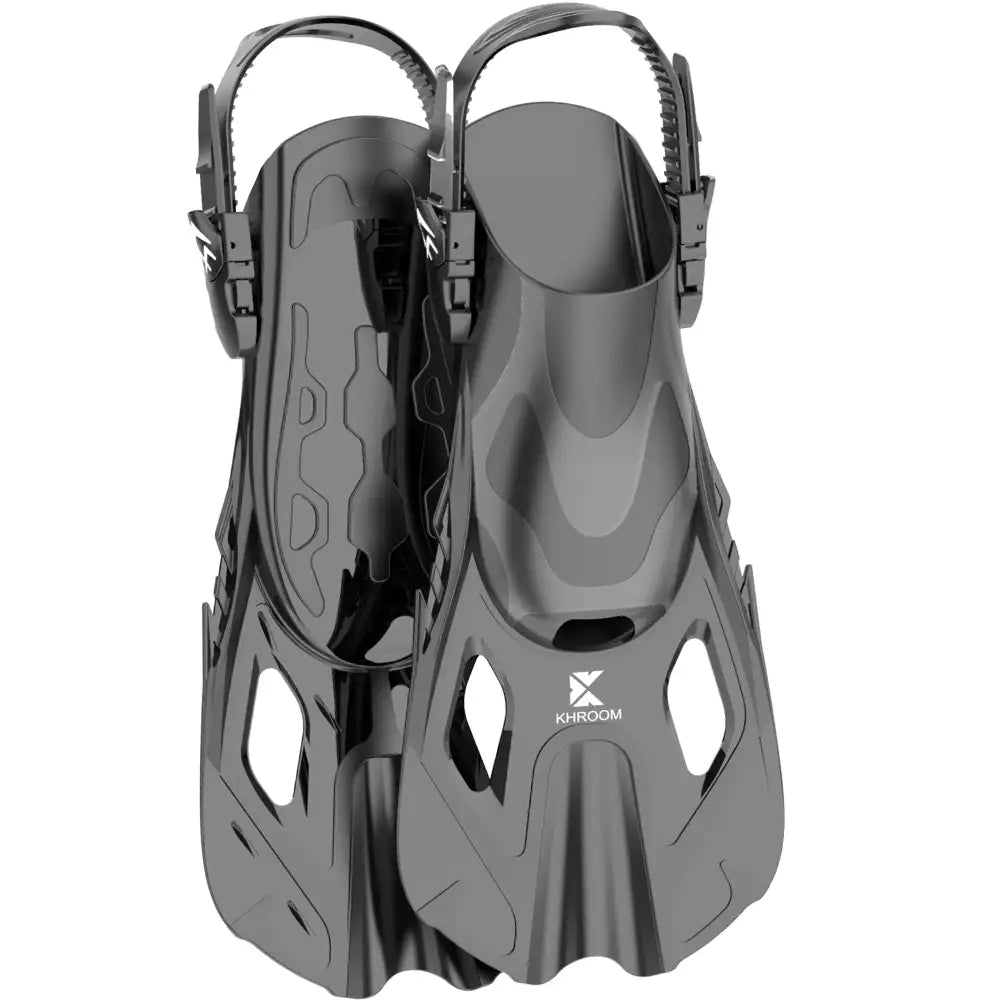
Our recommendation for beginners and advanced snorkellers: Khroom snorkel fins — adjustable, short, sizes 32-47
Fins are like air in a tyre. You can still cycle without it, but it's a lot more effort and you won't go as fast. Fins reduce early leg fatigue, give you strong propulsion, and if you ever get caught in a current, they'll make it much easier to swim your way out.
The why and what for
Let's start with what you actually want the fins for. Do you just want some extra support while you swim? Or are you planning a relaxed snorkelling trip?
Besides the activity itself, the destination also plays a role. Outside Europe — in the Maldives, for example — you'll often be flying in on a propeller plane, which limits your luggage allowance considerably. Long fins take up a lot of space and weigh almost four times as much as short fins. But if you do have the space and the weight allowance, go for long fins — the difference in propulsion is noticeable.
Long fins — maximum performance, made in Italy
Long fins with a closed foot pocket
Our long fins are made in Italy, in close collaboration with an Italian partner. The extra-long blade delivers strong thrust with every kick. A flexible mid-section adapts dynamically to your movement, converting every kick efficiently into propulsion.
The closed foot pocket holds your foot snugly and securely — it's designed to be worn barefoot only. We'd advise against wearing neoprene socks with it: the soft material creates extra play, causing the fin to flutter and putting strain on your ankle.
Adjustable long fins
Long fins — adjustable any time
With adjustable fins, the heel is open at the back and sticks out a little from the foot pocket. The advantage: you can wear them with neoprene socks wear them barefoot, or share them between people with similar shoe sizes.
If you've still got room in your suitcase and don't need maximum performance but want a good balance of functionality and thrust, this is the right choice for you.
Short fins — our favourite for snorkelling
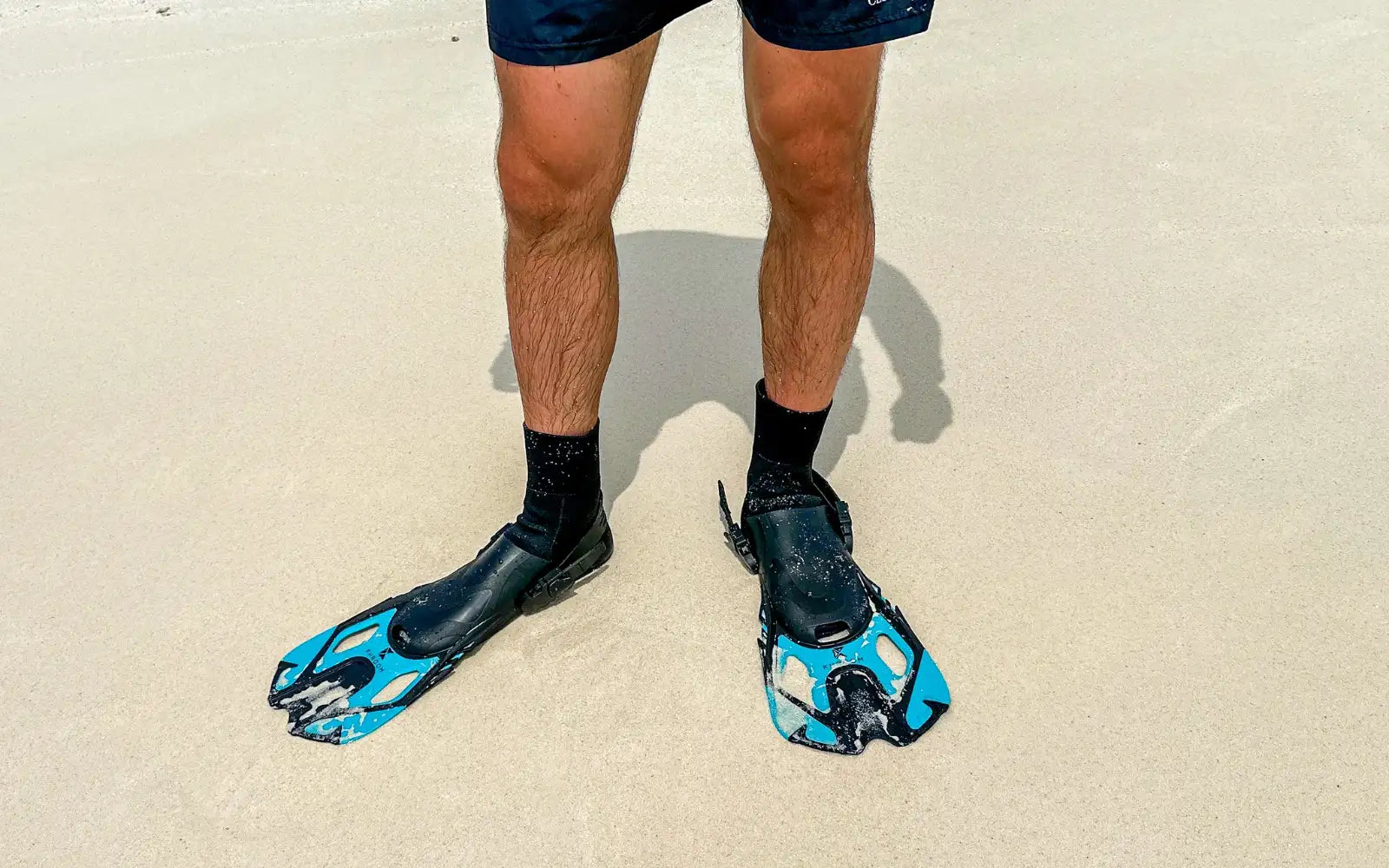
Short fins with an adjustable heel
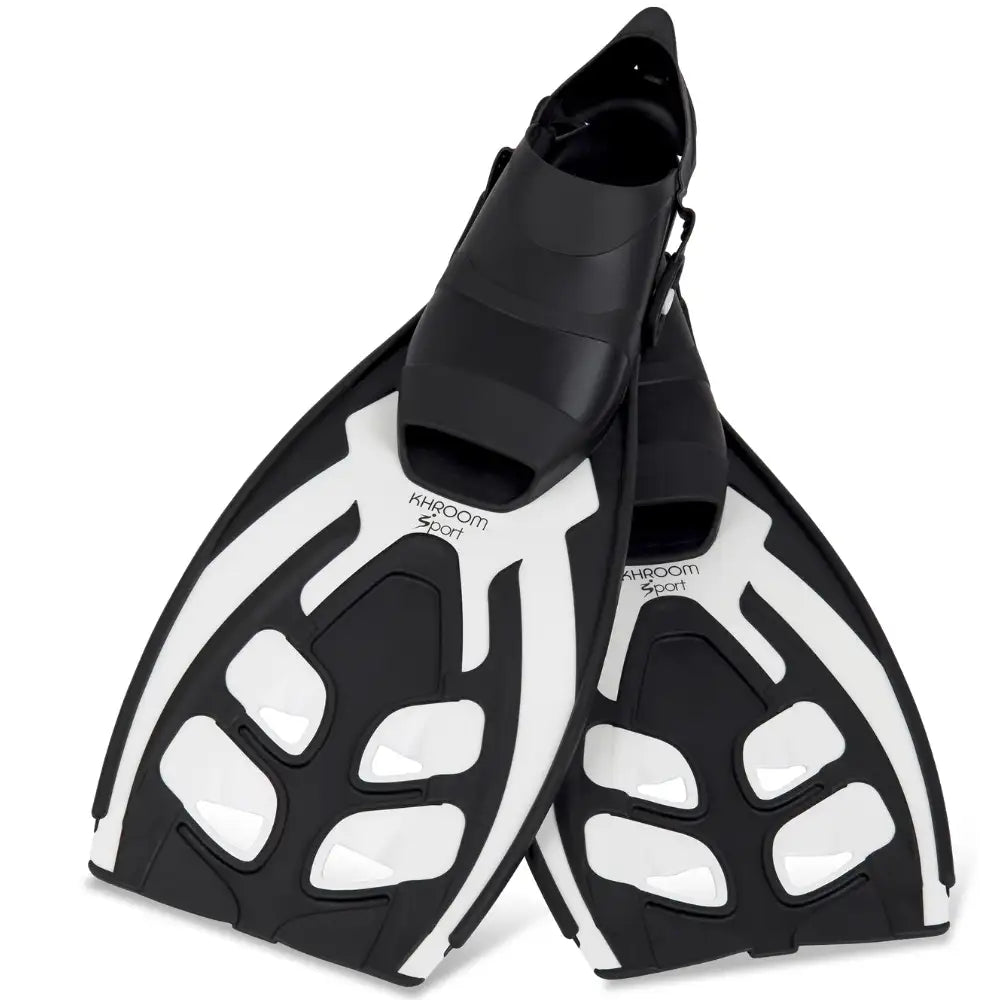
Short fins are our best-selling fins by far. Why? Because they're perfect for the average snorkeller: compact travel size, lightweight and adjustable. The shorter shape creates less resistance, which makes swimming easier and goes easier on your legs.
A solid choice from beginner to advanced level. If you're an expert and find them a bit too easy, go for our premium long fins instead.
Our recommendation: Khroom snorkel fins
Adjustable short fins in sizes 32-47. Pair them with neoprene socks for cold water and protection against sea urchins.
Monofin & mermaid fin
The monofin is a single, wide fin for both feet. It generates the most propulsion, but requires a special swimming technique (the dolphin kick). It's mainly used in freediving and fin swimming.
The mermaid fin encloses your legs and hips completely. It's more fun than sport — a childhood dream for many, with dedicated swimming courses offered at many pools.
Our recommendation
For most snorkellers, adjustable short fins are the best choice. If you want maximum performance and have room in your luggage, go for the long fins made in Italy.
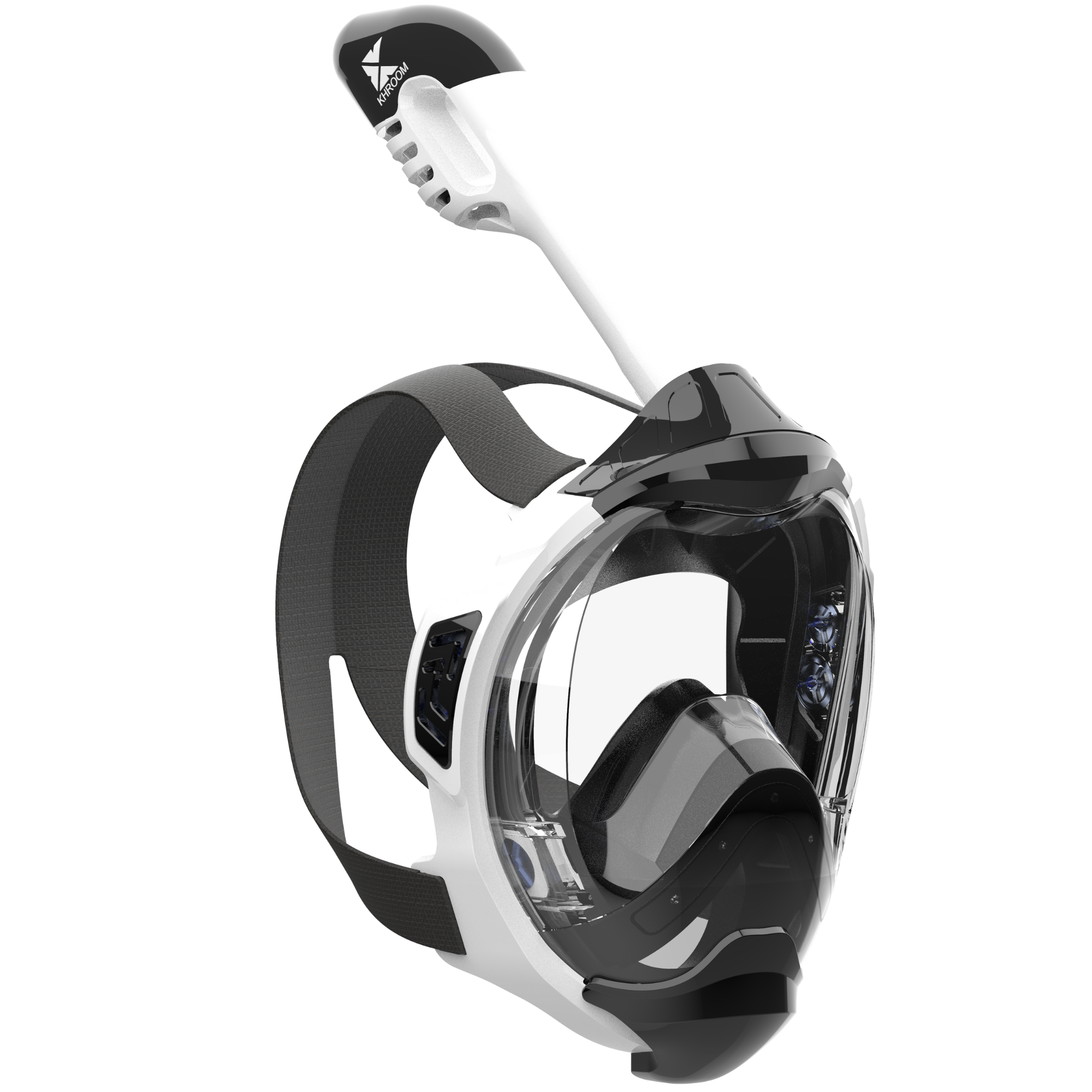
Seaview Pro snorkel mask + Adjustable short fins + 3mm neoprene socks
→ View snorkel fins → Add neoprene socks
Further reading:
- Snorkelling the right way — tips for beginners & advanced snorkellers
- Learning to snorkel — step by step
- Which snorkel mask is best for beginners?
- Snorkel mask test 2026 — the best full-face masks
- Snorkel mask vs. diving mask — which is better?
Do you need fins for snorkelling?
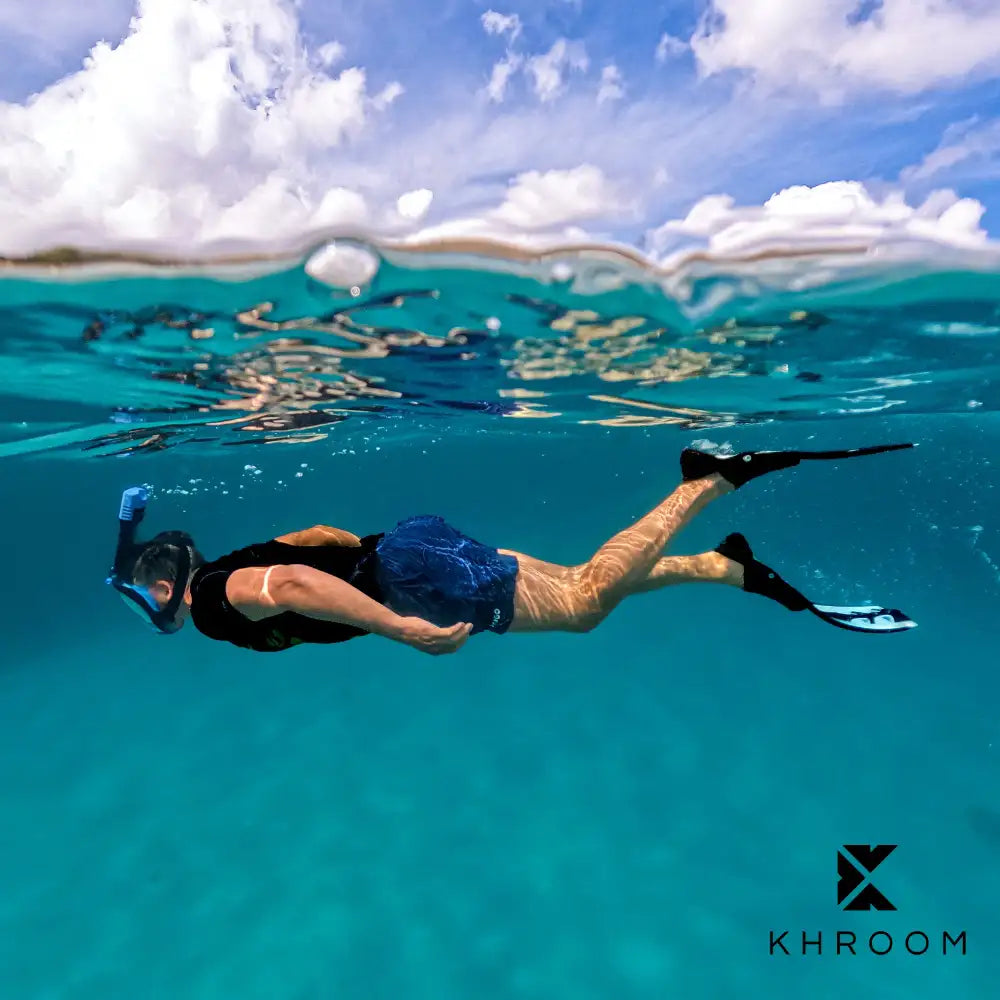
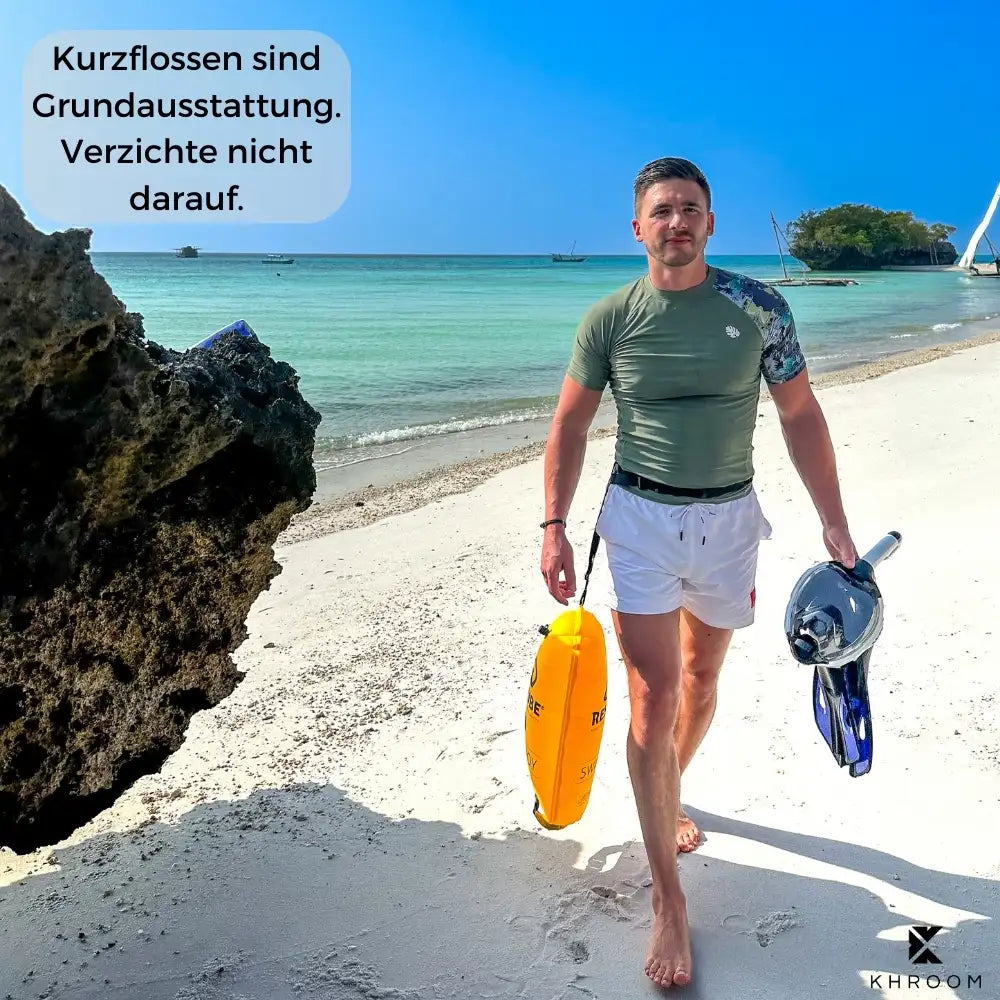
Fins aren't strictly necessary — the basic kit really only consists of a mask and a snorkel. But they save a lot of effort, give you more confidence in waves or a light current, and let you change direction in the water more quickly and precisely.
In very shallow, calm water — right off the beach or in a sheltered lagoon, for example — you can manage perfectly well without fins. But if you're snorkelling in open water or in a current, fins give you a clear advantage.

Written by Christian Hanauer