Snorkel Mask for Kids: Safety, TÜV Certification & Age Recommendations
Snorkel mask for kids – The most important things for parents:
Biggest risk: CO₂ buildup – especially dangerous for children because their lung volume is smaller.
Most important rule: Only use masks with an independent CO₂ test certificate (TÜV, DEKRA, SGS).
The only TÜV-tested snorkel mask for kids: Khroom Seaview Kids – certified by TÜV Rheinland, designed for children aged 3 to 10.

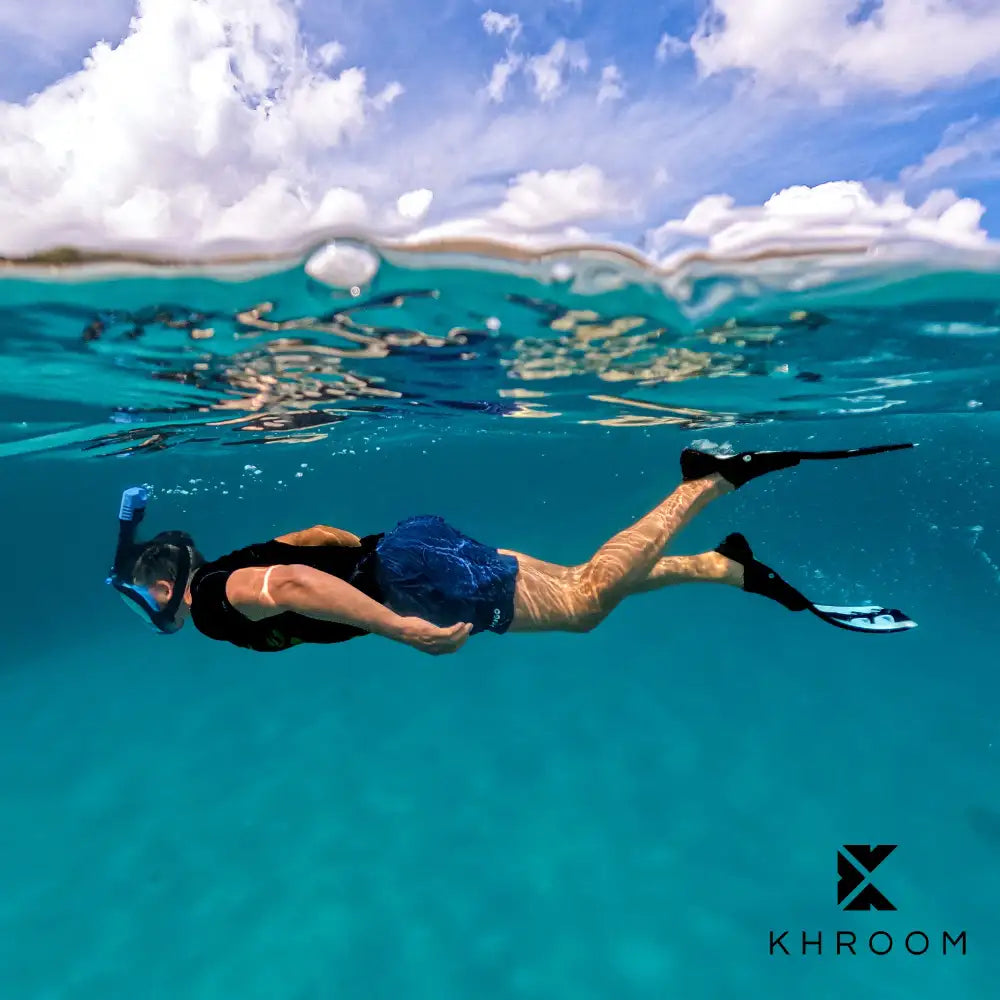
As a parent, you want to show your children the underwater world – watching colorful fish, gliding over coral reefs, and sharing unforgettable vacation moments together. Snorkeling is a perfect way to do that. But safety must always come first.
The market for children’s snorkel masks is confusing. Cheap masks attract buyers with colorful designs and cute patterns – but behind the packaging there can be real dangers. CO₂ buildup, poor ventilation, and missing safety testing make many inexpensive children’s masks a risk that parents often recognize too late.
In this guide, you’ll learn everything parents need to know: at what age snorkeling is safe, what risks exist, what to look for when buying a mask – and why there is only one TÜV-certified snorkel mask for children on the entire market.
1. Why cheap snorkel masks for kids can be dangerous
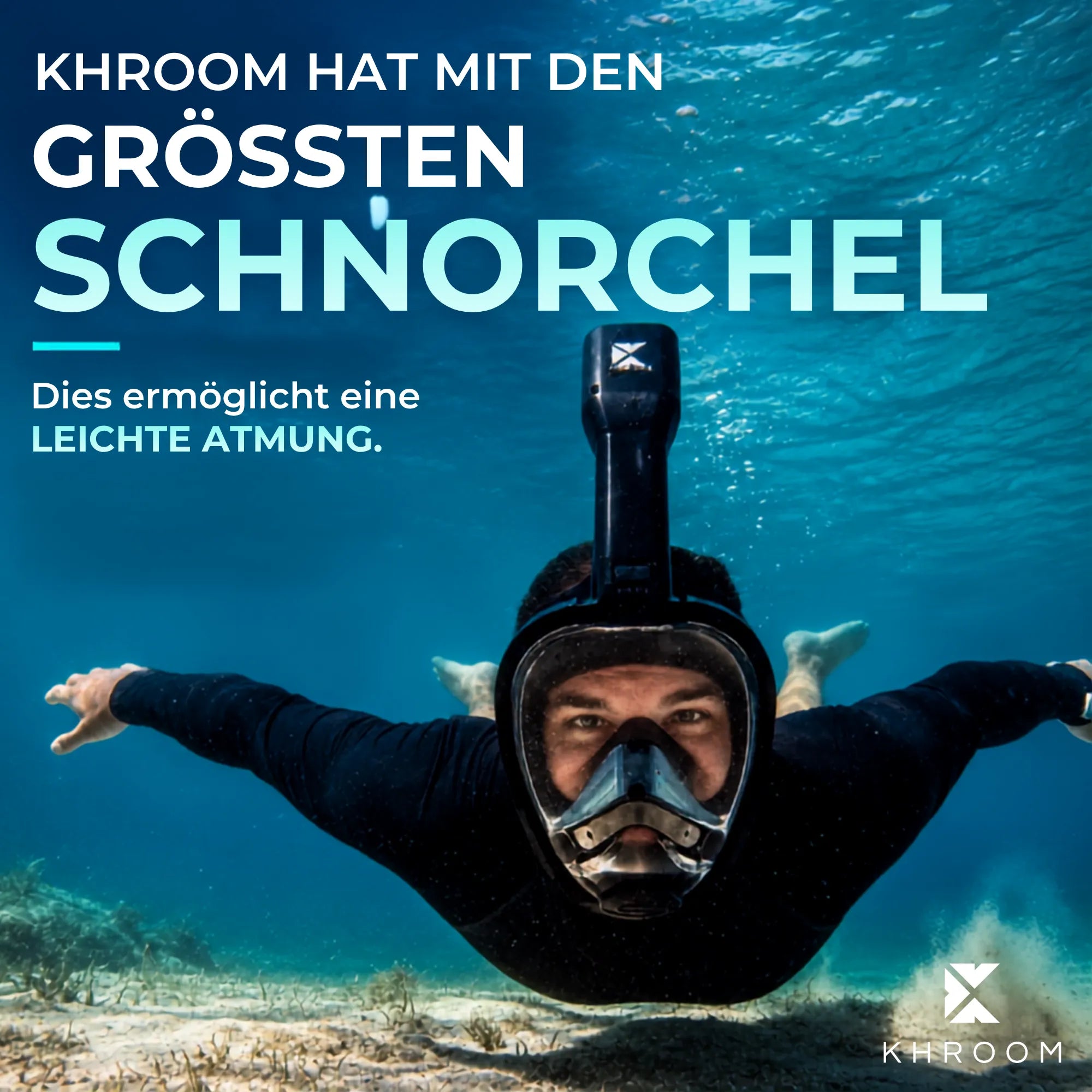
Full-face snorkel masks have a major advantage over traditional diving masks with snorkels: children can breathe through their mouth and nose at the same time, and there is no mouthpiece that can trigger a gag reflex. This makes them especially beginner-friendly. However: if the ventilation system does not function properly, this advantage becomes a problem.
The CO₂ problem – especially critical for children
When exhaling, the body releases carbon dioxide (CO₂). In a well-designed mask, this CO₂ is directed outwards through separate exhaust channels. In lower-quality masks, part of the CO₂ remains inside – creating what is known as pendulum breathing: your child inhales used air again.
- Lower lung volume: Children breathe faster and more shallowly. At the same CO₂ concentration, the CO₂ level in the blood rises faster than in adults.
- Higher oxygen consumption: Children’s metabolism is more active relative to body weight. They consume proportionally more oxygen and produce more CO₂.
- Later recognition of symptoms: Children often cannot correctly interpret dizziness, headaches, or discomfort and may not communicate symptoms in time.
- Lower physiological reserves: A child’s body has fewer compensatory mechanisms to counteract excess CO₂.
Pediatric specialists therefore explicitly warn against using untested snorkel masks for children. Dr. Michael Stimpfl, a specialist in pediatric and adolescent medicine, summarizes it this way: in adults, mild CO₂ buildup may cause headaches – in children it can lead to unconsciousness much more quickly.
Video: CO₂ risks in children’s snorkel masks explained
More details: Dangers of snorkel masks caused by CO₂ buildup
How can you recognize an unsafe children’s snorkel mask?
- No test certificate: If there is no TÜV, DEKRA, or SGS certificate, the CO₂ safety has never been independently tested.
- Constant fogging: A fogging viewing lens can be a warning sign of insufficient air circulation.
- Plastic smell: Cheap materials (PVC instead of silicone) are not only unpleasant but often also leak.
- “Best product” labels without a source: Self-awarded or purchased seals are not proof of safety.
- No size specification: An adult mask in size “S” is not a children’s mask. Children need a fit specifically designed for them.
2. Age recommendations: When is my child ready for snorkeling?

Every child develops differently. The following age recommendations are guidelines – the decisive factor is always your child’s individual comfort and confidence in the water.
| Age | Readiness | Recommendation | Mask |
|---|---|---|---|
| 3–5 years | First water familiarity, shallow water, always with a parent | First snorkeling attempts in a pool or paddling pool. Short sessions (5–10 min). Never without direct supervision. | Seaview Kids |
| 6–8 years | Confident swimmer, able to follow instructions | Snorkeling in calm water. Longer sessions possible (15–20 min). Always within arm’s reach of an adult. | Seaview Kids |
| 9–10 years | Experienced swimmer, understands safety rules | Snorkeling in the sea, longer tours possible. A parent should still be in the water. | Seaview Kids or Seaview Y (S/M) |
| 11–12 years | Advanced swimmer | More independent snorkeling, but still with supervision. Transition to adult masks in size S/M possible. | Seaview Y (S/M) or Seaview Pro (S/M) |
More details: At what age can children start snorkeling? Everything parents need to know
3. Safety criteria: What parents must pay close attention to
When buying a snorkel mask for children, there are five non-negotiable safety criteria. If even one of them is missing, you should not buy the mask.
Safety checklist for parents
- Independent CO₂ test certificate – TÜV, DEKRA, or SGS. No manufacturer claims, no self-awarded seals.
- Separate inhalation and exhalation system – one-way valves that prevent pendulum breathing.
- Child-appropriate size and fit – designed specifically for children’s faces, not simply a scaled-down adult mask.
- Medical-grade silicone – skin-friendly, soft, and reliably seals. No PVC.
- Dry-top snorkel – automatically closes in waves or when submerged, preventing water from entering.
3.1 CO₂ safety: The decisive factor
We cannot emphasize this enough: CO₂ safety is the key criterion for children’s masks. Adults usually notice the first symptoms of CO₂ buildup (headaches, dizziness) and can react. A child may not recognize these signals – or may not be able to communicate them.
Therefore: only masks whose ventilation system has been tested by an independent testing institute according to recognized standards should be used for children. We recommend exclusively TÜV-, DEKRA-, or SGS-certified masks.
3.2 Fit: Why “size S” is not enough
A common mistake: parents buy an adult mask in size S and assume it will work for older children. The problem: adult masks are designed for different facial proportions. Even in size S, the sealing skirt often does not sit correctly on a child’s face – leading to leaks, water entering the mask, and frustration instead of fun.
A proper children’s mask is designed specifically for children’s faces from the ground up: shorter nose distance, smaller chin area, and a softer sealing skirt that requires less pressure to seal properly.
3.3 Breathing resistance: Easy breathing is essential
Children have smaller lung volumes and weaker respiratory muscles than adults. The breathing resistance of the mask – meaning how easily air flows through the valve system – must be adapted accordingly. A mask with too much breathing resistance can cause children to breathe more shallowly and rapidly, which can worsen CO₂ buildup.
More details: How to breathe properly while snorkeling
4. TÜV certification explained
TÜV Rheinland is one of the most respected testing organizations in the world. When a snorkel mask carries the TÜV certificate, it means that an independent laboratory has tested the mask according to defined testing standards – and it passed.
What is tested?
During TÜV testing of a snorkel mask according to EN 136:1998, the following aspects are examined:
- CO₂ concentration in inhaled air: How much CO₂ remains in the mask after exhalation? The value must remain below the defined limit.
- Breathing resistance: How easily can the user breathe through the mask? Excessive resistance is particularly dangerous for children.
- Watertightness: Does water enter the mask? Does the mask remain sealed even during movement?
- Material testing: Are the materials skin-friendly and free from harmful substances?
Why is only one children’s snorkel mask TÜV-certified?
TÜV certification is complex and expensive. It requires a mask that has already been optimized for CO₂ safety during development. Most manufacturers – especially those selling low-cost masks from standard production – avoid this effort. The result: across the entire market, there is only one children’s snorkel mask with TÜV certification – the Khroom Seaview Kids.
5. Khroom Seaview Kids in detail: The only TÜV-tested snorkel mask for children

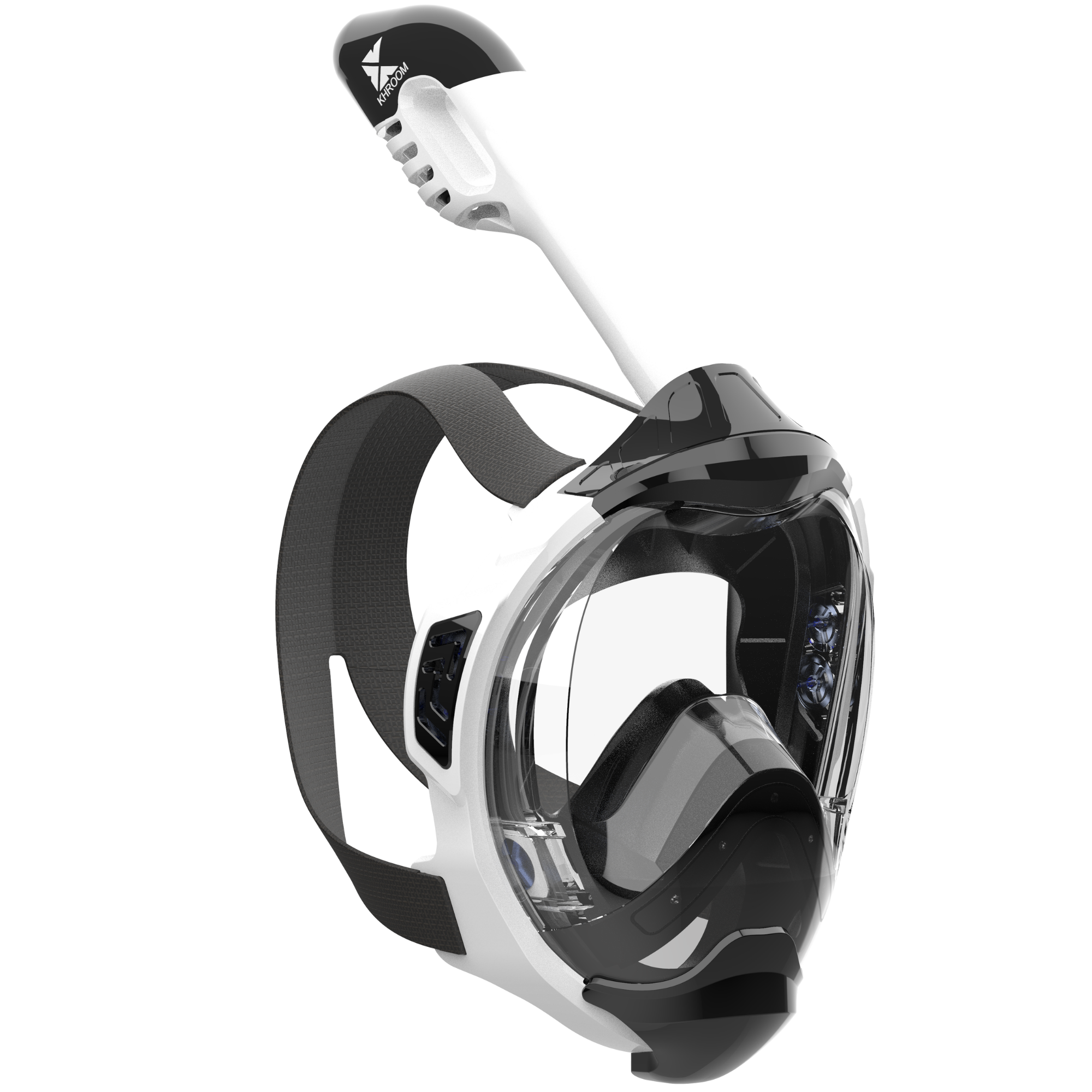
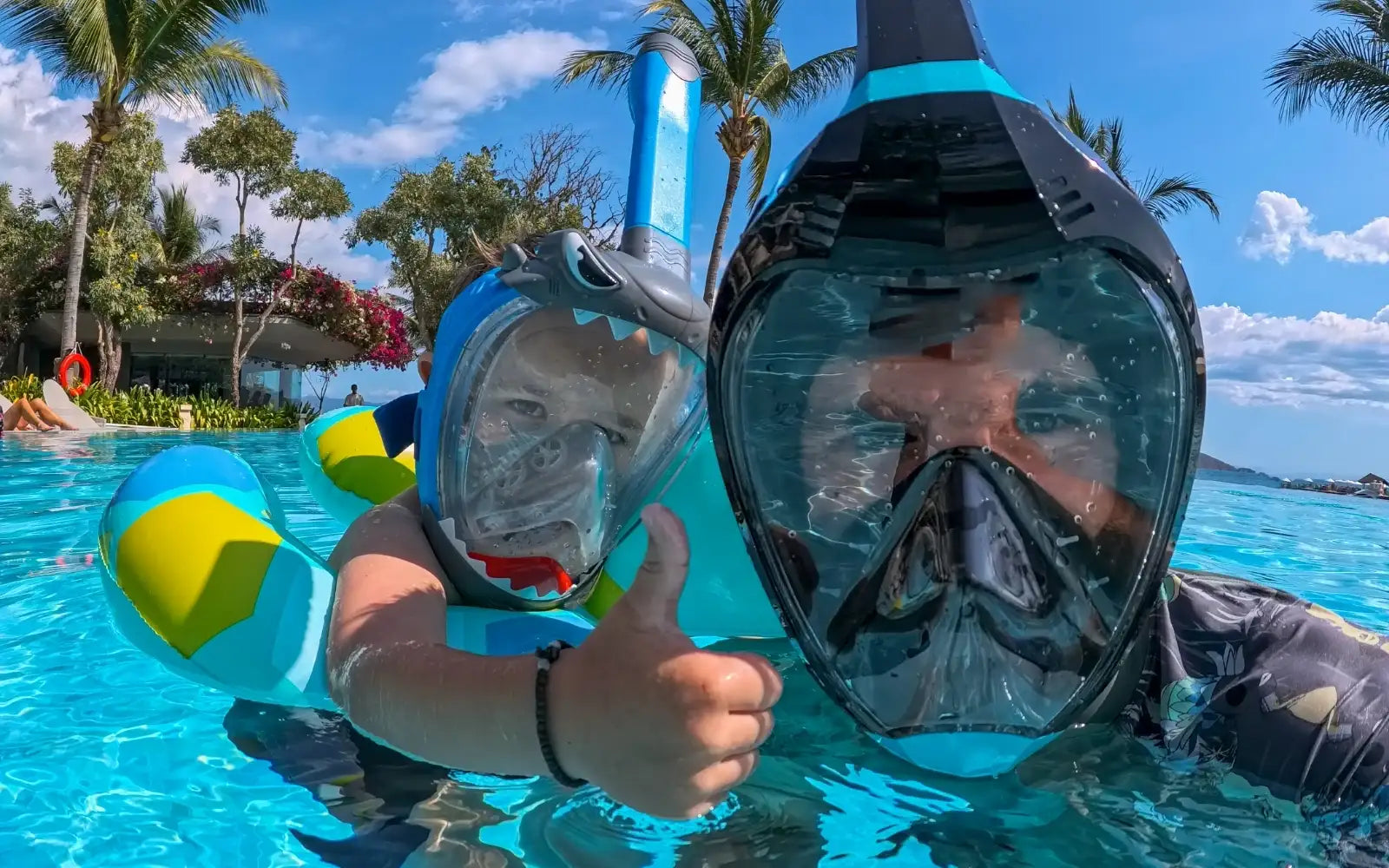
The Khroom Seaview Kids was designed from the beginning for one specific target group: children aged 3 to 10. Every design element – from the size of the viewing lens to the sealing skirt and breathing resistance – is adapted to children’s proportions and needs.
Safety features
- TÜV Rheinland certified (EN 136:1998): CO₂ safety verified by an independent laboratory. Test report (PDF)
- Separate inhalation/exhalation system: One-way valves prevent CO₂ rebreathing.
- Dry-top snorkel: Automatically closes when submerged – prevents water from entering.
- Medical-grade silicone: Skin-friendly, soft, and suitable for sensitive skin.
- Low breathing resistance: Optimized for the smaller lung volume of children.
Child-friendly design
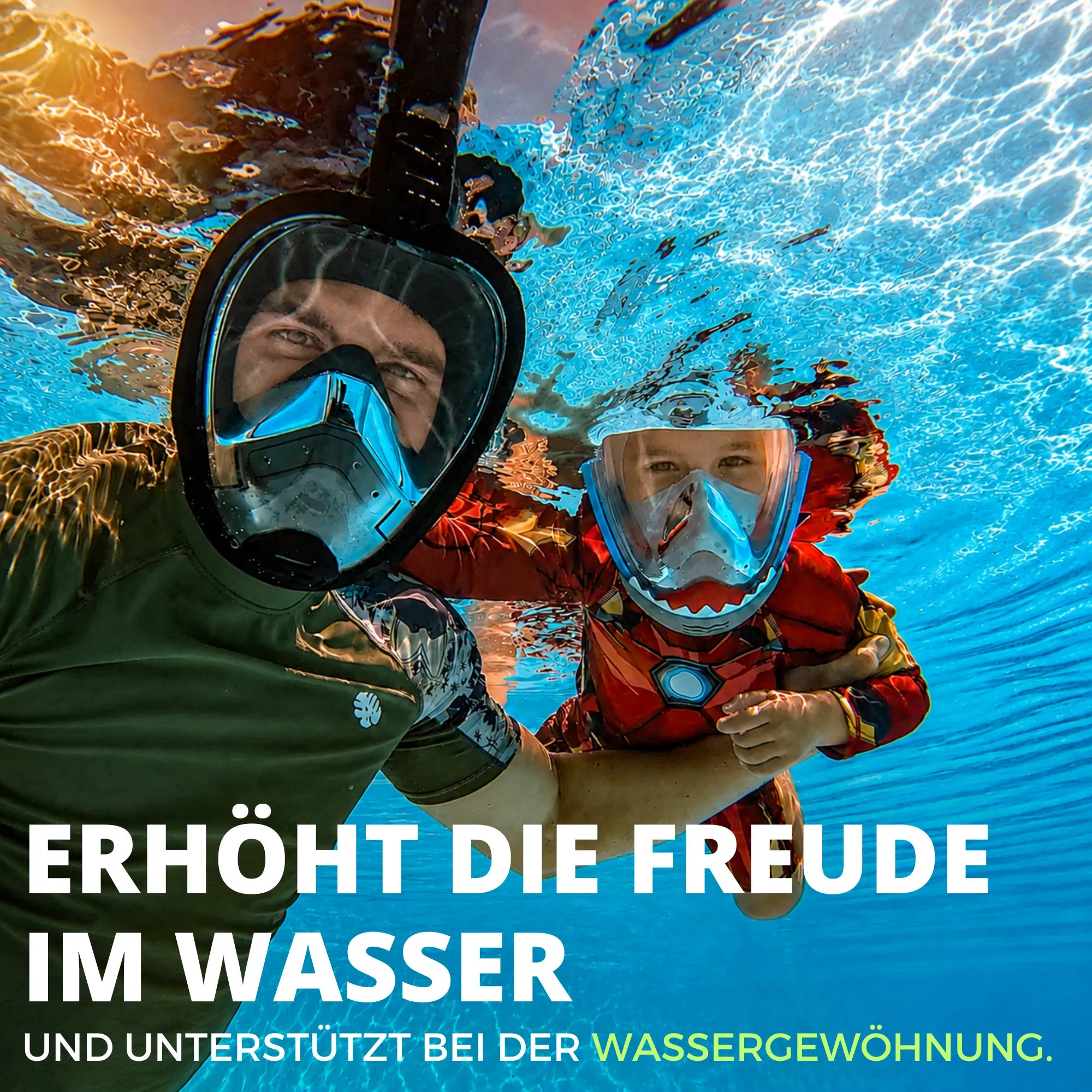
The Seaview Kids is available in three designs that children love: Shark, Unicorn, and Dog. This is not just marketing – children who like their mask are more willing to wear it and keep it on longer. A mask left in the sand because a child dislikes it is worthless.
Sustainability
All individual parts – snorkel, head strap, valves – are available as replacement parts. If a component wears out after a season, you don’t have to replace the entire mask.
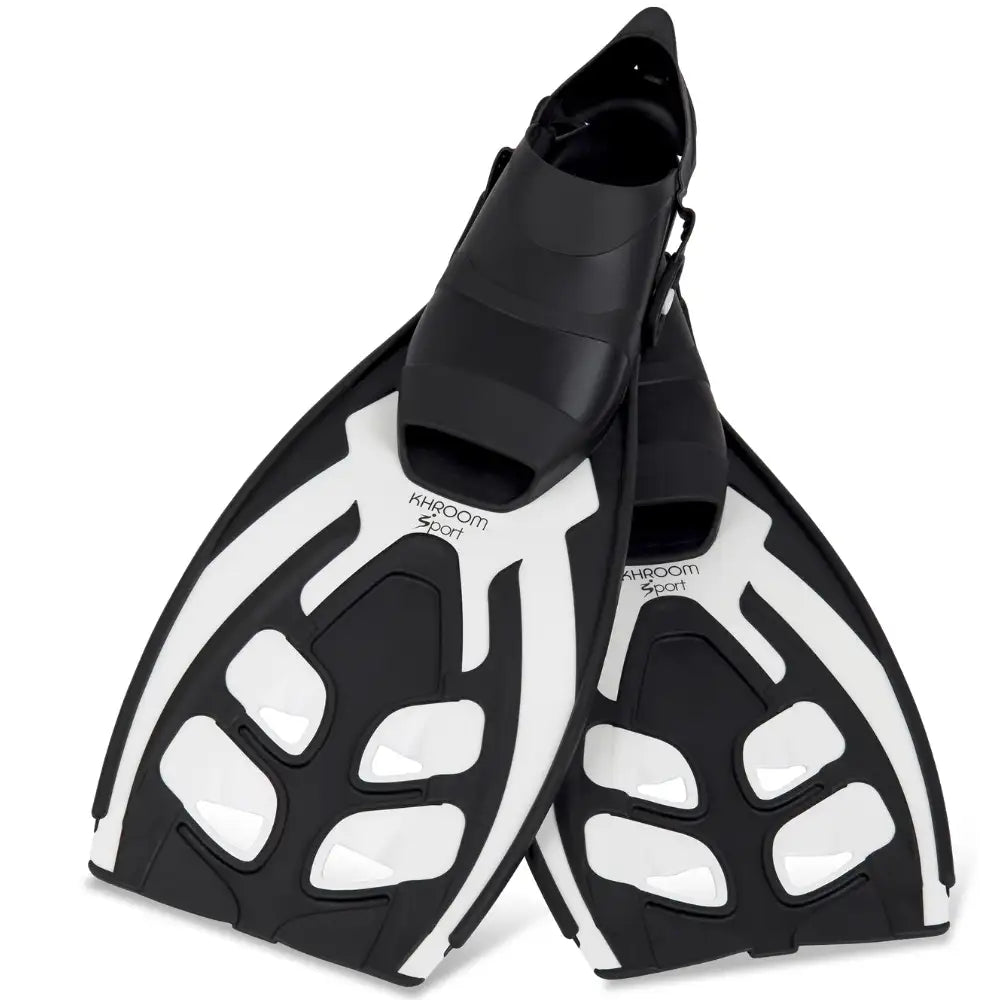
Also available: Bundle with free fins | with pool toy torpedo
6. Getting started: First steps in the water

The mask has arrived, your child is excited – now what? With the right preparation, the first snorkeling experience can be a great success. Here is our proven step-by-step plan.
Step 1: Practice at home (without water)
Let your child put the mask on at home first and wear it for a few minutes. They should get used to the feeling of breathing through the mask. Show them how to adjust the straps and that they can breathe normally through their nose. Important: no pressure – if your child wants to take the mask off, that’s completely fine.
Step 2: Bathtub or paddling pool
Next step: try the mask in the bathtub or a paddling pool. Your child can put their face in the water and look through the mask. This creates the first “wow effect” of underwater vision – without risk.
Step 3: Pool or shallow water
In a pool or at a shallow beach, the first real snorkeling attempts can begin. Always stay within arm’s reach. Show your child how to float calmly at the surface. Explain that they should breathe slowly and steadily, not in a rushed way.
Step 4: Snorkel together

Once your child feels comfortable in shallow water, you can start snorkeling together. Always snorkel next to your child, not behind them. This way you maintain constant visual contact and can intervene immediately if needed.
- 3–5 years: Maximum 5–10 minutes per session
- 6–8 years: Maximum 15–20 minutes per session
- 9–10 years: Maximum 30 minutes, then take a break
Take regular breaks, even if your child says they are “not finished yet”. Shorter sessions with positive experiences are better than a long session that ends in exhaustion.
More practical tips: Snorkeling safely with children: The complete parent guide
Parent tip: Snorkel together
Children learn by imitation. If you wear a snorkel mask yourself and visibly enjoy it, your child will feel more confident and relaxed. You are also already in the water and can react immediately if necessary.
For parents, we recommend the Khroom Seaview Pro (SGS certified) or the Seaview Pro Plus with pressure equalization. This ensures the whole family is equipped with CO₂-tested masks.
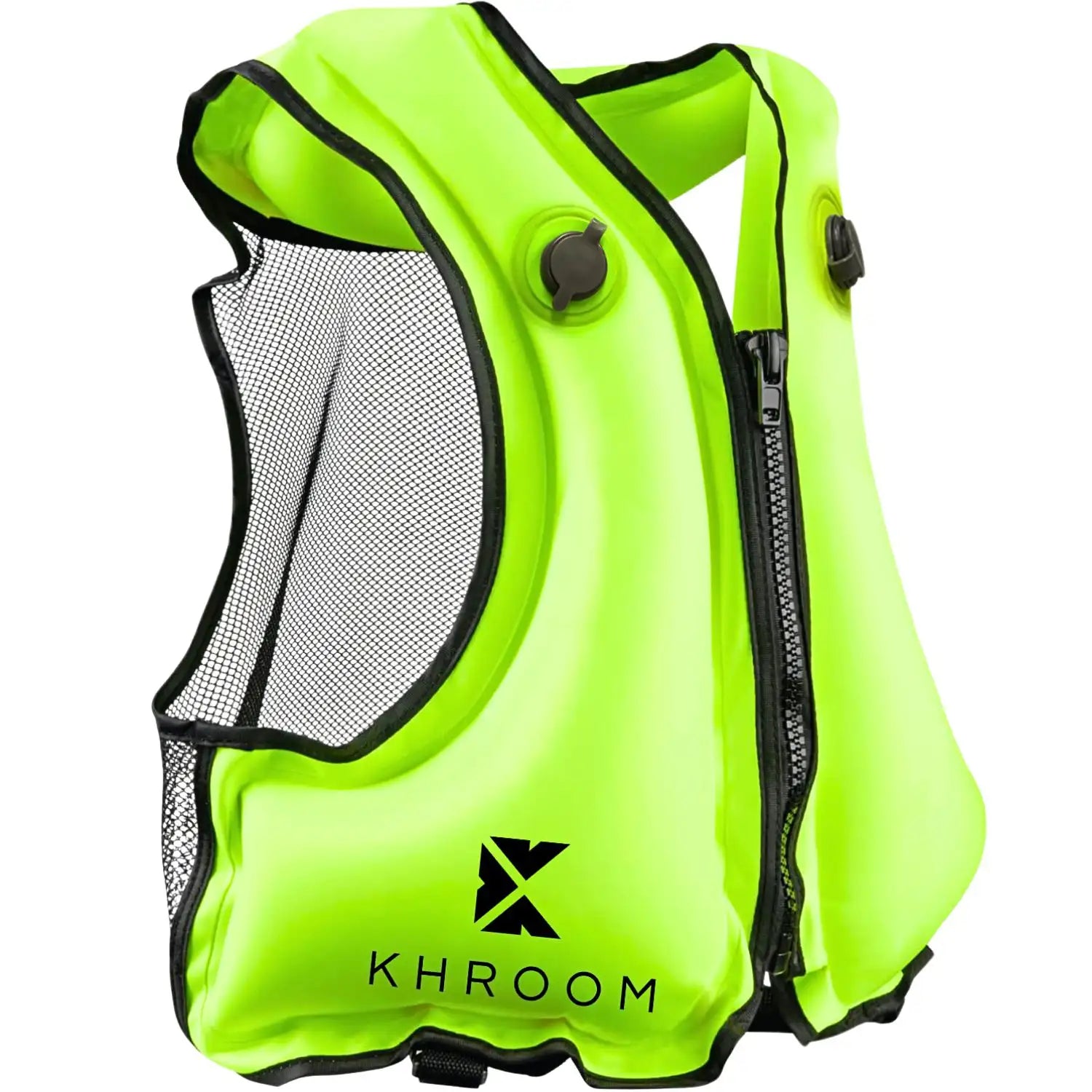
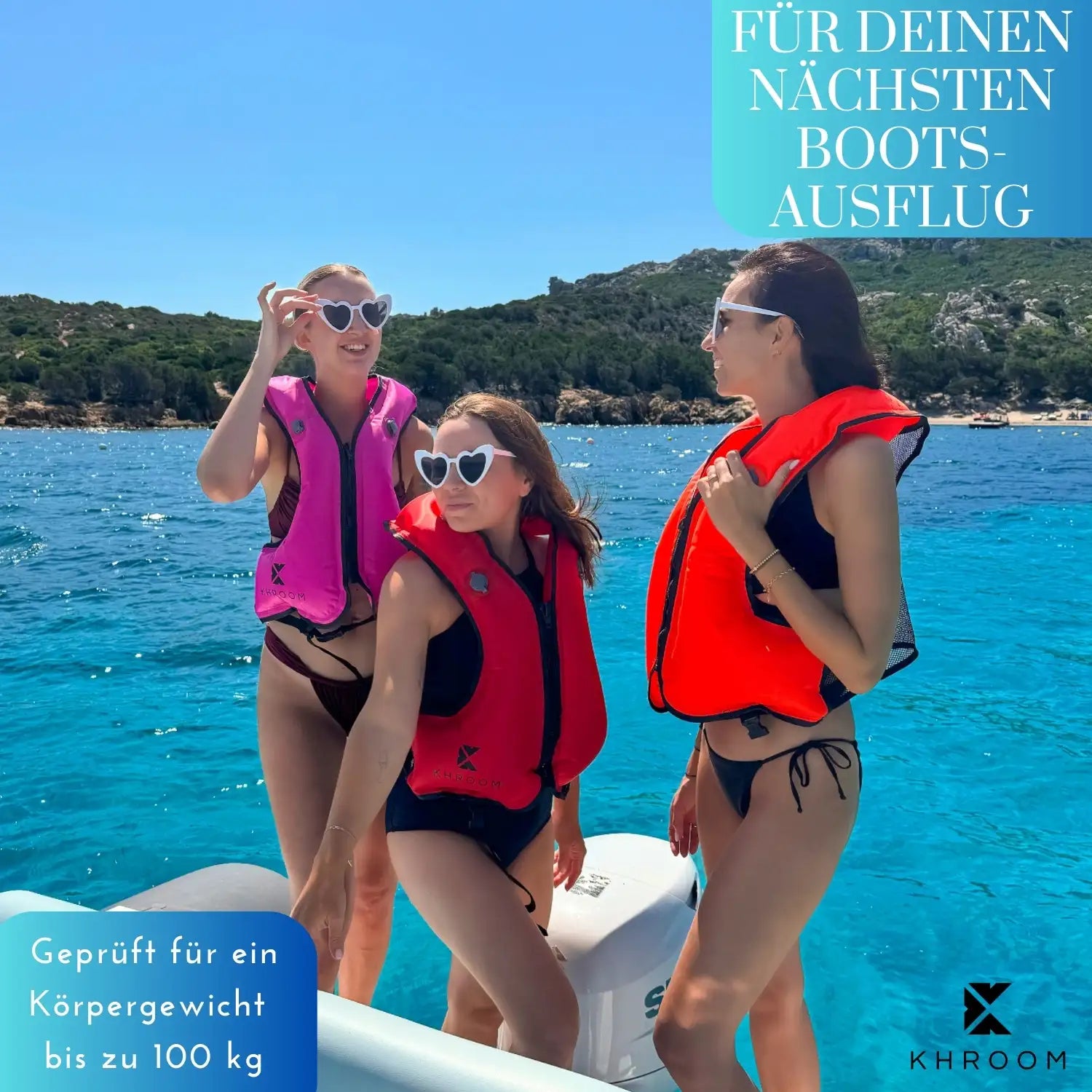
Additional safety: A Snorkel Vest for parents and children provides extra buoyancy and safety – especially during the first attempts in open water.
7. Tips for parents
What to do if your child has problems?
Recognize warning signs:
- Noticeably fast or irregular breathing
- Your child grabs the mask or appears panicked
- The viewing lens fogs up heavily and continuously
Immediate actions:
- Remove the mask immediately – do not ask first, act immediately.
- Take the child out of the water – bring them to the edge or the shore.
- Fresh air – let the child breathe calmly and deeply.
- Calm them down – speak calmly and avoid pressure.
Prevention is better than reaction: Always stay within arm’s reach, continuously observe your child, and follow the recommended time limits.
Safety rules for every snorkeling trip with children
- Never allow children to snorkel alone – an adult must always be in the water.
- Choose familiar waters – snorkel only where you know the currents and depth.
- Sun protection – a UV shirt or neoprene suit protects the back from sunburn.
- Don’t forget to drink – children dehydrate faster, and saltwater increases the effect.
- Check the mask beforehand – before every use: is the seal intact? Is the snorkel clear? Are the valves functioning?
- Stop immediately without discussion – if your child shows discomfort, stop right away. No “just five more minutes”.
8. Conclusion & recommendation for parents
Snorkeling with children is a wonderful experience – if the equipment is right. Discovering the underwater world together creates memories for a lifetime. But safety must never come second.
The facts are clear:
- CO₂ buildup is particularly dangerous for children.
- Most children’s snorkel masks on the market are not independently tested for CO₂ safety.
- There is only one children’s mask with TÜV certification: the Khroom Seaview Kids.
Our recommendation for families:
- Child (3–10 years): Khroom Seaview Kids – TÜV-certified, three designs, child-specific fit
- Parents: Khroom Seaview Pro (value option) or Seaview Pro Plus (with pressure equalization)
- Also recommended: Snorkel Vest for additional buoyancy and safety
Build your family snorkeling set:
Seaview Kids – TÜV tested, for ages 3–10
Seaview Kids + free fins – complete package for kids
Seaview Pro – for parents, SGS certified
Seaview Pro Plus – for parents, with pressure equalization
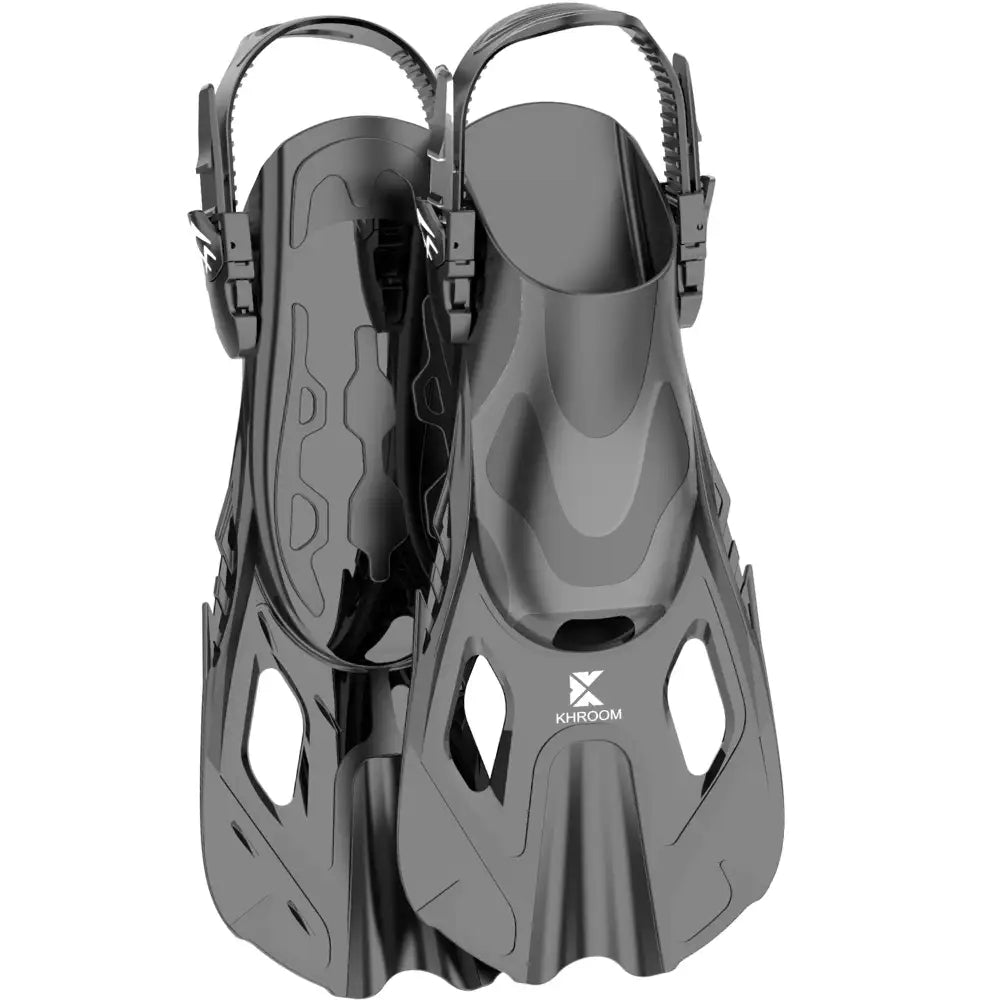
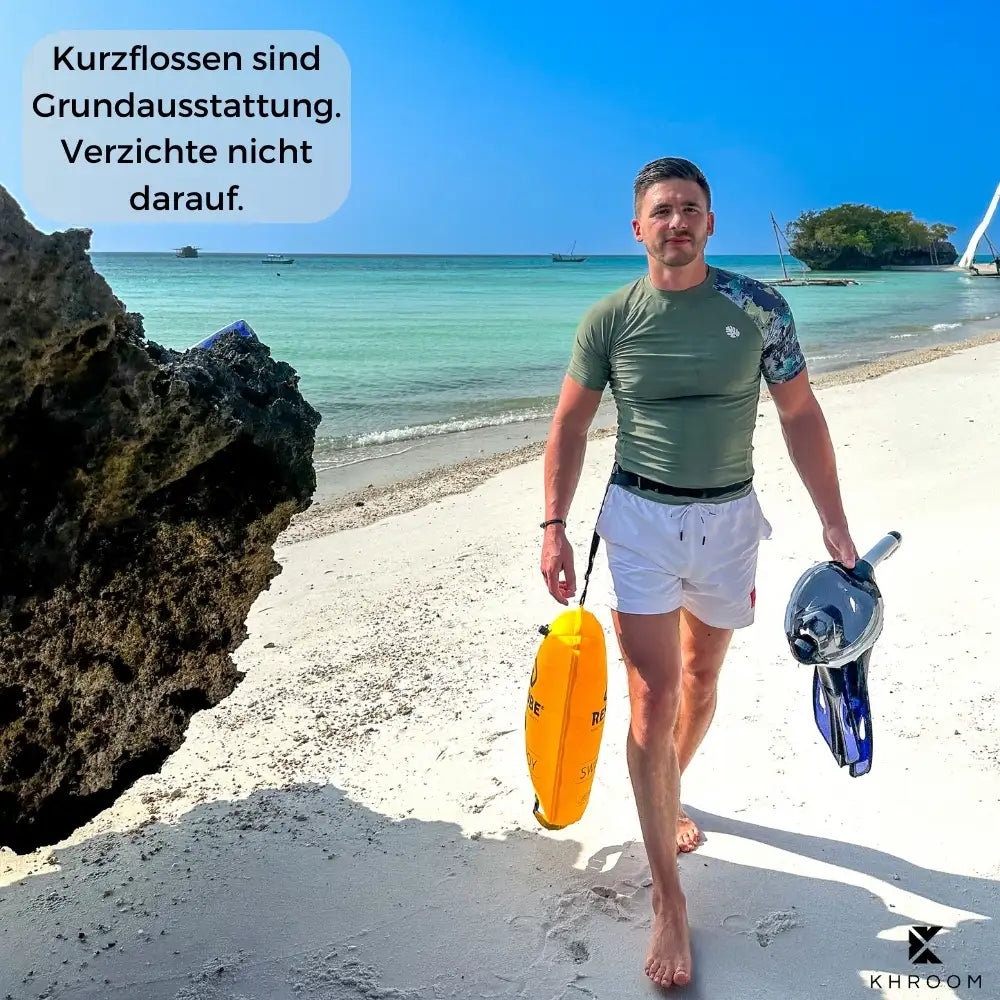
Short fins – for parents, ideal for travel
Further articles for parents
- Snorkeling safely with children: Tips and the right equipment
- At what age can children start snorkeling?
- Dangers of snorkel masks caused by CO₂ buildup
- Guide: CO₂-safe snorkel masks
- How to recognize a CO₂-safe snorkel mask
- Are full-face snorkel masks dangerous?
- How to breathe properly while snorkeling
- Snorkel mask test 2026: All masks compared
- Learn how to snorkel – the right way

Written by Christian Hanauer